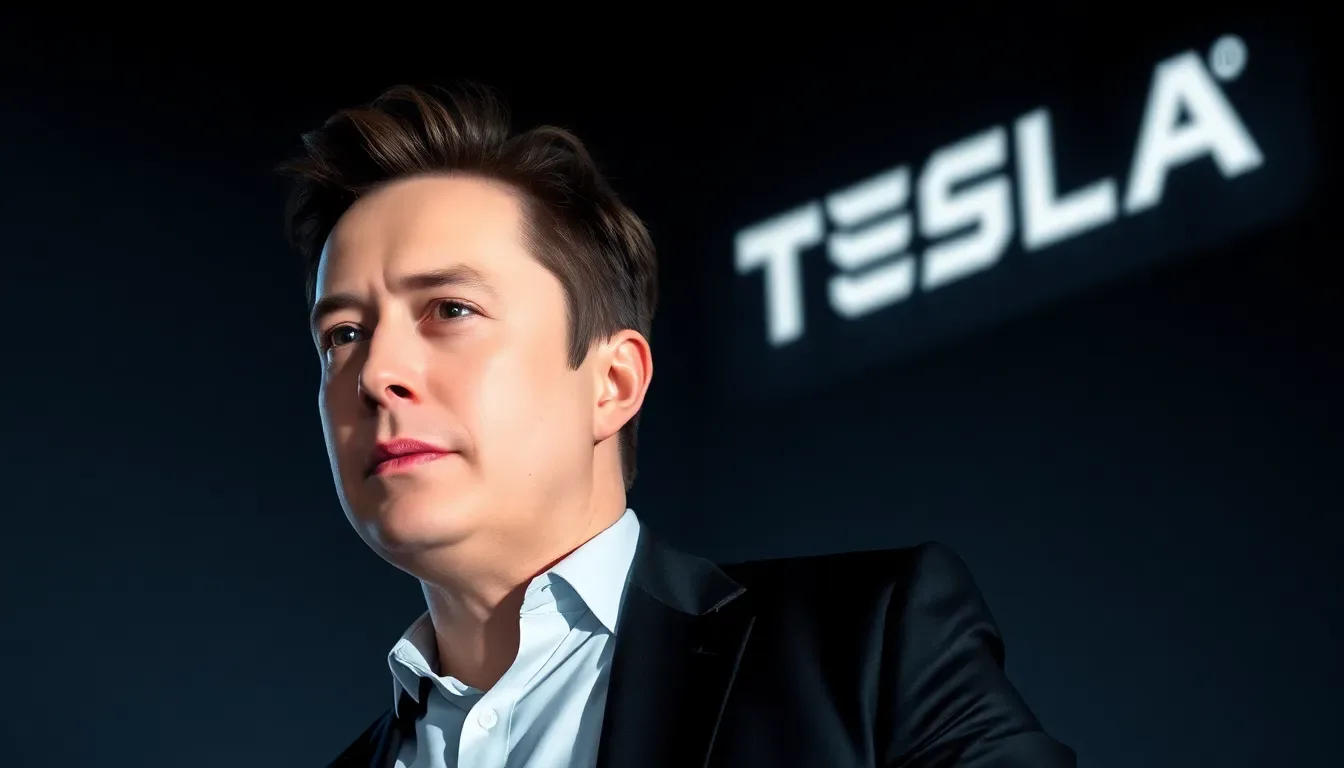
Elon Musk’s ventures often make headlines, and his interactions with other tech heavyweights can stir quite the conversation. Recently, a notable incident involving Sam Altman, the CEO of OpenAI, has created a buzz in the tech community. Altman’s decision to cancel his long-awaited reservation for a Tesla Roadster sheds light on the ever-evolving relationship between these two influential figures.
Sam Altman cancels his Tesla Roadster reservation
In a surprising move, Sam Altman announced via social media his decision to cancel his reservation for the Tesla Roadster. This high-performance vehicle has been in development for almost eight years, and Altman’s disappointment is palpable. He tweeted, “I really was excited for the car! And I understand delays. But 7.5 years has felt like a long time to wait.”
Altman’s journey with Tesla began on July 11, 2018, when he made a $50,000 deposit to secure his place in line for the much-anticipated supercar. However, after years of waiting with no clear end in sight, he decided to reach out to Tesla to formally cancel his order. In his email, he requested a refund for his deposit, but faced an unexpected hurdle when his message bounced back, indicating that the email address was inactive.
His decision to cancel was not driven by any rivalry with Musk, despite their complicated history, which includes legal disputes over the direction of OpenAI. Instead, it stemmed from a genuine sense of frustration over the lengthy delay in the car’s release.
The ongoing rivalry between Musk and Altman
The relationship between Musk and Altman traces back to the founding of OpenAI in 2015, where both shared a vision for advancing artificial intelligence responsibly. However, as the years passed, their paths diverged significantly. Musk has publicly criticized OpenAI for transitioning into a for-profit model, claiming it contradicted the organization’s foundational principles.
This year, Musk even attempted to buy OpenAI for over $97 billion, facing legal battles along the way, including a judge’s ruling that blocked his request to halt the company’s shift to a profit-driven enterprise. Furthermore, Musk’s company, xAI, has recently filed a lawsuit against OpenAI, alleging the theft of trade secrets.
The Tesla Roadster’s protracted release timeline
The Tesla Roadster promises to be a remarkable vehicle, boasting impressive specifications such as a 0 to 60 mph time of under 2 seconds and a top speed exceeding 250 mph. However, the development has faced multiple delays, pushing its launch back five years. As of now, Tesla has stated that a demonstration of the Roadster’s updates will occur in late 2025, but no specific date has been confirmed.
- Initial announcement: 2017
- First delay: 2020, citing battery technology issues
- Second delay: 2021, due to supply chain disruptions
- Third delay: 2022, focusing on software optimizations
- Current status: Awaiting timely updates and demonstrations
Tesla’s ambitious plans for Robotaxi expansion
Shifting gears from the Roadster, Tesla’s focus on its autonomous vehicle program, particularly the Robotaxi initiative, has gained significant attention. During a recent appearance on the All-In podcast, Elon Musk revealed plans to expand the Robotaxi fleet drastically. By the end of 2025, Tesla aims to have 500 Robotaxis operating in Austin and 1,000 in the Bay Area.
Musk emphasized the importance of scaling up the fleet effectively, stating: “We’re scaling up the number of cars to, what happens if you have a thousand cars?” This ambitious rollout comes at a time when Tesla’s ride-hailing service has been conservative, and the expansion could impact the company’s overall valuation positively.
Future of Full Self-Driving (FSD) technology
As Tesla continues to develop its Robotaxi network, Musk has made it clear that the Full Self-Driving (FSD) technology will be integral to the company’s future. In a recent earnings call, he mentioned plans to transition to a system without safety drivers in significant parts of Austin by the end of the year, reflecting confidence in the technology’s reliability.
- Expected elimination of safety drivers in Austin
- Focus on autonomous operations without human intervention
- Development of a robust safety framework for passengers
Neuralink’s advances and patient upgrades
In a related vein, Elon Musk’s other venture, Neuralink, is also making strides in the tech world. Recently, Musk hinted at the possibility of upgrading the brain implant of Noland Arbaugh, the first human recipient of the Neuralink device. This upgrade could enhance Arbaugh’s capabilities, allowing him to perform complex tasks solely through thought.
Arbaugh has shared updates on his life with the implant, which he affectionately named Eve. He has been able to return to activities he loves, such as gaming and studying neuroscience, demonstrating the transformative potential of Neuralink’s technology.
The Cybercab’s design and functionality
The Tesla Cybercab is another exciting project within Musk’s portfolio, designed to phase out human drivers. Speculation arose regarding whether the Cybercab would feature traditional driving controls like a steering wheel or pedals. Musk clarified that the vehicle will not include any manual controls, emphasizing that most passengers prefer the convenience of autonomous driving.
Despite the presence of steering wheels in prototype models, these are primarily for testing purposes. Musk’s firm stance on the Cybercab’s design reflects a broader vision for the future of transportation, where human intervention is minimized.
Conclusion: Implications of these developments
The developments surrounding Tesla, Neuralink, and the intricate relationships between their leaders highlight the dynamic nature of the tech industry. As Musk navigates these challenges, the outcomes could redefine the landscape of autonomous driving and AI, influencing not just the companies involved but also the broader market and regulatory frameworks.
As we look forward, it will be fascinating to observe how these ambitious plans unfold and what they mean for consumers, investors, and the future of technology.