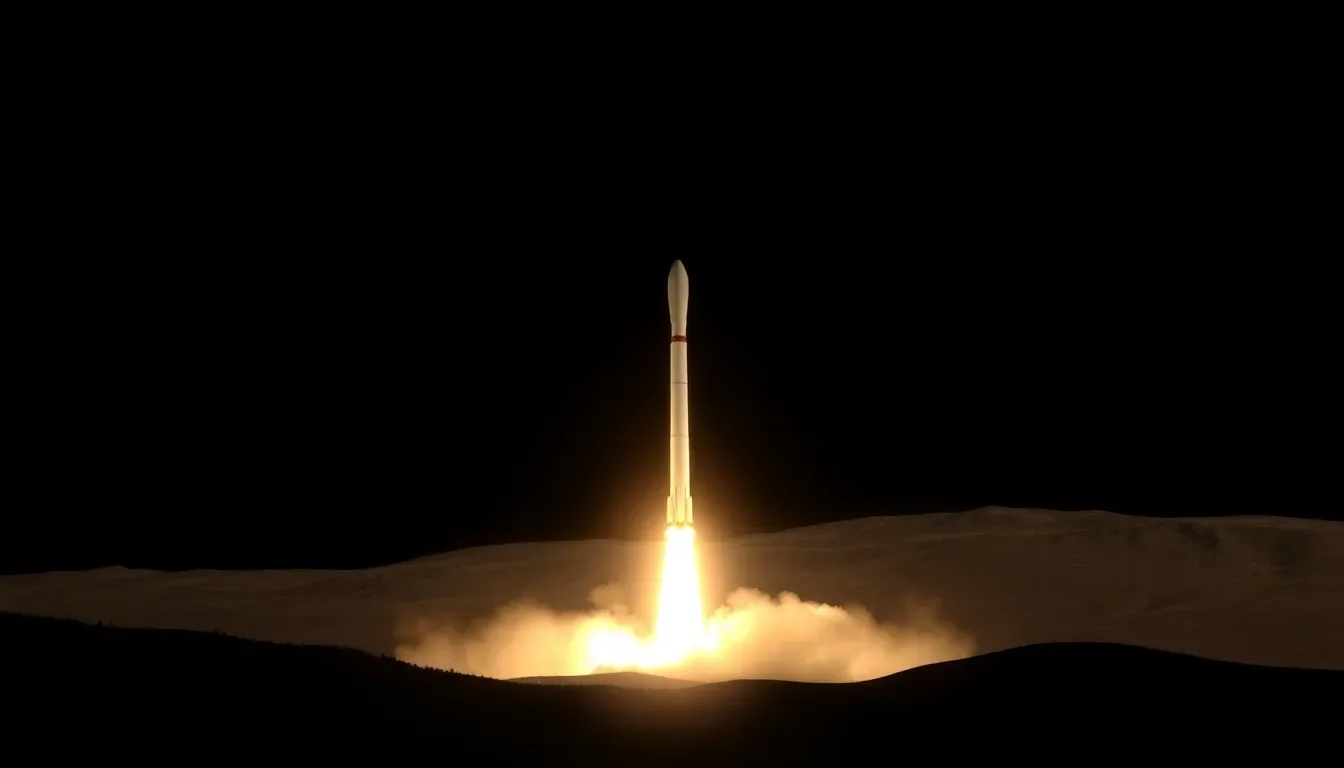
SpaceX is embarking on an ambitious journey to redefine its Starship mission plan for NASA’s Artemis 3 program. This new direction involves what the company describes as a “simplified” architecture aimed at accelerating the timeline for the first crewed lunar landing of the 21st century. The stakes are high, as SpaceX is not only focused on returning to the Moon but also on establishing a sustainable human presence on its surface.
This move comes in the wake of NASA’s decision to reopen the lunar mission contract, inviting competition from other aerospace companies. As SpaceX navigates these challenges, its updates on the project are critical not just for the company, but for the entire lunar exploration endeavor.
SpaceX highlights progress on lunar mission
In a recent blog post titled To the Moon and Beyond, SpaceX showcased significant advancements in its lunar mission plans. The company reaffirmed its commitment to NASA’s aspirations, positioning itself as a “core enabler” for lunar exploration. Notably, SpaceX’s ambitions extend beyond simply landing on the Moon; the goal is to establish a lasting human presence there.
“Since the contract was awarded, we have consistently adapted to NASA’s evolving requirements for Artemis III,” SpaceX stated in its post. “We’ve shared concepts on how to simplify the mission to align with national priorities.” This adaptability reflects the dynamic nature of space exploration, where timelines and goals often shift in response to new challenges and opportunities.
Starship is designed with impressive capabilities for lunar operations. It boasts over 600 cubic meters of pressurized habitable volume, which is approximately two-thirds of the total pressurized volume of the International Space Station. This spacious design includes a cabin that can be scaled for a large number of explorers, featuring dual airlocks to facilitate surface exploration.
- Large habitable volume: Over 600 cubic meters, accommodating multiple crew members.
- Adaptable cabin: Scalable design for various missions.
- Dual airlocks: Enhanced access for surface operations.
SpaceX’s fixed-price NASA contract is another critical aspect of this mission. It not only safeguards taxpayer investments but also incentivizes progress based on key milestones. As part of the preparations for the lunar mission, SpaceX intends to conduct an essential in-space refueling demonstration in 2026, a task pivotal for future long-duration missions. Concurrently, the company continues the development of its Starship for broader endeavors, including Mars exploration.
Recently, NASA Acting Administrator Sean Duffy expressed his frustration regarding the pace of SpaceX’s progress. During an interview on CNBC, he noted that the company has “pushed their timelines out” while emphasizing the urgency of the U.S. space program amidst competition from other nations, particularly China. Duffy pointed out that NASA cannot afford to wait for any single company to catch up.
“I love SpaceX. It’s an amazing company. The problem is, they’re behind,” Duffy stated. “The president and I want to get to the Moon in this president’s term, so I’m going to open up the contracts to let other space companies compete with SpaceX, like Blue Origin.” This statement underscores the competitive landscape of the space industry, where multiple entities are vying for the same objectives.
In response to these critiques, Elon Musk has publicly defended SpaceX, redirecting focus toward the technical advancements being made. Although the company has not provided extensive details on its simplified architecture, Musk hinted at a future where Starship could independently conduct the entire moon mission. “Starship will build Moonbase Alpha,” Musk commented in a recent post on X, indicating his vision for a sustained lunar base.
The future of lunar exploration: What’s at stake?
The evolution of SpaceX’s Starship program is pivotal not only for the company but also for the future of lunar exploration and even the long-term goals of human spaceflight. The Artemis program aims to establish a sustainable human presence on the Moon by the end of the decade, paving the way for future missions to Mars and beyond.
Some of the critical aspects of the Artemis program include:
- International collaboration: Partnerships with other space agencies to share knowledge and resources.
- Technological advancements: Development of new technologies that will enhance deep space exploration.
- Sustainability goals: Establishing systems on the Moon that can support human life and research for extended periods.
As SpaceX continues to refine its mission approach, the implications are vast. A successful lunar mission could not only bolster U.S. leadership in space but also open up new avenues for commercial opportunities and international partnerships. The race to the Moon has become a focal point for innovation and competition, with the potential to redefine humanity’s presence in space.
Potential challenges and considerations
While the prospects appear promising, several challenges accompany the ambitious plans for the Artemis program and SpaceX’s role in it. Among these challenges are:
- Technical hurdles: Ensuring that all systems function flawlessly during critical phases of the mission.
- Budget constraints: Managing costs effectively while meeting ambitious timelines and expectations.
- Logistical complexities: Coordinating the various components of the mission, including hardware, crew training, and international collaboration.
Addressing these challenges will require not only innovative engineering but also effective management and strategic foresight. As the landscape of space exploration evolves, the collaboration between SpaceX, NASA, and other stakeholders will be crucial in navigating the complexities of future missions.
In summary, SpaceX’s strategic adjustments to its Starship program reflect a broader ambition to not only win the moon race but establish a foothold for humanity’s next steps beyond our planet. The outcome of this endeavor will undoubtedly shape the future of space exploration for generations to come.