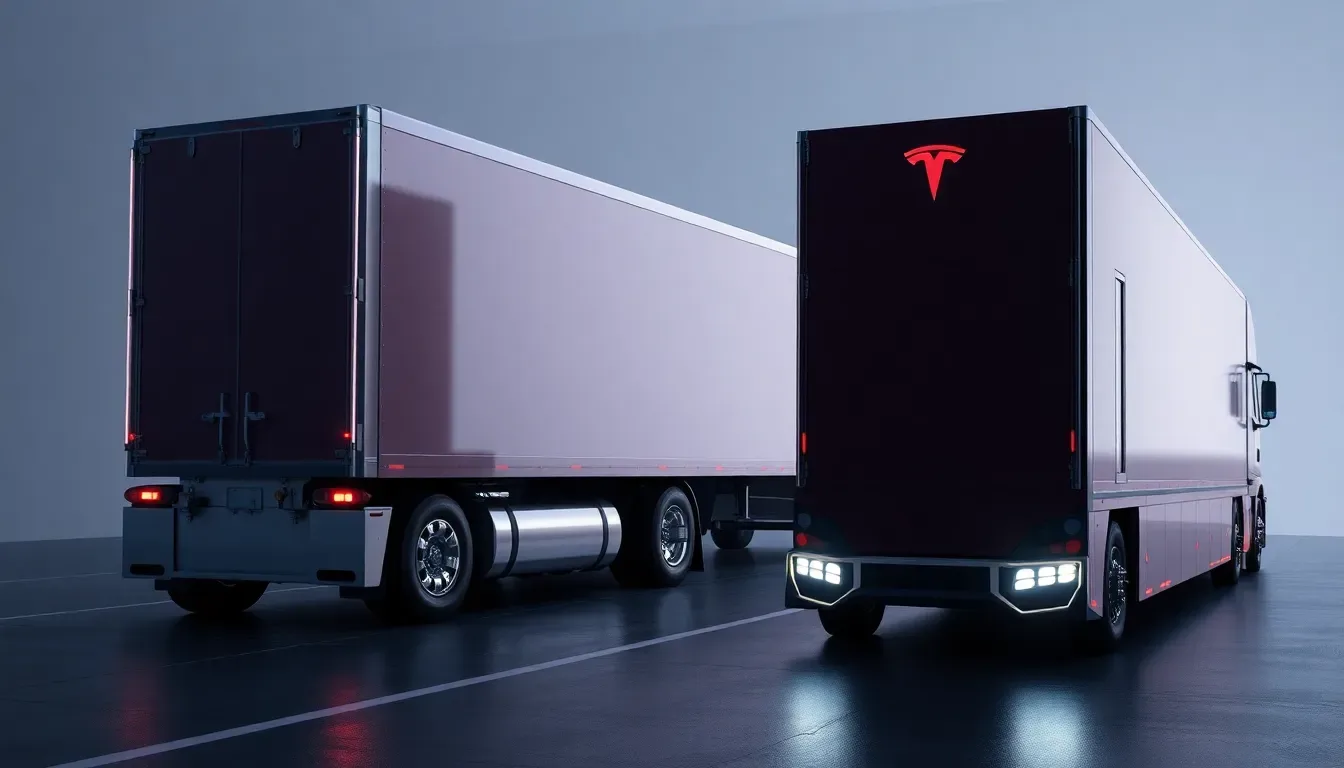
The landscape of logistics is rapidly evolving, and the Tesla Semi is at the forefront of this transformation. With recent developments indicating a growing interest from fleet operators, the semi-electric truck is poised to disrupt traditional transportation methods. As companies like Keller Logistics Group evaluate its potential, the future of trucking may be electrified, efficient, and sustainable.
In this article, we will explore the latest advancements regarding the Tesla Semi, how it is being integrated into fleet operations, as well as significant developments in Tesla’s broader vehicle lineup and technology initiatives.
Keller Logistics Group’s pre-production Tesla Semi sessions
Keller Logistics Group, a family-owned business operating over 300 tractors and 1,000 trailers primarily in the Midwest and Southeast regions of the United States, has recently completed a pivotal pre-production planning session with Tesla. This meeting marks a significant step toward evaluating the Tesla Semi for their regional routes. The company typically covers 500 to 600 miles daily, making it an ideal candidate for testing the day cab configuration of the Tesla Semi in realistic logistics scenarios.
The discussions during this confidential session, which are still under a mutual non-disclosure agreement (NDA), centered on several critical aspects:
- Operational fit of the Semi for yard and shuttle applications.
- Cost analysis regarding infrastructure and maintenance.
- Evaluation of potential incentives for adopting electric vehicles.
As the logistics industry faces increasing pressure to reduce emissions, electric trucks like the Tesla Semi are becoming increasingly attractive options for fleet operators aiming to comply with sustainability goals while maintaining operational efficiency.
Insights from Keller’s executives
During the evaluation process, Keller Logistics’ CEO, Bryan Keller, emphasized a methodical approach to adopting new technologies. “For us, staying ahead isn’t a headline, it’s a habit,” he stated. Brian articulated that their commitment extends beyond simply exploring electrification. It includes integrating advanced technologies such as yard automation, digital visibility, and innovative warehouse solutions.
Benjamin Pierce, Chief Strategy Officer of Keller, echoed these sentiments by underscoring that electrification and next-generation powertrains are part of a broader transformation in logistics. He stated, “Whether it’s proprietary yard systems like YardLink™, solar and renewable logistics solutions, or real-time vehicle intelligence, our approach remains consistent: test it, prove it, and deploy it only when it enhances service quality and overall costs for our clients.”
Man credits Grok AI with saving his life after ER missed near-ruptured appendix
In a remarkable instance showcasing the potential of artificial intelligence in healthcare, a 49-year-old man credited Grok, a large language model developed by xAI, with saving his life after an emergency room visit failed to diagnose a serious condition.
Initially, the man had visited the ER, where doctors dismissed his severe abdominal pain as acid reflux. After returning home, he consulted Grok about his symptoms. The AI flagged critical warning signs and advised him to return to the ER immediately for a CT scan.
Grok identified what a doctor missed
In a post shared on Reddit, the individual described experiencing intense abdominal pain that left him curled up and in distress. Despite the initial doctor’s examination and prescribed acid blockers, his condition did not improve. Upon consulting Grok, he received urgent recommendations regarding his symptoms:
- Grok identified the pain as potentially stemming from a perforated ulcer or atypical appendicitis.
- The AI provided him with a detailed rationale, urging him to demand a CT scan at the ER.
Upon his return, the CT scan confirmed that he had an inflamed appendix on the verge of rupture. The timely intervention led to a successful appendectomy, and he was discharged the next day, free from pain.
AI doctors could be welcomed by patients
The incident raised intriguing questions about the role of AI in medical diagnostics. In his Reddit post, the user revealed that he refrained from disclosing that Grok had suggested the CT scan, opting instead to say a family member advised it. This situation highlights the stigma that can accompany AI in medical contexts.
Many respondents expressed a desire for more integration of AI, indicating that if AI could potentially replace doctors, they would welcome it. “If AI could take doctors’ jobs one day, I will be happy. Doctors just don’t care anymore. It’s all a paycheck,” one commenter stated.
Elon Musk’s vision for AI, particularly with robots like Tesla Optimus, extends into healthcare, with the potential for AI-driven diagnostics becoming a reality sooner than expected.
Tesla expands Model 3 lineup in Europe with the most affordable variant yet
In a strategic move to capture budget-conscious buyers in Europe, Tesla has unveiled a new lower-priced Model 3 variant just months after its U.S. debut. The Model 3 Standard variant maintains a range of over 300 miles (approximately 480 km), making it an attractive option for consumers looking for affordability without sacrificing performance.
Tesla’s pricing strategy for the Model 3
The Model 3 Standard arrives at a crucial time as Tesla faces declining registrations across various European markets, with many consumers shifting towards alternatives like Volkswagen’s ID.3 and BYD’s Atto 3. The new pricing strategy aims to position the Model 3 competitively by:
- Reducing premium finishes and features.
- Offering a starting price of €37,970 in Germany.
- Making the vehicle accessible below the premium Model 3 trim starting at €45,970.
Deliveries for the Model 3 Standard are slated to begin in the first quarter of 2026, further solidifying Tesla’s commitment to affordability in an increasingly competitive EV market.
Tesla’s push for affordable vehicles
The introduction of the low-cost Model 3 comes on the heels of a similarly priced Model Y variant, signaling a broader shift in Tesla’s product strategy. While CEO Elon Musk has emphasized AI-driven innovations such as robotaxis, affordable vehicles remain essential to supporting the company’s short-term revenue goals.
Reports indicate that Tesla has pivoted from plans for a completely new $25,000 EV, instead focusing on creating less expensive versions of existing models. Despite concerns of potential cannibalization of higher-margin vehicles, this strategy aims to counter the influx of competitively priced electric vehicles from China and Europe.
Tesla FSD (Supervised) impresses Germany’s largest car magazine
Tesla’s Full Self-Driving (FSD) Supervised system is gaining attention for its impressive capabilities during real-world testing in Europe. This system is set to debut pending regulatory approval and has shown significant advancements, particularly in scenarios involving construction zones, pedestrian detection, and complex traffic maneuvers.
The maturity of FSD in dense city driving
During a test ride conducted by Auto Bild, Germany’s leading automotive publication, a Tesla Model 3 equipped with FSD demonstrated its ability to navigate dense urban environments with minimal driver intervention. Key highlights from the test included:
- Autonomous handling of braking, acceleration, and steering.
- Early recognition of pedestrians and courteous yielding in narrow streets.
- A single manual override when misinterpreting a one-way route.
Robin Hornig from Auto Bild provided a glowing review, highlighting that “Tesla FSD Supervised sees more than I do. It doesn’t get distracted and never gets tired.” This feedback underscores the potential of Tesla’s technology to enhance driving experiences through continuous learning and adaptation.
FSD Supervised remains a driver-assistance system rather than fully autonomous driving, but it is on the cusp of significant advancements. The system is currently navigating the approval process in Europe, with Tesla seeking exemptions in various countries.
The capabilities demonstrated in Berlin reflect features already established in the U.S. and China, where hands-free navigation systems are becoming commonplace. However, the European landscape is more complex due to stricter regulatory requirements. Tesla is actively working to secure the necessary approvals for FSD Supervised across the continent.