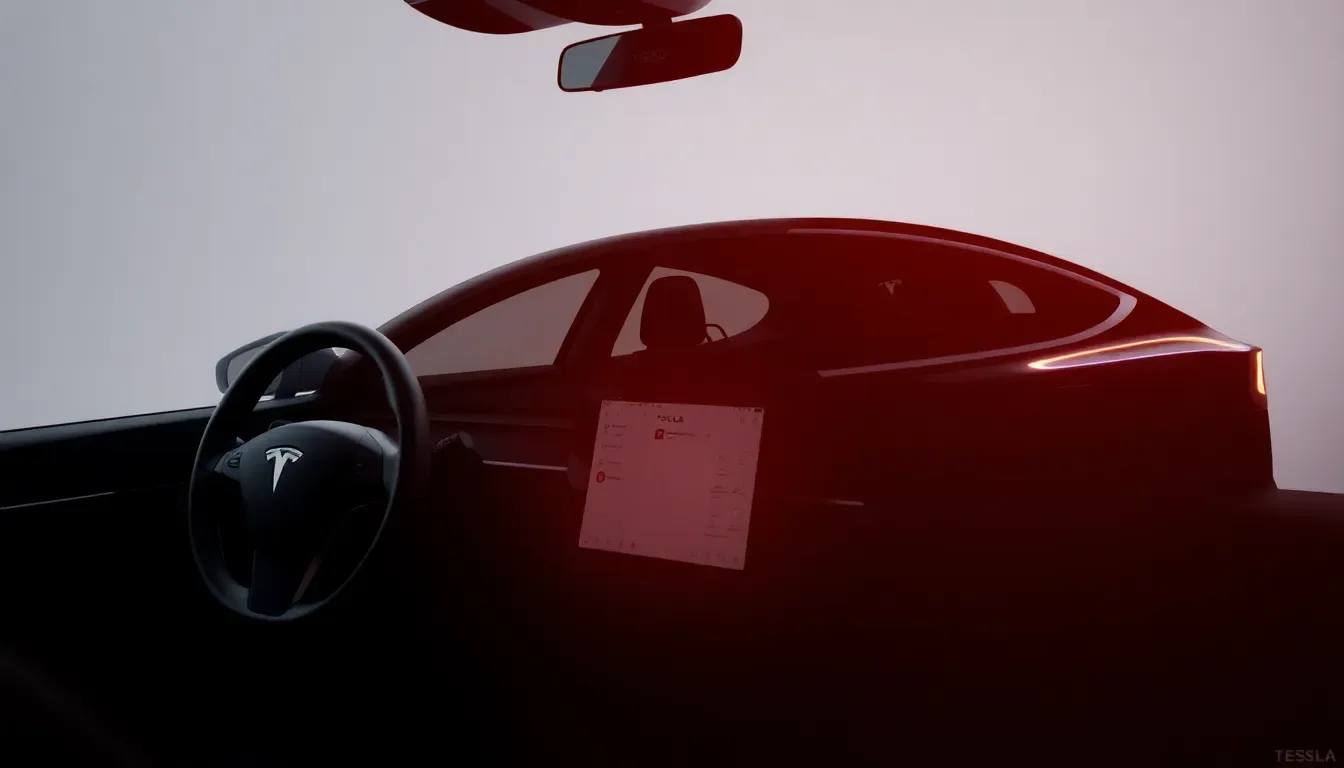
The race for dominance in the electric vehicle (EV) market is heating up, especially in Europe, where Tesla is making significant strides with its Full Self-Driving (FSD) technology. By extending its supervised ride-along program, Tesla is not just showcasing its innovative technology but also gathering invaluable feedback from potential users. This article delves into the implications of this extension, the excitement surrounding Tesla’s FSD in Europe, and a broader look at how AI technologies are reshaping various industries, including automotive and healthcare.
Extended FSD demonstrations across Europe
Tesla’s commitment to expanding its Full Self-Driving (FSD) capabilities in Europe is evident with the recent announcement of extending its demo ride-along program by an additional three months, now running until the end of March 2026. The program has been rolled out in key European markets including Germany, France, and Italy, providing an opportunity for the public to experience FSD firsthand.
Ivan Komušanac, Tesla’s EU Policy and Business Development Manager, highlighted the importance of this initiative on LinkedIn, emphasizing the value of public feedback. Participants in the ride-along program are encouraged to share their experiences, which can significantly inform future iterations of Tesla’s technology. For those who missed out on booking slots in December, Komušanac playfully suggested more opportunities would be available as “Christmas presents.”
- Locations include Stuttgart-Weinstadt, Frankfurt, and Düsseldorf.
- Participants are encouraged to document and share their ride experiences.
- Demand has led to the extension of the program, reflecting growing interest in FSD technology.
The enthusiasm from the public is palpable, with social media buzzing about the program. Some users have reported full bookings in cities like Cologne and Düsseldorf, prompting calls for expansion into more territories, including Switzerland and Finland.
Building momentum for European approval of FSD
The excitement surrounding Tesla’s ride-along program is not just about experiencing FSD; it also plays a crucial role in paving the way for regulatory approval in Europe. As Tesla continues to demonstrate the capabilities of its FSD technology, it is laying the groundwork for acceptance by European regulatory bodies.
Recent demonstrations of FSD in real-world scenarios have garnered positive attention from media in both France and Germany. These demonstrations are crucial, as they showcase the system’s ability to navigate complex urban environments, a critical aspect for gaining regulatory approval.
- Demonstrations included interactions with pedestrians and construction zones.
- Positive media coverage enhances public perception and acceptance.
- Calls for expansion indicate strong demand for Tesla’s FSD technology.
As Tesla continues its push for FSD in Europe, it faces the challenge of navigating a stringent regulatory environment. However, the feedback gathered from public demonstrations can help refine the technology and address any concerns regulators may have.
AI technologies transforming healthcare
While Tesla makes waves in the automotive sector, the influence of AI extends into healthcare, demonstrating its potential to save lives. A recent case highlighted the role of AI in diagnosing a near-ruptured appendix that was initially overlooked by medical professionals.
A 49-year-old man described how the AI model, Grok, prompted him to return to the emergency room after an initial visit where his symptoms were dismissed as mere acid reflux. The AI flagged critical symptoms and advised him to insist on a CT scan, which ultimately revealed the impending rupture of his appendix.
- The patient experienced severe abdominal pain but had no fever or visible symptoms.
- Initial ER visit resulted in a prescription for acid blockers.
- Grok’s intervention led to a life-saving diagnosis and timely surgery.
This incident underscores the growing trust and reliance on AI tools in medical diagnosis, emphasizing how these technologies can serve as critical decision-support systems for healthcare professionals. The integration of AI in healthcare settings has the potential to enhance diagnostic accuracy and patient outcomes.
AI doctors could very well be embraced
The acceptance of AI in healthcare is still evolving, but stories like that of the man and Grok highlight a broader shift towards integrating technology into medical practice. Interestingly, the patient refrained from mentioning Grok’s recommendation to the doctors, instead attributing his insistence on the CT scan to advice from a nurse in his family. This reveals a potential barrier to the acceptance of AI recommendations in clinical settings.
As AI continues to demonstrate its reliability and accuracy, public perception may shift, leading to a greater acceptance of AI-assisted diagnoses and treatments. Users on platforms like Reddit have expressed optimism about the role of AI in healthcare, with some stating they believe AI could take over tasks traditionally performed by doctors.
- AI can enhance diagnostic capabilities and provide real-time insights.
- AI tools can support doctors by reducing diagnostic errors.
- Public acceptance is vital for the integration of AI in healthcare.
As the healthcare landscape evolves, combining human expertise with AI technology could lead to improved patient care and outcomes. Elon Musk’s vision for AI, including its application in various fields, suggests that the future of healthcare may very well intertwine with advanced AI capabilities.
Tesla’s strategic expansion in Europe
In addition to advancements in FSD technology, Tesla has also made headlines by introducing a new, lower-priced variant of the Model 3 in Europe. This new model aims to attract budget-conscious consumers while still maintaining impressive performance metrics, such as a range of over 300 miles (approximately 480 km).
The introduction of the Model 3 Standard comes at a time when Tesla faces increasing competition in the European market from brands like Volkswagen and BYD, which have been gaining traction with aggressive pricing strategies. Tesla’s approach involves simplifying its product offerings to remain competitive.
- The Model 3 Standard is priced at €37,970 in Germany, significantly lower than the premium trims.
- Deliveries are expected to begin in early 2026.
- This move signals Tesla’s commitment to a broader market strategy amidst fierce competition.
By focusing on affordability, Tesla aims to capture a larger share of the European EV market, which has increasingly favored more economical options. This strategy not only addresses current market demands but also positions Tesla for sustainable growth in the future.
Tesla FSD’s advancements in real-world testing
As Tesla continues to refine its FSD technology, recent trials have revealed significant advancements. The FSD Supervised feature has shown remarkable capabilities during real-world testing, effectively managing dense traffic conditions, recognizing construction zones, and responding to pedestrians.
During a recent evaluation by Germany’s largest automotive publication, Auto Bild, the Model 3 equipped with FSD successfully navigated complex urban environments with minimal human intervention. This success serves as a testament to the effectiveness of Tesla’s technology.
- FSD demonstrated the ability to autonomously handle braking, acceleration, and steering.
- Only one manual override was necessary during the testing phase.
- Journalists praised the system for its superior situational awareness compared to human drivers.
These positive evaluations not only enhance Tesla’s credibility but also provide a glimpse into the potential future of autonomous driving in urban settings. As Tesla navigates the regulatory landscape in Europe, the feedback from these tests will be crucial in shaping its approach to obtaining necessary approvals.
The future of Tesla FSD in Europe
While the FSD Supervised system is still classified as a driver-assistance feature, it marks a significant advancement from earlier versions. With a suite of 360-degree cameras and robust computational power, Tesla is positioning itself as a leader in the autonomous driving sector.
As the company seeks regulatory approval across various European countries, its recent demonstrations in Berlin are indicative of the progress being made. The technology has already been active in markets like the U.S. and China, and with plans for a launch in the Netherlands as early as February 2026, the anticipation for FSD in Europe is building.
- Regulatory hurdles remain, but Tesla is actively working to address them.
- Demonstrations have shown that Tesla’s technology can compete with existing systems in other regions.
- Continued advancements in AI and machine learning will shape the future of autonomous driving.
The race to revolutionize the automotive industry and healthcare through AI and advanced technologies is just beginning. Tesla’s efforts in Europe, coupled with the impactful stories emerging from AI applications in healthcare, suggest a future where technology plays an integral role in enhancing our lives. As these innovations develop, they will undoubtedly reshape both industries in unprecedented ways.