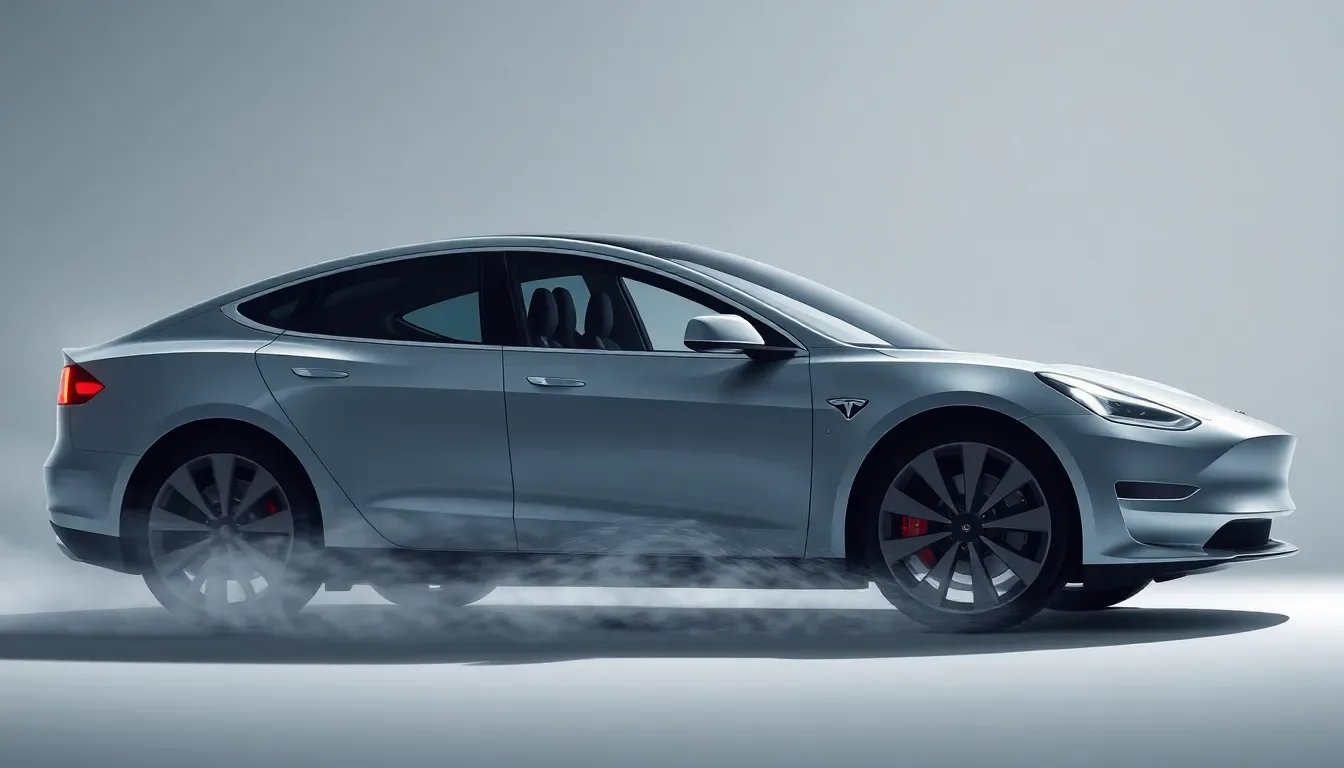
As the automotive industry rapidly shifts toward automation and artificial intelligence, Tesla continues to lead the charge with its Full Self-Driving (FSD) technology. Recently, French journalist Julien Cadot had the opportunity to experience Tesla’s FSD (Supervised) in a test drive, and his reaction was nothing short of enthusiastic. This article delves into his impressions, the technology’s advancements, and its implications for the future of driving.
Cadot’s positive feedback is particularly noteworthy, given the extensive anticipation surrounding Tesla’s FSD capabilities. Having followed the evolution of Autopilot since its early days, his insights offer a critical perspective on Tesla’s latest innovations in autonomous driving technology.
Julien Cadot’s FSD test ride in France
Cadot took to social media to announce his test drive, expressing excitement about revisiting the sensations from his initial encounters with Tesla’s Autopilot back in 2016. In his posts, he described the FSD experience as “mind-blowing,” highlighting both the safety measures and the “human-like” decision-making processes of the system.
During the test drive, Cadot noted several impressive maneuvers, including:
- Safe overtaking of a delivery truck with mere inches to spare.
- Maintaining a safe distance of 1.5 meters when passing cyclists.
- Fluid navigation through urban traffic, particularly in the bustling streets of Paris.
These observations underscore Tesla’s commitment to enhancing safety and efficiency through advanced AI. Cadot’s experience suggests that FSD is not only about automation but also about replicating human-like judgment in driving scenarios.
FSD’s ‘human’ advantage over traditional Autopilot
When Cadot compared FSD to the standard Autopilot, he stated: “It’s incomparable, it’s not the same language.” This distinction is critical, as it highlights the advancements made in FSD’s ability to handle complex driving situations that would typically require a human driver’s intuition and experience.
The FSD system demonstrated remarkable capabilities, such as:
- Bypassing obstacles, like parked delivery trucks, by making safe judgments about road conditions.
- Adapting to the chaotic nature of urban driving, which often includes pedestrians, cyclists, and construction zones.
- Executing maneuvers that prioritize both safety and flow in traffic conditions.
These features suggest that FSD is designed to minimize the need for driver intervention while enhancing overall safety and efficiency on the road. Tesla’s push for regulatory approval to expand FSD testing across Europe indicates their confidence in the system’s capabilities.
The expansion of Tesla’s FSD capabilities in Europe
Tesla is making significant strides in launching FSD across various European nations. Reports indicate that Tesla has received approval to operate numerous FSD test vehicles in Spain, with plans to expand testing in Italy, Germany, and France. This expansion is crucial as it aligns with the increasing demand for autonomous driving technologies in Europe.
Recent job postings by Tesla also hint at the possibility of initiating FSD tests in Austria, further indicating the company’s ambitious plans for European market penetration. The ability to operate FSD on national routes in Spain demonstrates a significant step forward in regulatory acceptance of autonomous vehicle technology.
Real-world advancements: FSD’s performance in test conditions
In a recent demonstration ride in Berlin, Tesla’s FSD Supervised system showcased its refined capabilities by successfully navigating complex urban environments. This included:
- Identifying construction zones and adjusting driving behavior accordingly.
- Consistently yielding to pedestrians and adapting to narrow streets.
- Executing lane changes and managing speed effectively in city traffic.
Such performance is indicative of Tesla’s ongoing commitment to refining its driver-assistance technology. While the system still requires driver oversight, its ability to handle intricate driving conditions autonomously is a testament to the advancements made in AI and machine learning.
The implications of Tesla’s FSD technology on the future of driving
The emergence of FSD technology raises important questions about the future of transportation and the role of AI in personal mobility. Analysts and industry experts are beginning to speculate on how AI-driven technologies could reshape the driving experience, including:
- Reducing traffic accidents through enhanced safety features.
- Improving traffic flow and reducing congestion in urban areas.
- Changing the way we think about car ownership and personal transportation.
Moreover, as Tesla continues to refine its FSD technology, the potential for integration with other aspects of daily life—such as ride-sharing and public transportation systems—becomes increasingly realistic. This evolution could pave the way for a future where autonomous vehicles play a crucial role in reducing our carbon footprint and enhancing urban living.
Challenges ahead for Tesla’s FSD technology
Despite the promising advancements, several challenges remain in the rollout of FSD technology. Regulatory hurdles, public perception, and technical limitations must be addressed to ensure widespread adoption. Some of the key challenges include:
- Obtaining necessary approvals from regulatory bodies in various regions.
- Building public trust in autonomous systems to ensure safety and reliability.
- Continually updating the technology to respond to real-world driving conditions and legal requirements.
As Tesla navigates these challenges, its ability to adapt and respond to the evolving landscape of autonomous driving technology will be critical to its success.
The broader impact of AI in healthcare and other sectors
While Tesla’s FSD technology is making waves in the automotive world, the potential applications of AI extend far beyond driving. Recent stories highlight how AI systems, like Grok, are beginning to impact healthcare. In one notable case, a man credited Grok with saving his life by identifying a critical health issue that was initially dismissed by medical professionals.
This incident sheds light on the growing role of AI in diagnostics and healthcare management, suggesting that AI could soon complement medical professionals rather than replace them. As AI technology develops, we may see:
- More accurate diagnostic tools for identifying conditions.
- Enhanced patient monitoring systems that can alert healthcare providers in real time.
- AI-driven health advisories that empower patients to seek timely medical attention.
The intersection of AI and healthcare could lead to a more efficient and responsive medical system, improving outcomes and potentially saving lives.