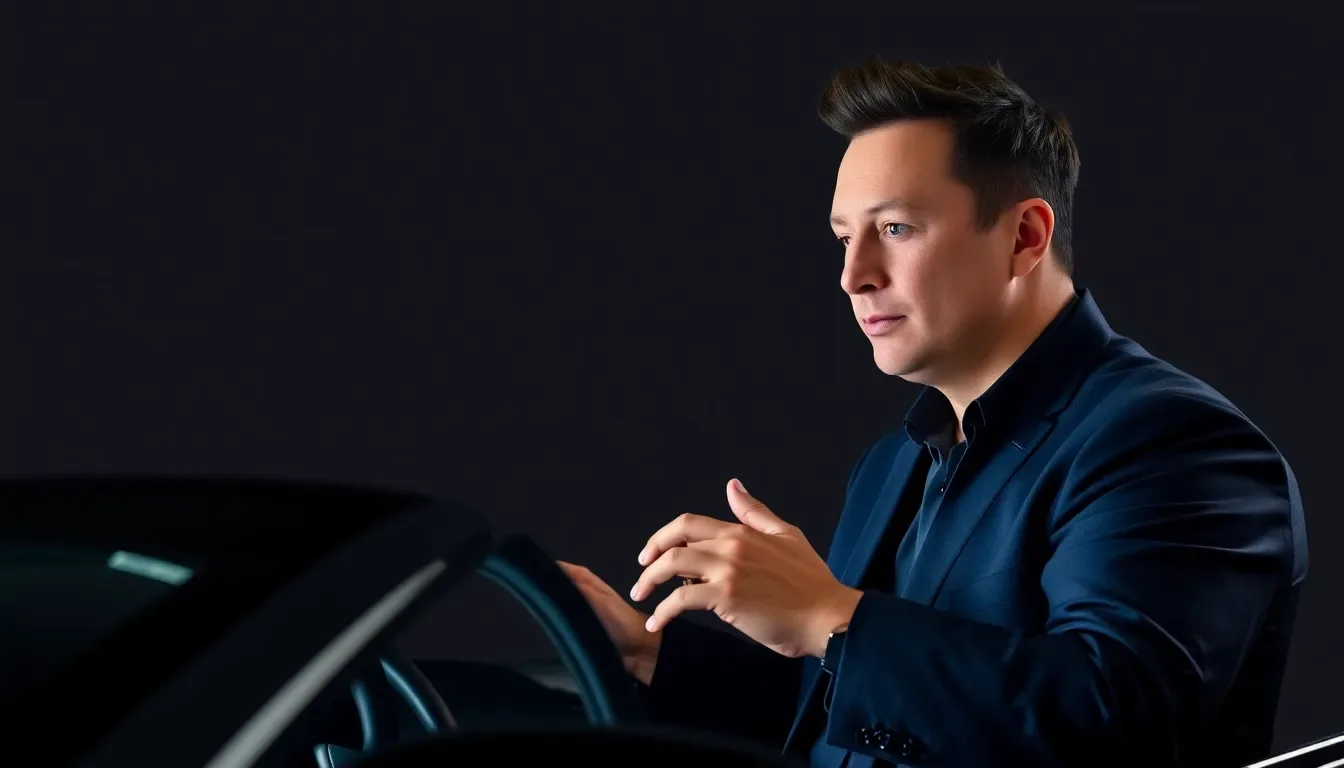
As the automotive industry continues to evolve with advancements in technology, Tesla remains at the forefront of innovation. Recently, CEO Elon Musk has made headlines by discussing the implications of using the company’s Full Self-Driving (FSD) technology while engaging in activities such as texting. This raises important questions about safety, legality, and the implications of autonomous driving technology on everyday activities.
Tesla’s Robotaxi app: A New Era of Autonomous Driving
Tesla is in the process of developing a Robotaxi app that is designed to integrate seamlessly with its FSD technology. This app aims to allow Tesla owners to transform their vehicles into autonomous ride-hailing services when not in use. As the company moves closer to realizing its vision, the implications for both consumers and the transportation industry are significant.
The Robotaxi concept is part of Musk’s broader vision for a future where self-driving cars are a common sight on roads. The app will facilitate a more efficient use of vehicles, potentially reducing the number of cars on the road and contributing to lower emissions. This could lead to a significant shift in urban mobility, enabling users to summon a ride without the need for ownership.
Concerns Over Texting and Driving
The recent discussions surrounding Musk’s announcement about FSD v14.2.1 allowing for texting while driving have raised eyebrows. While the feature aims to enhance convenience, it is crucial to consider the potential risks involved.
Despite Tesla’s advancements in autonomous driving technology, the act of texting while driving is still widely regarded as dangerous. Many jurisdictions have laws against using mobile devices while operating a vehicle, regardless of whether the vehicle is in self-driving mode. Here are some key points to consider:
- Legal Implications: Many regions have strict laws prohibiting texting and driving, regardless of vehicle capabilities.
- Safety Risks: Distracted driving remains one of the leading causes of accidents, and even autonomous systems are not foolproof.
- Public Perception: Incidents involving autonomous vehicles can lead to negative media portrayals that may affect consumer trust.
The Testing Process: Understanding the Context
In an effort to evaluate the practicality of texting while using FSD, a series of tests were conducted. The goal was to assess how the system responds in different traffic conditions. The testing process involved evaluating three distinct levels of congestion: low, medium, and high.
During the test, the objectives were clear:
- Determine how the vehicle’s monitoring system reacts when the driver engages with their phone.
- Identify whether the context of surrounding traffic influences the system’s alerts.
- Maintain safety by limiting phone use and being aware of the environment.
Results of the Testing
Low Congestion Area
In a low traffic area, the driver looked at their phone for a maximum of five seconds. During this time, there were no nudges or alerts from the FSD system, indicating that the vehicle was functioning as designed in a controlled environment.
Medium Congestion Area
Shifting to a medium traffic area, the driver faced more distractions, such as traffic lights and other vehicles. Despite this increased complexity, the FSD system again failed to issue any alerts, raising questions about its responsiveness in real-world scenarios.
High Congestion Area
Testing in a high congestion area, such as a highway, finally triggered the monitoring system to alert the driver to return their attention to the road. This highlights the importance of understanding the varying responses of the FSD system based on traffic conditions.
Legalities and Responsibilities of Drivers
Even with advancements in technology, the responsibility for safe driving remains with the operator. The implications of allowing texting while driving, even under certain conditions, can lead to legal consequences and moral dilemmas.
For example, in many places, laws like the Paul Miller Law in Pennsylvania prohibit the use of mobile devices while driving, emphasizing the need for drivers to remain attentive at all times. The potential liability in case of an accident complicates matters further, as drivers may face legal repercussions regardless of the vehicle’s capabilities.
The Future of Tesla’s FSD and Driver Monitoring
Looking ahead, the evolution of Tesla’s FSD technology and its implications on human behavior will be critical for both the company and society. As the landscape of autonomous driving evolves, so too will the expectations and responsibilities of drivers.
The integration of robust driver monitoring systems is essential to ensure that operators remain engaged, even when the vehicle is in control. Future updates to FSD are likely to emphasize the importance of driver attentiveness, potentially mitigating risks associated with distractions.
Conclusion on the Implications of FSD Technology
While Tesla’s FSD technology represents a significant leap forward in automotive innovation, it also brings forth a plethora of challenges and responsibilities. As the company continues to refine its technology, the dialogue surrounding safety and legality must remain at the forefront of discussions regarding autonomous vehicles.
Ultimately, the responsibility lies not only with the technology developers but also with the drivers who must navigate the complexities of modern driving in an era of rapid technological advancement.