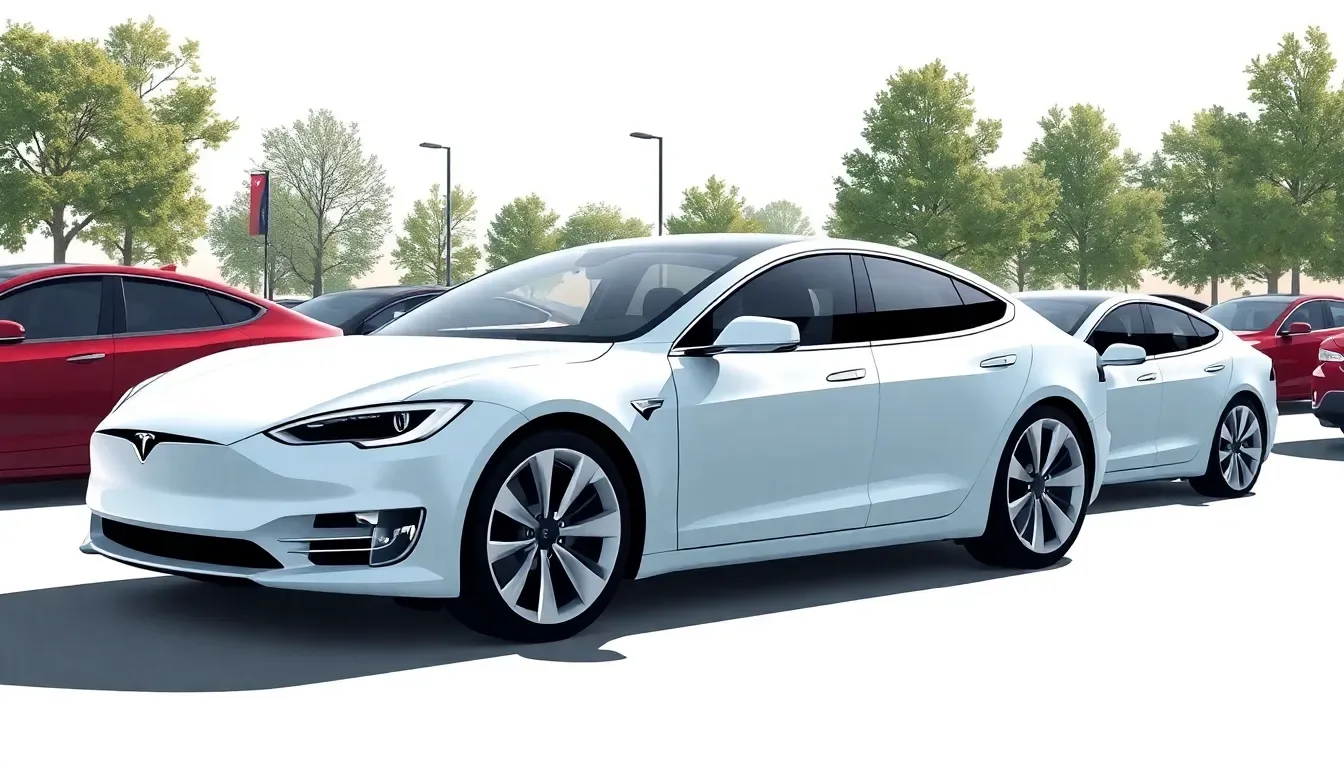
As technology advances, the intersection of convenience and innovation becomes increasingly evident. Tesla, a pioneer in the electric vehicle market, continues to introduce features that not only enhance the driving experience but also address everyday challenges faced by drivers. One such feature is the newly implemented Vehicle Locator, designed to assist users in crowded parking environments. This article delves into this feature’s significance, the implications for Tesla users, and other exciting updates from the company.
Tesla introduces vehicle locator feature for enhanced parking experience
Tesla has recently rolled out an innovative Vehicle Locator feature, which is especially beneficial for navigating bustling parking lots and confusing garages. This functionality is part of the latest update to the Tesla App with App Update v4.51.5.
This update sets the stage for Tesla’s anticipated Holiday Update, which promises various enhancements for Tesla owners. The Vehicle Locator utilizes a directional arrow displayed on the app’s home screen to guide users toward their parked vehicle, drawing inspiration from similar features found in devices like Apple’s Find My.
By providing real-time navigation to the vehicle, this feature aims to alleviate the frustration often experienced when searching for a car in large venues such as shopping malls or stadiums. The arrow not only points in the right direction but also indicates the distance to the vehicle, making it a practical tool for drivers.
The convenience of locating your car in busy environments
Finding your vehicle after an event can be a daunting task. The introduction of the Vehicle Locator feature is particularly useful in high-traffic situations:
- Provides visual guidance to the vehicle’s location.
- Indicates the distance, helping users estimate walking time.
- Helps avoid aimless wandering in expansive parking areas.
This feature is especially advantageous for those who frequent crowded venues, as many users have reported difficulties in retracing their steps to find their cars. The app now effectively eliminates this concern, allowing users to focus on their activities rather than the hunt for their vehicle.
Tesla’s previous app versions only showed the address of the parked vehicle, which was helpful but not always practical in a large parking structure. The new Vehicle Locator elevates this experience, ensuring that users have a seamless and intuitive interface when it comes to locating their cars.
Additional app features introduced in the latest update
Besides the Vehicle Locator, the recent app update includes several other noteworthy enhancements, such as:
- Photobooth features: Allowing users to take fun photos with their vehicles.
- Dog Mode Live Activity: Provides real-time updates on pets left in the car.
- Custom Wraps and Tints: Enhancements for personalizing the vehicle’s aesthetic.
- Dashcam Clip details: Improved access to recorded footage.
These features contribute to a more comprehensive user experience, demonstrating Tesla’s commitment to innovation and customer satisfaction.
Tesla’s competitive edge in the self-driving market
Elon Musk, Tesla’s CEO, has been vocal about the company’s position in the self-driving market, particularly in comparison to competitors like Waymo. In a recent statement, he claimed that Waymo “never really had a chance” against Tesla’s autonomous driving technology.
This rivalry is fueled by the differing approaches each company takes towards self-driving technology:
- Tesla: Primarily relies on a vision-only approach that uses cameras and AI to navigate.
- Waymo: Utilizes multiple sensors, including LiDAR, which Musk has criticized as unnecessary.
As both companies expand their autonomous ride-hailing services, the competition intensifies. While Waymo targets larger urban markets, Tesla’s strategy is to integrate self-driving technology across its entire vehicle lineup globally. This ambition could potentially position Tesla to leverage a much larger fleet for its Robotaxi services in the future.
The role of partnerships in Tesla’s innovation
Tesla’s strategic collaborations play a crucial role in its innovation trajectory. For instance, recent reports highlight Tesla’s partnership with Samsung to produce the AI5 chip, which will enhance self-driving capabilities. This collaboration is crucial as Tesla aims to push the boundaries of its autonomous driving technology further.
Samsung’s hiring of experienced engineers for this project indicates a significant commitment to ensuring smooth production and resolving technical challenges. The AI5 chip is expected to be a game-changer:
- Offering approximately 40 times the speed of the previous generation.
- Providing eight times more computational power.
- Enhancing memory capacity significantly.
This chip will not only support Tesla’s self-driving program but will also contribute to other AI-driven features across various projects, solidifying Tesla’s position as a leader in electric vehicle technology.
Future developments in Tesla’s Supercharging network
In another significant development, Tesla has announced an exciting partnership with BOXABL to design and construct modular buildings at Supercharging stations. This initiative aims to enhance the charging experience for Tesla users, particularly in rural areas.
These modular structures, referred to as Micromenities, will provide essential amenities such as snacks, restrooms, and even entertainment options, making charging stops more enjoyable. The concept is currently being piloted in various locations, and if successful, could lead to more widespread implementation:
- Improving the overall charging experience.
- Encouraging longer road trips with better amenities.
- Expanding Tesla’s Supercharging footprint across the U.S.
This innovative approach to Supercharging stations aligns with Tesla’s ongoing efforts to enhance customer satisfaction and accessibility, ensuring that electric vehicle ownership is as convenient as possible.