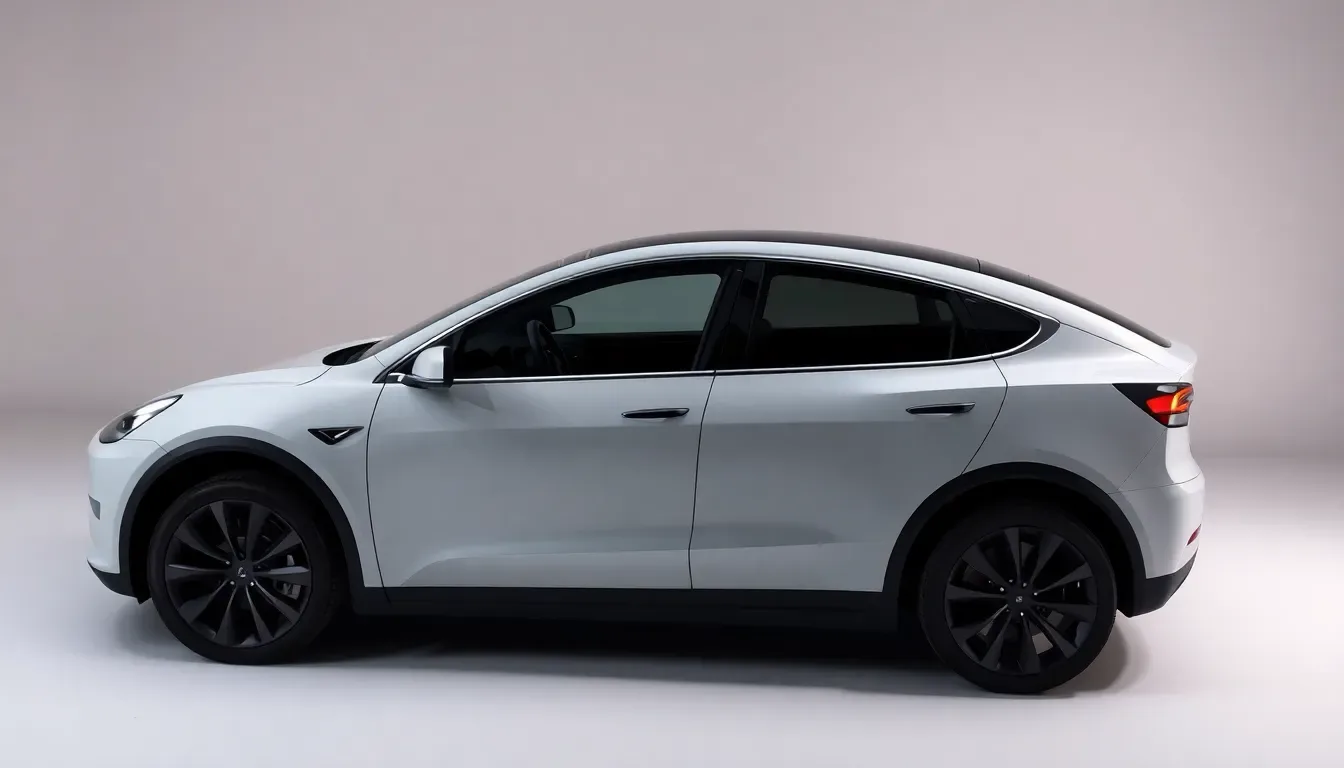
As the electric vehicle market continues to evolve, manufacturers are racing to innovate and improve their technologies. Two prominent players, Rivian and Tesla, are making headlines with their new offerings, from self-driving capabilities to insurance programs. These developments not only showcase the growing competition in the EV space but also highlight the increasing integration of technology into everyday driving experiences. Let’s delve into the latest updates from Rivian and Tesla.
Rivian introduces self-driving technology and subscription plans to rival Tesla
Rivian, a notable contender in the electric vehicle sector, recently unveiled its plans for a new self-driving chip and subscription service at its AI and Autonomy Day event. This initiative aims to enhance its competitive edge against established players like Tesla.
The company announced an Autonomy+ subscription service priced at $49.99 per month, along with a one-time purchase option available for $2,500. Both options provide access to Rivian’s self-driving suite, which is designed to evolve and improve over time as more data is collected from actual driving experiences.
Rivian’s CEO, RJ Scaringe, expressed enthusiasm for the advancements in autonomy and artificial intelligence. He stated, “Our updated hardware platform will enable us to achieve dramatic progress in self-driving, ultimately delivering on our goal of Level 4 autonomy,” highlighting the potential for vehicles that can operate independently in various conditions.
Initially, Rivian plans to offer its self-driving technology for personal vehicles, with aspirations to eventually expand into the ride-sharing market. Scaringe emphasized the importance of focusing on personally owned vehicles, as they account for the majority of miles driven in the United States.
The hardware behind Rivian’s self-driving technology
Unlike Tesla’s vision-only approach, Rivian is adopting a multi-sensor strategy that incorporates:
- 11 cameras
- 5 radar sensors
- 1 forward-facing LiDAR
This robust sensor suite is complemented by the in-house developed RAP1 chip, expected to be manufactured by TSMC. The RAP1 chip will be approximately 50 times more powerful than the current chip in Rivian vehicles, performing over 800 trillion calculations per second.
This new chip will drive the Autonomy Compute Module 3 (ACM3), which boasts impressive specifications, including:
- 1600 sparse INT8 TOPS (Trillion Operations Per Second)
- Processing power equivalent to 5 billion pixels per second
- RivLink technology for low-latency interconnect, enhancing processing capabilities
- AI compiler and platform software developed in-house
Furthermore, Rivian plans to implement LiDAR in its upcoming R2 vehicles to achieve SAE Level 4 automated driving. This level allows occupants to sit back and relax without needing to take control of the vehicle.
Additional advancements and features
Rivian is also preparing to roll out enhancements to its second-generation R1 vehicles, including the highly anticipated Universal Hands-Free (UHF) feature. This will allow hands-free driving across more than 3.5 million miles of roadway in the U.S. and Canada, responding to customer demand for more hands-free capabilities.
As Rivian positions itself alongside industry giants like Tesla, Waymo, and Zoox, the competition for autonomy is heating up. The advancements in technology and infrastructure will be crucial in determining which company can dominate the evolving electric vehicle market.
Tesla partners with Lemonade to offer innovative insurance solutions
Tesla has entered a partnership with Lemonade, a tech-driven insurance company, to provide a unique insurance program tailored to Tesla owners. This collaboration has garnered attention due to its potential to reshape how drivers insure their vehicles, particularly those equipped with Full Self-Driving (FSD) technology.
Recently, Shai Wininger, President and Co-founder of Lemonade, announced that the company would explore offering insurance for FSD miles at an almost negligible cost. This innovative approach could revolutionize the insurance model for electric vehicles, especially as self-driving technology becomes more mainstream.
Currently, Tesla owners in California, Oregon, and Arizona can benefit from this new insurance offering. Some advantages highlighted by Lemonade include:
- Direct connection without the need for additional telematics devices
- Enhanced customer service experience
- More intelligent pricing models based on AI analysis
Lemonade’s approach to insurance involves unique, fee-based pricing models that utilize AI to assess risk and determine premiums. Instead of retaining unclaimed premiums, Lemonade donates any leftover funds to charities chosen by policyholders, aligning with a socially conscious business model.
With this partnership, Tesla aims to provide its drivers with stable and fair insurance rates while also encouraging the use of Full Self-Driving technology for everyday travel.
Safety and data collection benefits
As Tesla continues to enhance its Full Self-Driving capabilities, data suggests that FSD vehicles have a nine times lower accident rate compared to the national average. Recent statistics indicate that Tesla vehicles equipped with FSD experience an accident approximately every 6.36 million miles, a stark contrast to the national average of one accident every 702,000 miles.
Through this partnership with Lemonade, Tesla not only improves the cost-effectiveness of FSD for its owners but also bolsters its data collection efforts, which are vital for continuous improvements in autonomous driving technology.
Upcoming Tesla FSD model promises significant advancements
In an exciting announcement, Tesla CEO Elon Musk revealed that a new Full Self-Driving model is set to launch in early 2026. Musk described this upcoming model as “the last big piece of the puzzle,” indicating that it could bring substantial improvements in FSD capabilities.
During a recent Q&A session, Musk shared that this new model will be “an order of magnitude larger” than previous iterations, incorporating advanced reasoning and reinforcement learning techniques. He emphasized the need for Tesla to scale its AI chip production, potentially requiring the construction of a dedicated chip fabrication facility to meet future demands.
He stated, “To get to serious scale, Tesla will probably need to build a giant chip fab.” This highlights the company’s commitment to maintaining a technological edge in the highly competitive EV and autonomous driving markets.
With each iteration of the Full Self-Driving software, Tesla is moving closer to achieving a fully autonomous driving experience. Musk has indicated that recent updates have made significant strides in reducing the need for driver monitoring, allowing for a more relaxed driving experience while using FSD.
As Tesla continues to develop its self-driving technology, the excitement around its forthcoming model builds anticipation for what is to come in the realm of autonomous driving. With a focus on safety, efficiency, and user experience, both Rivian and Tesla are setting the stage for a transformative future in transportation.