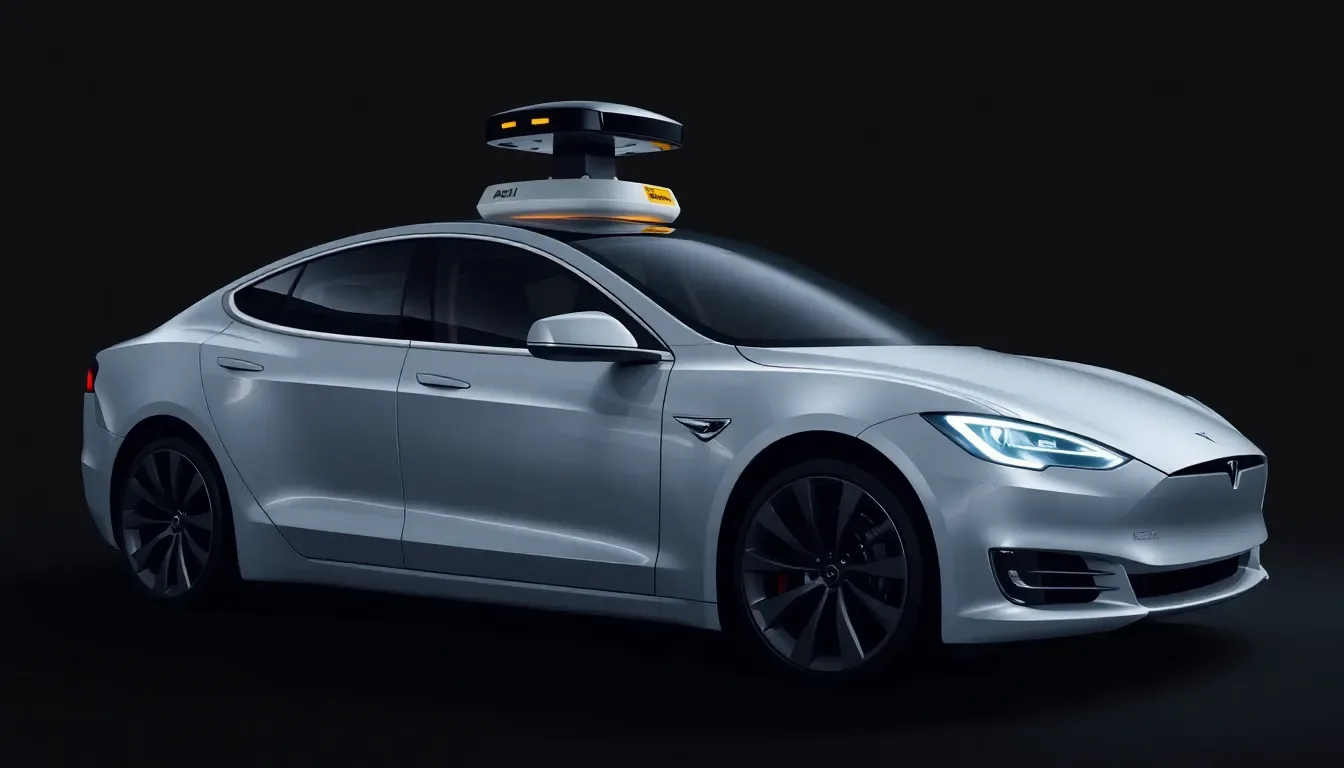
In the fast-paced world of electric vehicles and autonomous driving, significant advancements are continuously being unveiled by industry leaders. This article delves into Rivian’s bold plans to compete with Tesla through innovative technology, Tesla’s new insurance partnership with Lemonade, and the current sales strategies aimed at maintaining market momentum. Each of these developments plays a crucial role in shaping the future of transportation.
Rivian reveals autonomous driving technology and subscription plans
At its recent AI and Autonomy Day held in Palo Alto, California, Rivian made waves by introducing its self-driving chip and ambitious autonomy plans. The company aims to position itself as a formidable competitor in the electric vehicle market, particularly against giants like Tesla.
Rivian announced the launch of its Autonomy+ subscription service, allowing customers access to its self-driving suite at a monthly fee of $49.99. Alternatively, there will be a one-time purchase option priced at $2,500. This dual approach provides flexibility for potential users, catering to different preferences and financial situations.
CEO RJ Scaringe expressed optimism about Rivian’s capabilities, stating, “I couldn’t be more excited for the work our teams are driving in autonomy and AI.” He emphasized that the company’s technology would improve as more data is collected from real-world driving, similar to Tesla’s approach of utilizing deep learning through its neural networks.
Hardware and Software Innovations
Rivian’s strategy differs from Tesla’s vision-only approach. Instead, it plans to employ a multifaceted sensor array consisting of 11 cameras, five radar sensors, and a single forward-facing LiDAR unit. This combination aims to enhance the vehicle’s perception of its environment, paving the way for advanced autonomy.
The in-house developed chip, dubbed RAP1, is a key component of this strategy. Manufacturing will be handled by TSMC, a well-known supplier in the semiconductor industry. RAP1 is projected to be around 50 times more powerful than the current chips in Rivian vehicles, capable of executing over 800 trillion calculations per second.
The Autonomy Compute Module 3 (ACM3) will leverage this chip, featuring specifications such as:
- 1600 sparse INT8 TOPS (Trillion Operations Per Second).
- Processing power of 5 billion pixels per second.
- RAP1’s RivLink technology for enhanced chip connectivity.
- In-house developed AI compiler and platform software.
Rivian also plans to implement LiDAR in its upcoming R2 vehicles, targeting SAE Level 4 driving automation, which allows passengers to remain disengaged from driving duties.
Future Aspirations and Market Positioning
Initially, Rivian intends to offer its self-driving technology for personally owned vehicles, with an eye toward expanding into the ride-sharing market in the future. Scaringe noted, “While our initial focus will be on personally owned vehicles, we also see opportunities in the rideshare space.”
The company’s advancements are set to enhance the driving experience for customers significantly. Furthermore, Rivian is expected to roll out updates for its existing R1 vehicles, including the Universal Hands-Free (UHF) feature, which will be available over approximately 3.5 million miles of roadways across the U.S. and Canada.
Tesla’s innovative insurance partnership with Lemonade
Tesla is taking a bold step forward by partnering with Lemonade, an insurance company known for its unique approach to coverage. The collaboration offers Tesla owners in California, Oregon, and Arizona a chance to connect their vehicles directly to the Lemonade app, eliminating the need for additional telematics devices.
Lemonade’s President and Co-founder, Shai Wininger, hinted at the possibility of providing “almost free” coverage for Tesla’s Full Self-Driving (FSD) miles. This strategy aims to offer stable and competitive insurance rates while encouraging owners to utilize FSD technology for everyday travel.
Advantages of Lemonade’s Insurance Model
The partnership comes with several notable advantages:
- Direct vehicle connection through the app.
- Enhanced customer service experience.
- Innovative pricing models driven by AI.
Lemonade operates on a unique model where unclaimed premiums are not kept as profit but instead donated to charities chosen by policyholders. This socially responsible approach resonates well with many consumers, further enhancing the appeal of their insurance offerings.
Data indicates that Tesla’s FSD technology is a safer alternative. According to recent statistics, Tesla vehicles utilizing FSD are nine times less likely to be involved in accidents compared to the national average, with incidents occurring every 6.36 million miles. In contrast, the National Highway Traffic Safety Administration (NHTSA) reports a crash every 702,000 miles.
Sales strategies for Tesla Model Y in 2025
In a proactive move to boost sales, Tesla is implementing significant discounts on its Model Y configurations as part of a final sales push for the year. The company is offering discounts of up to $1,500 on new Model Y Standard trims and up to $2,000 off Premium trims. Additionally, buyers will receive a complimentary upgrade, such as a preferred paint color or interior choice.
This strategy is particularly crucial as Tesla aims to maintain strong sales figures following a challenging year. Despite delivering over 1.2 million cars in the first three quarters of 2025, the company experienced a decline in growth compared to the previous year. The impending loss of the $7,500 EV tax credit prompted a surge in showroom traffic, contributing to a strong Q3 performance.
Market Outlook and Future Growth
As Tesla looks to the future, it faces a potential 8% drop in deliveries by the end of the year, marking a second consecutive slide in growth. However, analysts predict that the automaker will rebound, focusing less on merely increasing delivery numbers and more on enhancing its technology, particularly in autonomy.
The ongoing development of Full Self-Driving technology and the Optimus humanoid robot project are expected to play significant roles in Tesla’s future valuation and market position.
These discounts and promotions are designed to entice potential buyers to make a purchase before the year’s end, especially in light of the new EV tax credit regulations. As the industry evolves, Tesla and Rivian’s strategies may very well define the trajectory of electric vehicles in the years to come.