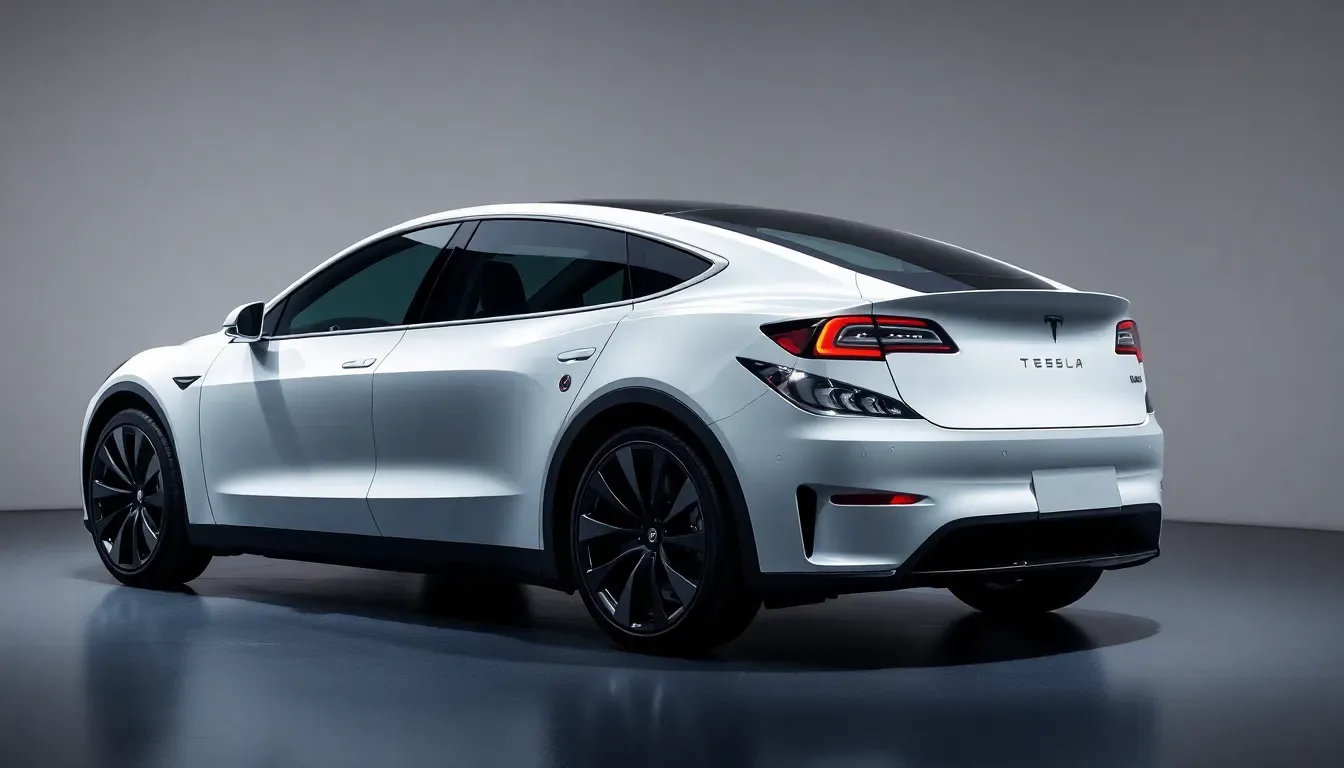
As the automotive landscape continues to evolve, Tesla’s innovative approach to electric vehicles is transforming consumer expectations, particularly in markets like China. With the introduction of the Model Y L, Tesla is not merely increasing its lineup; it is reshaping the premium segment of the electric vehicle market. This article delves into the implications of this shift, examining sales figures, market trends, and what the future holds for Tesla in this competitive environment.
Tesla China’s domestic sales performance in November 2025
In November 2025, Tesla China reported stable domestic sales, delivering approximately 73,000 vehicles during the month. This impressive figure includes a breakdown of:
- 34,000 standard Model Y units
- 26,000 Model 3 units
- 13,000 Model Y L units
The Model Y L’s contribution is particularly noteworthy, as it comprised about 27% of Tesla’s total Model Y sales in China. Despite carrying an estimated 28% premium over the base Model Y, the Model Y L’s sales figures indicate a strong demand for more premium vehicle variants, suggesting a shift in consumer preferences towards higher-end options.
Industry analysts, including @TSLAFanMtl, have pointed out that this trend could signify a broader movement towards “premiumization” within Tesla’s offerings in China, as sales figures from previous years may not fully capture this shift in market dynamics.
Understanding the momentum of Tesla in November 2025
Despite facing a competitive market landscape, Tesla’s Model Y and Model 3 have established themselves as top sellers in China. Notably, the Model Y claimed the title of China’s #1 best-selling SUV in November, boasting around 34,000 deliveries, while the Model 3 also performed admirably with approximately 25,700 deliveries.
One of the most compelling aspects of Tesla’s performance in November is the context in which these sales occurred. The electric vehicle market in China is highly competitive, filled with numerous domestic and international players vying for market share. Furthermore, Tesla has yet to implement the latest Full Self-Driving (FSD) capabilities in China, indicating that potential sales could further increase once these advancements are made available.
The introduction of the Model Y L aligns with Tesla’s broader strategy of focusing on premium vehicles to enhance profitability and market presence. This strategy is particularly relevant in the growing luxury electric vehicle market, where consumers are increasingly willing to pay a premium for cutting-edge technology and superior performance. Some key factors driving this shift include:
- Consumer Demand: There is a rising preference among consumers for premium features and aesthetics in electric vehicles.
- Brand Perception: Tesla’s brand is synonymous with innovation and quality, attracting a customer base willing to invest in higher-end models.
- Technological Advancements: As Tesla continues to enhance its vehicles with advanced technology, consumers are motivated to upgrade to models that offer enhanced capabilities.
This focus on premium offerings may not only support higher margins but also position Tesla favorably against emerging competitors in the luxury electric vehicle space.
Market predictions for Tesla’s Robotaxi initiative
As Tesla strives to expand its Robotaxi initiative, analysts are closely monitoring its progress and the metrics that will define its success. Mark Delaney from Goldman Sachs emphasized that the primary focus should be on the speed of deployment rather than geographical expansion alone. He stated:
“We think the key focus from here will be how fast Tesla can scale driverless operations, including if Tesla’s approach to software/hardware allows it to scale significantly faster than competitors, as the company has argued, and on profitability.”
For the Robotaxi program to thrive, several factors need to be addressed, including:
- Initiation of Driverless Rides: Successful launches in major cities like Austin and beyond are crucial.
- Safety Metrics Improvement: Demonstrating effective safety measures in driverless operations is essential for public confidence.
- Operational Scaling: Rapid scaling of the Robotaxi fleet will depend on efficient deployment strategies and technological advancements.
Analysts have highlighted that profitability from the Robotaxi initiative will be contingent upon widening access to the service, allowing for greater utilization of the fleet.
Cybertruck’s safety accolades and market impact
In a significant achievement, the Tesla Cybertruck has earned the prestigious Top Safety Pick+ rating from the Insurance Institute for Highway Safety (IIHS) for models produced post-April 2025. This accolade not only reinforces Tesla’s commitment to safety but also boosts the Cybertruck’s market appeal, especially among safety-conscious consumers.
Factors contributing to this high rating include:
- Strong performance in updated crash tests.
- Superior front crash prevention capabilities.
- Effective headlight performance in various conditions.
The Cybertruck’s safety features are complemented by its advanced driving capabilities through Tesla’s Full Self-Driving (FSD) system, which enhances safety through technology. The vehicle’s ability to navigate urban environments and highways independently adds a layer of confidence for potential buyers.
Looking ahead: Tesla’s long-term vision
As Tesla navigates the evolving landscape of the electric vehicle market, the company’s commitment to innovation and safety will be crucial. The focus on premium offerings, coupled with advancements in autonomous driving technology, positions Tesla as a formidable player in both the global and Chinese markets.
With ongoing expansion plans, including the anticipated rollout of the Robotaxi fleet and the continuing evolution of the Cybertruck, Tesla is poised to redefine consumer expectations in the electric vehicle sector.
The company’s strategic emphasis on premium models and cutting-edge technology will be pivotal as it seeks not only to maintain its market leadership but also to set new benchmarks for what electric vehicles can achieve. As consumer preferences shift and competitors emerge, Tesla’s ability to adapt and innovate will determine its future success in this dynamic industry.