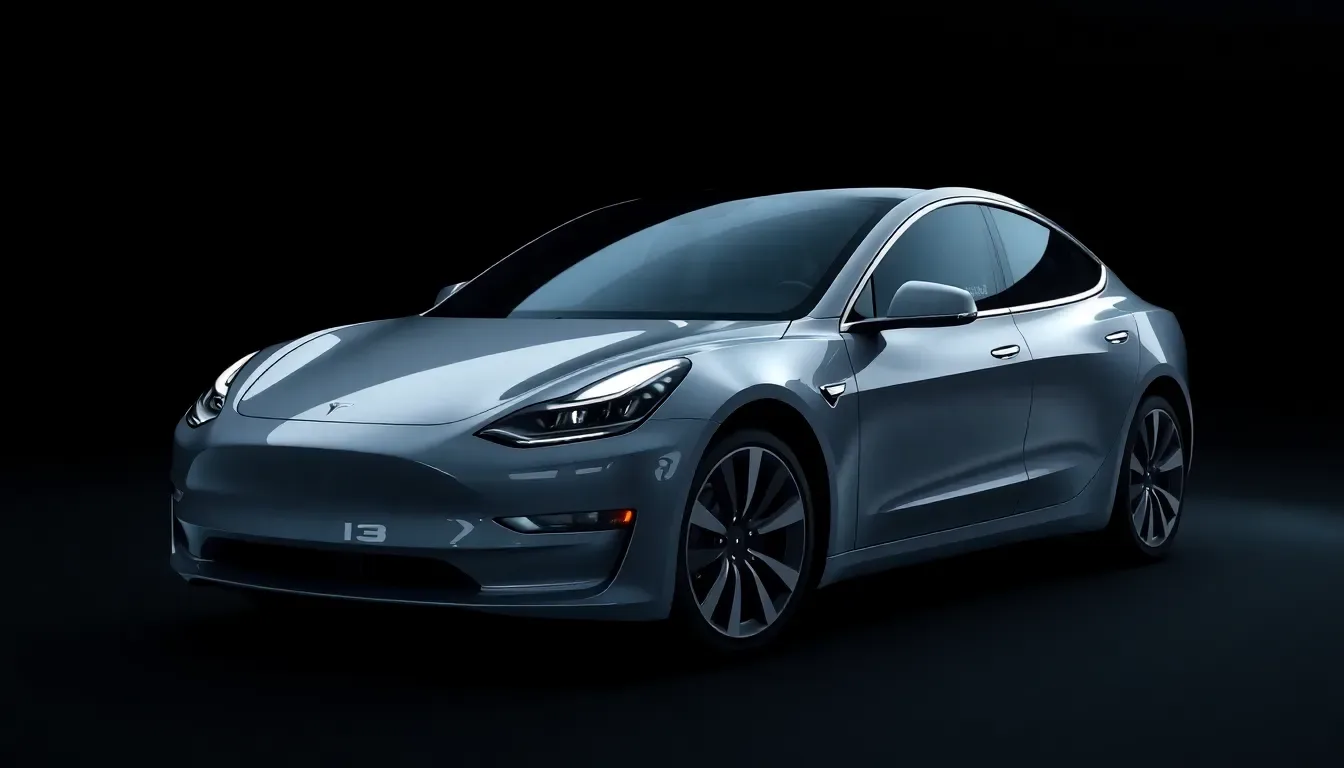
As Tesla continues to evolve in the electric vehicle market, recent developments around its Model 3 and Model Y variants have caught the attention of enthusiasts and investors alike. With a growing demand for electric cars, the company is navigating challenges while maintaining its innovative edge. Let’s delve into the latest updates that are shaping Tesla’s presence in the automotive landscape.
Model 3 LR RWD now slated for February 2026 deliveries
Tesla’s Model 3 Long Range Rear Wheel Drive (LR RWD) variant has officially joined the queue for February 2026 deliveries in China. Prospective buyers can expect an estimated delivery timeframe for new orders at this date. This model is priced starting at RMB 259,500 (approximately $36,810), positioning it as the second most affordable option within Tesla’s four-variant Model 3 lineup.
This recent development is indicative of the sustained popularity of the Model 3, which has managed to retain strong sales figures despite facing competition from more budget-friendly rivals such as the Xiaomi SU7 and its crossover counterpart, the Model Y. The demand for the Model 3 LR RWD variant aligns with a broader trend of consumers seeking high-quality electric sedans.
Interestingly, the delivery timeline for the Model 3 Performance variant is also extending, mirroring the LR RWD’s situation. Currently, both the base RWD version, starting at RMB 235,500, and the LR AWD variant, priced from RMB 285,500, maintain estimated delivery times of 4-6 weeks. Tesla has been proactive in encouraging buyers to opt for inventory units available for immediate delivery before the year concludes.
Shifts in Model Y delivery timelines and government policies
The Model Y is also experiencing significant changes in delivery timelines, with most customized variants now projected for February 2026. The only exception is the entry-level version, which still indicates a January 2026 delivery date. This shift has prompted Tesla to urge customers to prioritize purchasing inventory vehicles, a strategy aimed at maximizing year-end deliveries.
This urgency is compounded by impending changes in government incentives in China. The new energy vehicle purchase tax exemption is set to diminish in 2026, meaning customers who order vehicles next year may face higher tax costs compared to those completing their purchases by the end of 2025.
Data from the China Passenger Car Association illustrates Tesla’s performance, revealing a retail sales figure of 73,145 vehicles for November, which marks a slight decline of 0.47% year-over-year. Cumulatively, from January to November, Tesla’s sales in China total 531,855 units, reflecting a 7.37% dip compared to the previous year.
Analyst predictions: A promising year ahead for Tesla
In an optimistic forecast, Wedbush analyst Dan Ives projects a “monster year” for Tesla in 2026, primarily driven by advancements in artificial intelligence (AI) and robotics. Ives anticipates that Tesla’s market capitalization could reach $2 trillion or even $3 trillion in favorable scenarios, propelled by the company’s ambitious plans to enhance its AI capabilities.
The analyst emphasizes that Tesla is on the brink of a critical period where its autonomy and robotics initiatives are nearing commercialization. This shift may redefine the company’s valuation as investors increasingly focus on AI and software development rather than traditional automotive metrics.
In his assessment, Ives maintains an “Outperform” rating for Tesla stock, with a price target of $600 per share. His outlook suggests that the company is positioned to not only thrive in the electric vehicle sector but also to lead the way in the burgeoning fields of AI and autonomous technology.
Unsupervised Full-Self Driving tests spark excitement
Recent developments in Tesla’s autonomous vehicle testing have further fueled excitement among enthusiasts. Over the weekend, multiple Tesla Model Ys were sighted operating on public roads in Austin, Texas, without a safety monitor or any occupants. CEO Elon Musk confirmed the footage, indicating that testing is indeed underway.
The specifics of these tests remain somewhat ambiguous, particularly regarding whether the vehicles were assisted by chase cars or monitored remotely. However, Musk’s previous statements suggest that the removal of Safety Monitors from Tesla vehicles could happen imminently, aligning with the timeline of these recent sightings.
Introducing the production-ready Tesla Cybercab
Tesla has recently introduced a near-production-ready version of its Cybercab at the Santana Row showroom in San Jose, California. This unveiling offers a closer look at the autonomous two-seater’s refined design, showcasing subtle yet impactful updates to both its exterior and interior.
The Cybercab now features several enhancements, such as:
- Frameless window design for a sleeker look
- Updated front bumper with an extended bottom splitter
- Refined rear hatch design
- Production-spec front lightbar with integrated headlights
- New wheel covers and a license plate bracket
- Dual windshield wipers for improved visibility
- Upgraded interior materials for a more comfortable experience
These changes indicate Tesla’s commitment to enhancing the user experience and ensuring that the final product meets high standards of comfort and functionality.
Recent sightings and updates on the Cybercab
The updated Cybercab has been making headlines with increased sightings in recent months. Notably, Tesla’s AI team teased some of its updates after showcasing a photo of the vehicle being driven through an In-N-Out drive-through by employees in costumes, a fun nod to the company’s quirky tradition of taking prototypes through fast food establishments.
Enthusiasts have pointed out design alterations that include segmented daytime running lights (DRLs) and headlamps, improved turn signals, and a sharper splitter. Furthermore, the Cybercab’s cabin design has been noticeably updated, reflecting Tesla’s ongoing efforts to refine its vehicles through continuous feedback and testing.
Shifting focus: Deliveries take a backseat
As Tesla enters a new phase, analysts are observing a significant shift in focus away from vehicle deliveries towards broader technological advancements. Barclays analyst Dan Levy has highlighted that investor concerns about quarterly delivery figures may be diminishing as the company pivots towards AI and robotics.
Levy notes that Tesla’s upcoming Q4 delivery figures are unlikely to have a substantial impact on the stock, suggesting that the emphasis is now on progress in areas such as:
- AI developments
- Optimus humanoid robot
- Cybercab and autonomous vehicle initiatives
This evolution reflects a broader understanding among investors that while automotive sales remain important, the future of Tesla may hinge on its ability to innovate beyond traditional vehicles. CEO Elon Musk has previously stated that the company’s future is fundamentally tied to large-scale autonomous vehicles and humanoid robots, emphasizing the significance of software and AI in Tesla’s long-term success.