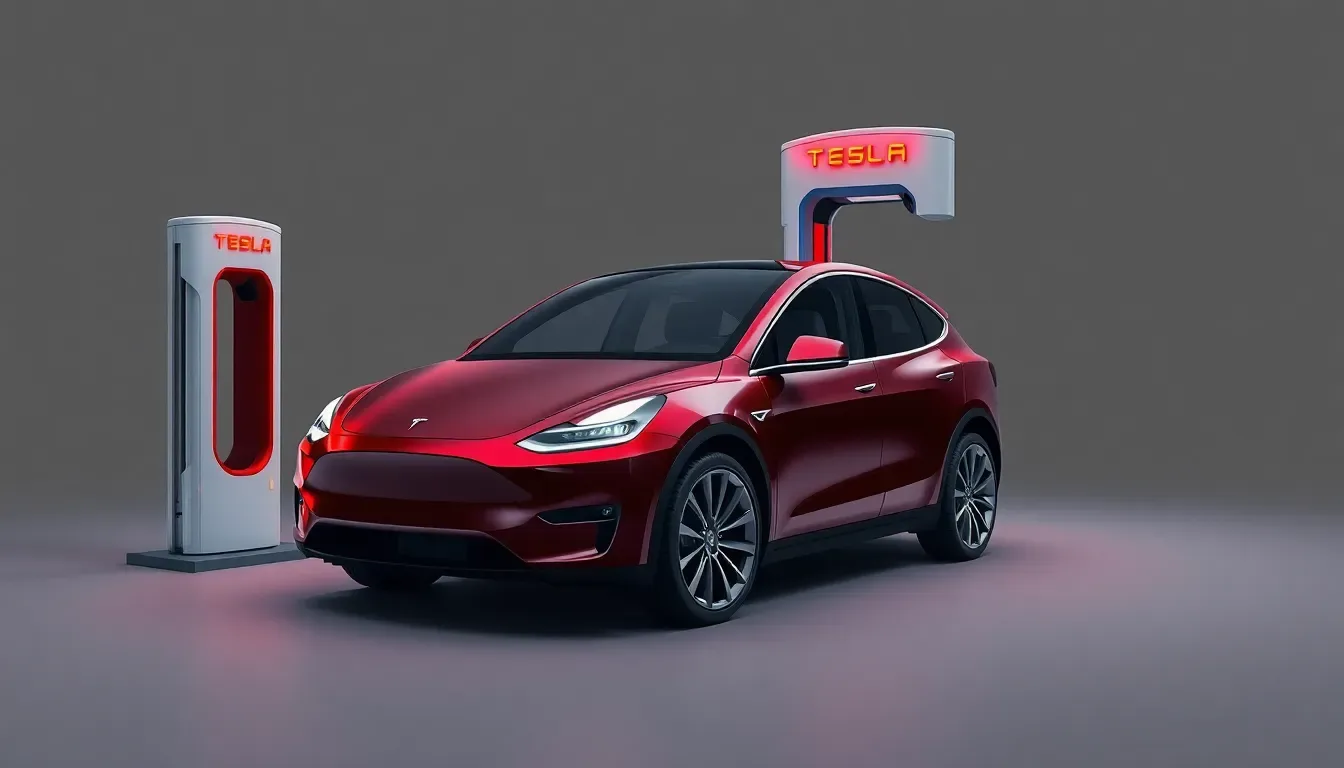
Tesla has consistently redefined the electric vehicle (EV) landscape, and a significant part of its success can be attributed to its Supercharger network. This expansive and reliable charging infrastructure not only supports Tesla’s vehicles but also enhances consumer confidence in electric mobility. The latest data reveals how this network influences sales, particularly for the Model Y, in regions where EV adoption is booming.
The Supercharger network is increasingly recognized as a pivotal element in Tesla’s strategy, solidifying its market presence and driving sales. Here’s a deeper look at how this infrastructure sets industry standards and impacts customer satisfaction.
Tesla’s Supercharger Network: A Benchmark for the Industry
According to Max de Zegher, Tesla’s Director of Charging, the Model Y achieved a remarkable 29% share of all vehicle sales in Norway during September 2025. This impressive statistic underscores the importance of a robust charging network, particularly in a country where electric vehicles dominate the market—98% of new cars sold are electric.
The reliability of the Tesla Supercharger Network has been a key differentiator. De Zegher highlighted on social media that Tesla’s Superchargers remain unmatched in their performance and availability. This assertion is supported by the EPSI survey, which indicated that among nearly 1,500 EV drivers in Norway, Tesla maintained the top spot in customer satisfaction for the fifth consecutive year.
Insights from the EPSI Survey
The EPSI survey revealed several key factors contributing to the high satisfaction ratings of the Tesla Supercharger Network:
- High Uptime: The network boasts an impressive operational uptime, ensuring that drivers can rely on it when they need to recharge.
- Ample Capacity: Tesla’s Superchargers are designed to handle high volumes of traffic, reducing wait times for users.
- User-Friendly Solutions: The network’s interface and payment systems are intuitive, making the charging process seamless.
- Competitive Pricing: Drivers appreciate the cost-effectiveness of charging at Tesla stations.
- Adaptability to Extreme Conditions: In Norway’s harsh winters, the reliability of Superchargers is particularly crucial.
As noted by EPSI, “Tesla has set the standard for simplicity in the charging process.” The combination of these factors significantly influences consumer preferences, leading many electric vehicle owners to choose Tesla for their charging needs.
Global Expansion of Tesla’s Supercharger Network
Tesla’s Supercharger network is not only thriving in Norway but is also expanding globally. This expansion aims to provide comprehensive charging solutions in various markets, including North America, Europe, and Asia. The network currently consists of thousands of Supercharger stations worldwide, strategically located to accommodate long-distance travel and daily commutes alike.
Key highlights of Tesla’s global expansion include:
- Strategic Locations: Superchargers are placed along major highways and in urban centers to maximize accessibility.
- Increased Charging Speed: Recent upgrades have improved the charging speed, allowing drivers to charge their vehicles significantly faster.
- Enhanced User Experience: Continuous improvements in the user interface and payment options make the experience smoother.
Impact on Tesla’s Model Y Sales
The Tesla Model Y’s success can be directly correlated to the reliability and reach of the Supercharger network. With the growing popularity of electric vehicles, customers prioritize accessibility to charging stations, and Tesla delivers on this front. The Model Y, as an SUV with ample space and performance, appeals to a broad demographic, further bolstered by the confidence instilled by a reliable charging infrastructure.
The Supercharger network not only aids in securing sales but also enhances Tesla’s reputation as a leader in the EV sector. This reputation is crucial as competition in the electric vehicle market intensifies.
Future Developments and Innovations
Looking ahead, Tesla is continuously innovating to enhance its Supercharger network. Future plans include:
- Faster Charging Technology: Tesla is developing new technologies to reduce charging times even further.
- Increased Station Density: More Supercharger stations will be added in underserved areas, improving accessibility.
- Integration of Renewable Energy: Future stations may utilize solar energy to power charging units, aligning with Tesla’s sustainability goals.
These advancements will likely improve customer experience and further solidify Tesla’s position in the EV market.
Conclusion
Tesla’s Supercharger network is much more than just a charging solution; it is a key component of the company’s strategy, enabling significant vehicle sales and driving the growth of electric mobility worldwide. As the network continues to expand and evolve, it sets a benchmark that others in the industry will strive to meet.