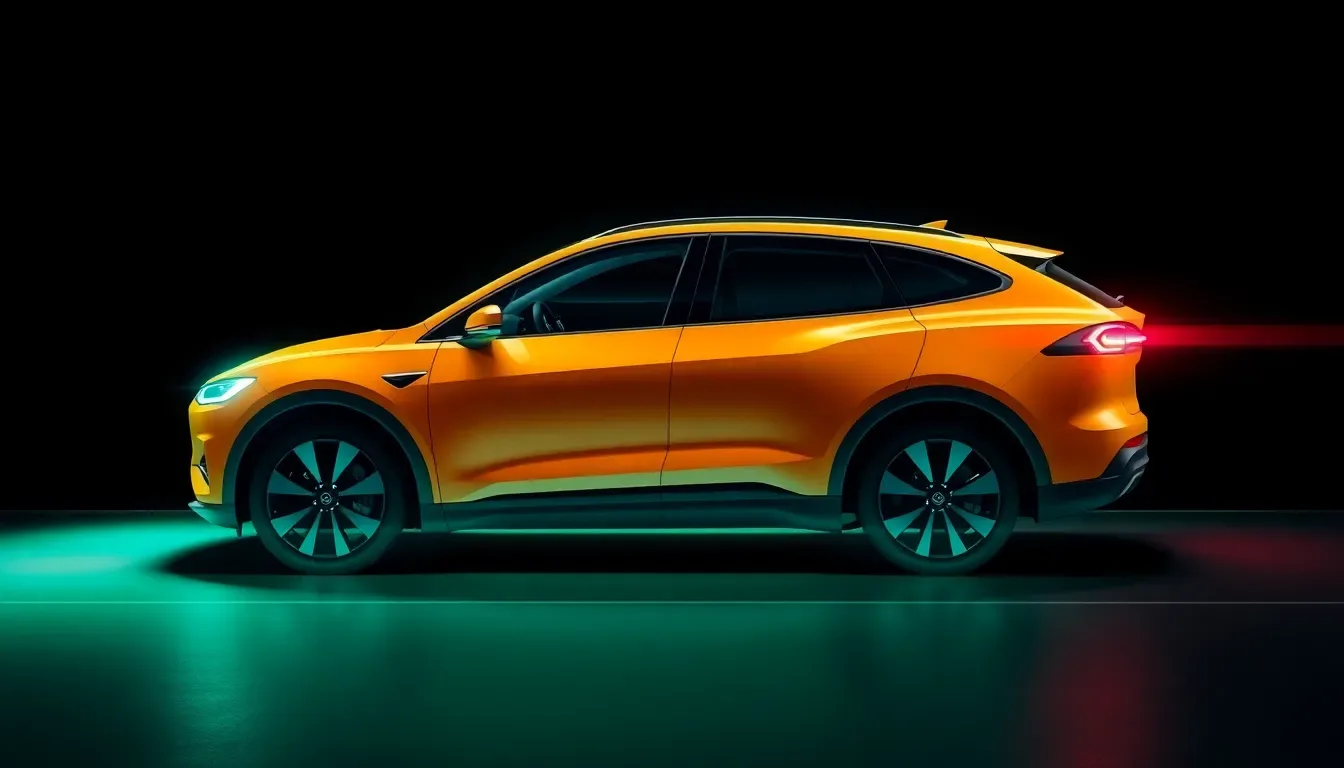
As the race for autonomous driving technology heats up, Rivian has taken a significant leap forward. Recently, the electric vehicle startup showcased its state-of-the-art self-driving chip and outlined ambitious autonomy plans aimed at challenging industry leaders like Tesla. This move is not just about competing; it’s about redefining the landscape of how we perceive and interact with transportation.
At their AI and Autonomy Day event held in Palo Alto, California, Rivian introduced a comprehensive self-driving suite that promises to transform the driving experience. The company is set to offer an Autonomy+ subscription service priced at $49.99 per month, as well as a one-time purchase option for $2,500, granting drivers access to this cutting-edge technology.
Rivian’s Vision for Autonomous Driving
Rivian’s CEO, RJ Scaringe, expressed his enthusiasm about the technological advancements, asserting that the system will learn and evolve as it accumulates more driving data. This learning process mirrors Tesla’s approach, utilizing deep learning through a sophisticated neural network.
Scaringe emphasized the potential impact of their new hardware platform, highlighting features like their in-house developed chip that operates at a remarkable 1600 sparse TOPS (trillion operations per second). This hardware will facilitate Rivian’s journey toward achieving Level 4 autonomy, which means vehicles can drive themselves under specified conditions without human intervention.
Initial Focus on Personally Owned Vehicles
Initially, Rivian plans to target personally owned vehicles rather than entering the ride-hailing market. Scaringe noted that most driving miles in the U.S. come from personal vehicles, which gives Rivian a significant launch pad for its technology.
However, the company has not ruled out expanding into ride-sharing services in the future. Scaringe mentioned, “While our initial focus will be on personally owned vehicles, this also enables us to pursue opportunities in the rideshare space.”
The Advanced Hardware Behind the Technology
Unlike Tesla’s vision-only approach, Rivian is integrating a multi-faceted sensory system. Their setup consists of 11 cameras, five radar sensors, and a single LiDAR sensor, which will be positioned at the front of the vehicle. This combination aims to enhance the vehicle’s perception of its surroundings, crucial for safe autonomous driving.
One notable feature of Rivian’s technology is the RAP1 chip, manufactured in collaboration with TSMC, a notable supplier for Tesla as well. This chip is approximately 50 times more powerful than the current model in Rivian vehicles and can perform over 800 trillion calculations each second, significantly enhancing processing capabilities.
Specifications of the Rivian Autonomy Compute Module
The RAP1 chip powers the Autonomy Compute Module 3 (ACM3), which represents Rivian’s third-generation autonomy computer. Some of its specifications include:
- 1600 sparse INT8 TOPS (Trillion Operations Per Second).
- Processing capacity for 5 billion pixels per second.
- RAP1 features RivLink, a low-latency interconnect technology that enhances processing power.
- Enabled by an in-house developed AI compiler and platform software.
This robust hardware infrastructure positions Rivian to pursue Level 4 automated driving, allowing passengers to relax in the back seat without the need for active driving.
Upcoming Innovations and Features
In addition to the self-driving capabilities, Rivian plans to introduce enhancements to its existing R1 vehicles. A significant feature is the Universal Hands-Free (UHF) technology, which will empower drivers with hands-free driving assistance across more than 3.5 million miles of clearly defined roadways in the U.S. and Canada.
Rivian’s commitment to customer feedback is evident as they prioritize features that owners have requested most. Scaringe stated, “More than any other feature, our owners have asked for more hands-free miles.”
The Competitive Landscape
With these advancements, Rivian is positioning itself among formidable competitors such as Tesla, Waymo, and Zoox, all of whom are vying for leadership in the autonomous vehicle sector. The battle for dominance in this rapidly evolving field will ultimately shape the future of transportation and redefine how we travel.
Rivian’s strategic focus on cutting-edge technology and customer-centric features underscores its potential to become a major player in the electric vehicle market and the autonomous driving landscape. As the company prepares for more developments in 2026, the industry watches closely to see how Rivian will navigate these ambitious plans.