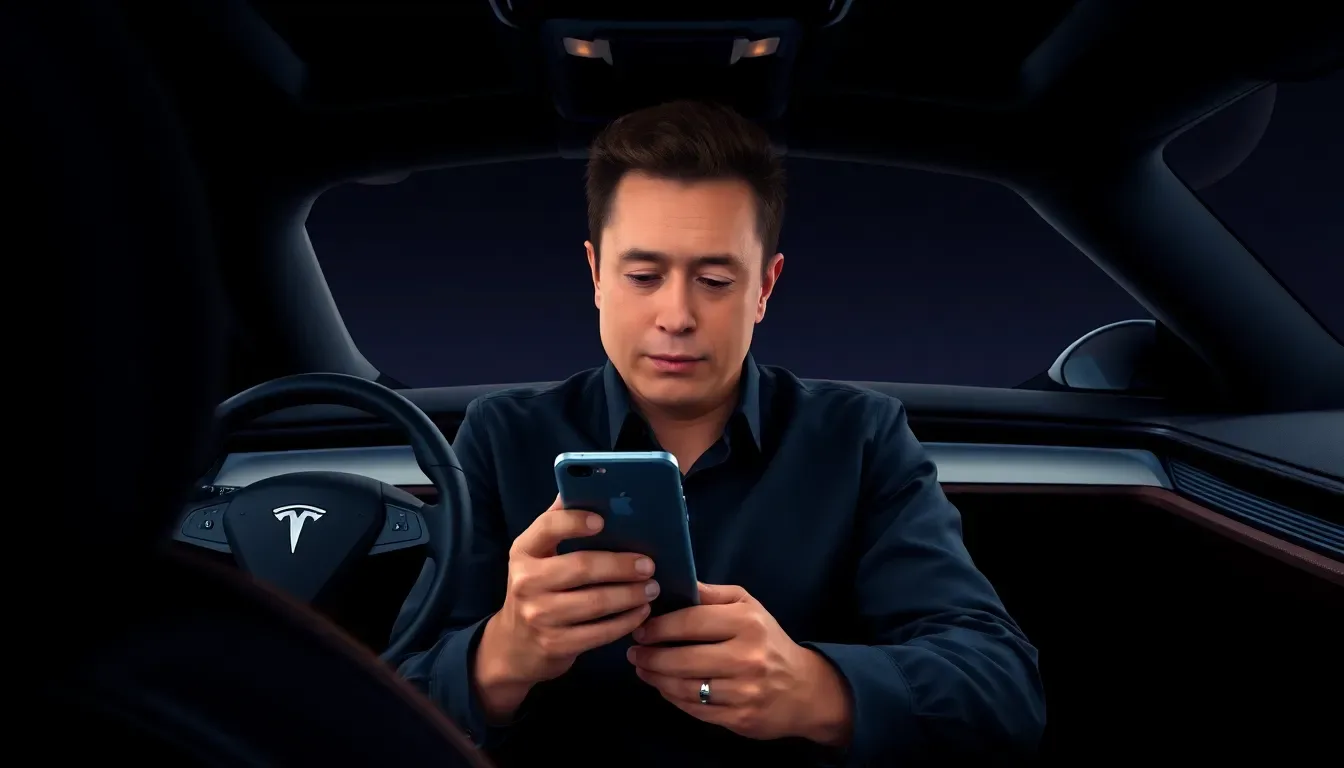
In a significant announcement, Tesla’s CEO Elon Musk revealed that the latest update for Full Self-Driving (FSD) version 14.2.1 would introduce the ability to text while driving, contingent upon the context of surrounding traffic. This bold move has sparked a wave of discussions about the safety and legality of such a feature, raising questions about the implications for drivers and the broader autonomy landscape.
As the automotive industry increasingly leans towards automation, understanding the consequences and responsibilities associated with such technologies is crucial. This article delves deeper into Musk’s announcement, the testing process, and the broader implications of texting and driving while using FSD.
Understanding the Context of Texting While Driving
Elon Musk’s assertion that texting while using FSD would depend on the “context of surrounding traffic” suggests a complex integration of AI and real-time data analysis. The idea is that the car would assess the driving environment to determine when it might be safe for drivers to divert their attention to their phones.
However, the actual application of this feature raises several critical questions:
- What constitutes a safe context for texting?
- How reliable is the car’s assessment of surrounding conditions?
- What legal ramifications might drivers face if they are involved in an accident while using this feature?
It’s vital for drivers to stay informed about their local laws regarding mobile phone use while driving. In many jurisdictions, texting while driving remains illegal regardless of the technology employed. This makes understanding the intersection of technology and law essential for responsible driving.
The Testing Process: Methodology and Observations
To explore the new capabilities of FSD, a recent test was conducted focusing on various levels of traffic congestion: low, medium, and high. The goal was to ascertain how the system would react and the extent to which it would allow drivers to use their phones without alerting them to return their attention to the road.
The testing involved the following parameters:
- A maximum phone usage of five to seven seconds at a time.
- A conscious effort to glance at the road regularly.
- Limiting each testing segment to one minute to minimize risks.
This structured approach aimed to gather data on the frequency of alerts from the driver monitoring system and how it interacted with varying traffic conditions.
Results from Low, Medium, and High Congestion Areas
The outcomes of the test provided insights into the performance of FSD in different scenarios:
Low Congestion Area
In a local area with minimal traffic, the driver was able to check their phone without receiving any nudges from the car’s system for the entire duration of the five-second checks. This indicated that in low-traffic conditions, the FSD system was more lenient.
Medium Congestion Area
In this scenario, traffic was noticeably heavier, including stops at traffic lights. Despite the increased traffic, the driver still did not receive alerts while checking their phone, leading to concerns about whether the system was adequately responsive. It raised questions about the system’s sensitivity, especially when compared to previous versions of FSD.
High Congestion Area
The highway represented the most challenging scenario, where the driver finally received an alert from the system, underscoring the importance of attentiveness in complex driving environments. Interestingly, the driver felt more secure checking their phone on the highway, reflecting a common perception that highways are safer due to lower traffic variability.
Legal and Ethical Considerations of Texting While Driving
The announcement and testing of texting while driving capabilities raise significant legal and ethical questions. Here are some pivotal aspects to consider:
- Liability: In the event of an accident, who would be held responsible? The driver, Tesla, or the technology itself?
- Public Perception: How might the media portray incidents involving FSD and texting? Could this lead to a backlash against Tesla?
- Personal Responsibility: Ultimately, drivers must remain vigilant. The responsibility to ensure safety should not solely rest on technology.
Furthermore, laws such as the Paul Miller Law in Pennsylvania highlight the strict regulations surrounding phone use while driving, emphasizing the need for drivers to remain aware of their local statutes.
Future Implications for Autonomous Driving Technologies
The introduction of such capabilities could signify a pivotal moment in the evolution of autonomous driving. As technology continues to advance, the line between driver responsibility and vehicle autonomy may become increasingly blurred. This situation raises several pertinent questions:
- Will other automakers follow Tesla’s lead?
- How will regulators respond to the integration of such features?
- What additional safety measures will be implemented to ensure responsible use of these technologies?
As we move into an era of more significant automation, it will be crucial for both manufacturers and consumers to navigate these challenges thoughtfully and responsibly.
Personal Reflections on the Testing Experience
Despite the potential benefits of texting while using FSD, personal reflections reveal a hesitance to embrace this feature fully. The risks involved in diverting attention from the road are substantial, and the potential for accidents remains a significant concern. Furthermore, the social and legal implications of appearing distracted while driving could overshadow any technological advancements.
Drivers should prioritize safety and adhere to the best practices while utilizing FSD. Awareness of the road and surroundings must remain paramount, even as the technology becomes more sophisticated.
Ultimately, the journey towards fully autonomous vehicles is fraught with challenges, and responsible usage of emerging technologies will be key to ensuring a safe driving environment for everyone.