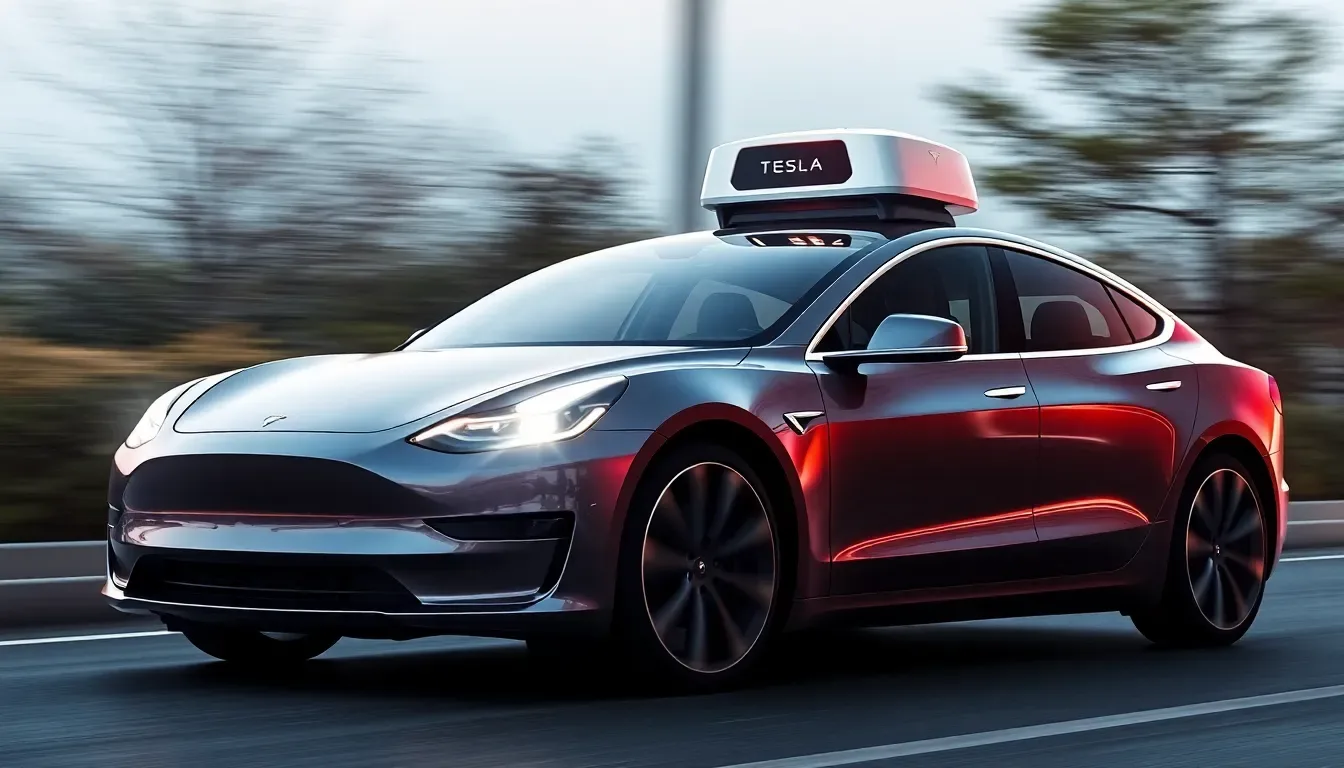
As Tesla continues to evolve and expand its reach in the electric vehicle (EV) market, investors are keeping a close eye on the company’s financial standing and future prospects. Recent analyses from various financial firms reveal a landscape filled with both optimism and skepticism, reflecting the complexity of valuing a company at the forefront of innovation.
The market for electric vehicles is not just about manufacturing cars; it’s a battleground for technology, energy solutions, and even robotics. Understanding the nuances of Tesla’s positioning and the factors impacting its valuation can provide valuable insights for investors and enthusiasts alike.
Tesla receives a price target increase, but challenges lie ahead
Recently, Morgan Stanley analysts gave Tesla’s stock a price target boost from $410 to $425, reflecting some confidence in the company’s potential. Andrew Percoco, who has taken over coverage of Tesla from former analyst Adam Jonas, expressed a cautious outlook for the coming year.
While praising Tesla’s leadership in electric vehicles and renewable energy, Percoco also warned of potential volatility in Tesla’s stock price. He noted:
“We expect a choppy trading environment for TSLA shares over the next 12 months, as we see downside to estimates.”
This sentiment underscores the intricacies of Tesla’s business model and the high expectations surrounding it. Percoco highlighted that Tesla’s valuation is increasingly reflective of its automotive capabilities, but the stock may be more vulnerable to market fluctuations than previously thought.
The evolving landscape of Tesla’s valuation: bulls and bears
As much as there are bullish sentiments regarding Tesla’s future, there are also starkly contrasting views from skeptics. Notably, Michael Burry—known for his role in “The Big Short”—has openly criticized Tesla’s valuation. He described it as “ridiculously overvalued,” suggesting that the company has not justified its market cap with corresponding financial performance.
Burry’s insights are rooted in his belief that Tesla’s fans have shifted their focus as competition has increased. He contends:
“The Elon cult was all-in on electric cars until competition showed up, then all-in on autonomous driving until competition showed up.”
This ongoing tug-of-war between optimistic and pessimistic views on Tesla highlights several key factors that investors should consider:
- **Market Sentiment**: Investor confidence can sway stock prices dramatically.
- **Technological Innovations**: Continuous improvements in autonomous driving and AI technologies are critical to long-term success.
- **Competitive Landscape**: The growing number of competitors in the EV space can impact Tesla’s perceived market share.
- **Regulatory Environment**: Changes in government policies regarding EV incentives can affect sales projections.
Mizuho’s perspective: maintaining an ‘Outperform’ rating
Mizuho’s analyst Vijay Rakesh has also adjusted Tesla’s price target, reducing it from $485 to $475. Despite this decrease, he retains an ‘Outperform’ rating, indicating a belief in Tesla’s potential for growth, albeit tempered by recent developments in EV incentives in major markets.
Rakesh’s analysis suggests that upcoming changes in EV subsidies—especially a potential 50% cut in China—could significantly affect Tesla’s unit growth. This is particularly concerning given that:
- The U.S. accounted for approximately 37% of Tesla’s third-quarter 2025 sales.
- China represented around 34%, making both markets highly sensitive to policy shifts.
With these factors in mind, Mizuho anticipates deliveries of 1.75 million vehicles in 2026, slightly below market consensus. Rakesh remains optimistic about Tesla’s long-term technology roadmap, highlighting three major growth drivers for the company:
- The broader adoption of Full Self-Driving (FSD) V14.
- The expansion of the Robotaxi service.
- The commercialization of Optimus, Tesla’s humanoid robot.
Full Self-Driving: A pivotal factor in Tesla’s valuation
Full Self-Driving (FSD) is often considered the crown jewel of Tesla’s automotive business, with significant implications for the company’s valuation. Percoco emphasized FSD’s potential to revolutionize personal driving experiences, creating a competitive edge not easily replicated by rivals.
As Tesla advances its autonomous driving technology, the implications for both operational efficiency and user experience are profound. Analysts believe:
- FSD could enhance Tesla’s market position against EV and non-EV competitors.
- Increased consumer adoption of FSD may drive revenue growth beyond vehicle sales.
- The successful rollout of FSD capabilities could fundamentally alter transportation norms, potentially increasing demand for Tesla vehicles.
Looking ahead: Navigating challenges while seizing opportunities
The path forward for Tesla is filled with both opportunities and challenges. As the company seeks to solidify its position in the competitive EV landscape, it must navigate:
- **Supply Chain Issues**: Ongoing disruptions could impact production rates.
- **Technological Advancements**: Keeping pace with rapidly evolving AI and autonomous driving technologies.
- **Market Fluctuations**: Adapting to economic shifts that affect consumer purchasing power.
With Tesla shares currently trading around $441, the financial community remains divided on the company’s future trajectory. Investors need to weigh the optimism surrounding Tesla’s technological advancements against the skepticism rooted in its valuation challenges. The next few quarters will be crucial in determining whether Tesla can sustain its growth momentum and justify its market position amid evolving industry dynamics.