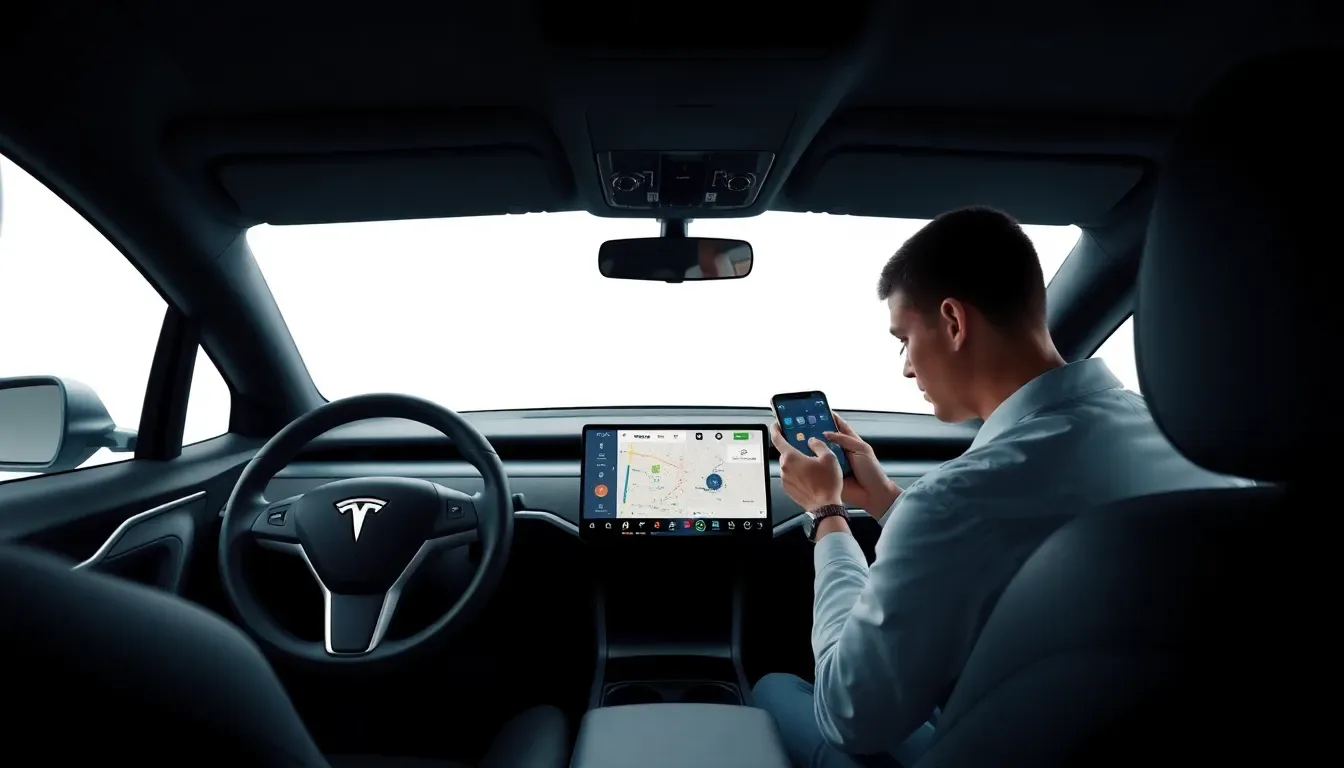
As the world moves toward greater automation, innovations like Tesla’s Full Self-Driving (FSD) feature continue to spark discussions about safety and technology. Recently, CEO Elon Musk announced an update that would allow drivers to text while driving, contingent on traffic conditions. This bold claim prompted us to investigate just how feasible and safe this feature really is.
The implications of such technology are far-reaching, not only for Tesla as a company but also for drivers everywhere. Even if the system supports this capability, it raises pertinent questions regarding legality and safety on the road. This article aims to explore these aspects in detail.
Understanding the New Update
Elon Musk’s announcement regarding Full Self-Driving v14.2.1 has caused a stir in both the tech and automotive communities. The idea that drivers could potentially text while on the road depending on surrounding traffic conditions is revolutionary, but it also comes with significant risks.
This update is designed to enhance the driving experience by leveraging advanced algorithms that assess traffic dynamics. Yet, it’s crucial to understand the limitations of this technology, especially as many regions have strict laws against mobile phone use while driving. Always consult your local regulations before considering using your phone behind the wheel.
The Testing Process: Methodology
To gauge the effectiveness and safety of the FSD feature, we conducted a series of tests under varying traffic conditions. Our objectives were clear:
- Identify different levels of traffic congestion: low, medium, and high.
- Determine how often the system prompted a driver to look at the road.
- Assess the system’s reliability while texting for brief periods.
During the tests, I consciously limited my phone usage to a few seconds at a time, ensuring that I occasionally glanced at the road. For ethical and safety reasons, I made it a point to stop using my phone whenever pedestrians or law enforcement officers were present.
This testing was capped at one minute per attempt, allowing for a focused observation of how the FSD system responded to the real-world driving environment.
Results of the Testing: A Closer Look
The outcomes of our test varied significantly based on traffic conditions. Here’s a breakdown of our findings:
Low Congestion Area Findings
In a local area with minimal traffic, I was able to use my phone for about five seconds without any alerts from the system.
The lack of nudges was unexpected, as I was still glancing at the road frequently. Vehicles were scarce, and the surroundings felt safe enough to briefly divert my attention.
Medium Congestion Area Observations
Transitioning to a more congested area, I tested the feature at a traffic light with noticeable vehicle presence. Again, my phone usage was limited to five seconds.
The system did not prompt me to refocus on the road, leading me to question the responsiveness of the driver monitoring system. In previous software versions, even a brief distraction would trigger an alert.
High Congestion Area Experience
Finally, I ventured onto the highway, which presented a higher level of congestion. Here, I finally received an alert to redirect my attention back to the road.
Interestingly, I felt more secure in utilizing my phone at this speed, as highways often have more predictable patterns of movement. However, the alert reminded me that even in a relatively stable environment, vigilance is essential.
Reflection on Safety and Legalities
Despite the apparent feasibility of texting while using Full Self-Driving, I remain uneasy about this capability. Here are my primary concerns:
- Liability: If an accident were to occur while texting, the repercussions could be severe—both legally and socially.
- Legal Risks:</ Many jurisdictions have laws explicitly prohibiting phone use while driving, regardless of the car’s automation level.
In Pennsylvania, for instance, the Paul Miller Law restricts not only texting but even holding a phone at a stoplight. This reality underscores the necessity of remaining cautious, even when technology suggests otherwise.
Potential Future Developments
The ongoing evolution of autonomous driving technology holds promise for safer and more efficient travel. However, the road ahead is laden with challenges, particularly regarding public perception and legal frameworks. As this technology matures, it will be essential for companies like Tesla to address these issues proactively.
Future developments may also focus on enhancing the driver monitoring systems to ensure that user distraction is minimized. Features such as:
- Improved facial recognition technology to gauge driver alertness.
- Adaptive responses that adjust based on user behavior.
- Real-time communication with law enforcement to ensure compliance with local regulations.
As we navigate this complex landscape, it is vital for consumers and manufacturers alike to prioritize safety and responsibility in the use of such advanced technologies.
Final Thoughts
While the update indicating the possibility of texting while using Tesla’s Full Self-Driving feature is intriguing, it raises significant concerns regarding driver attentiveness and legal implications. As technology continues to advance, it is imperative to approach these innovations with caution and a focus on safety, always prioritizing the well-being of all road users.