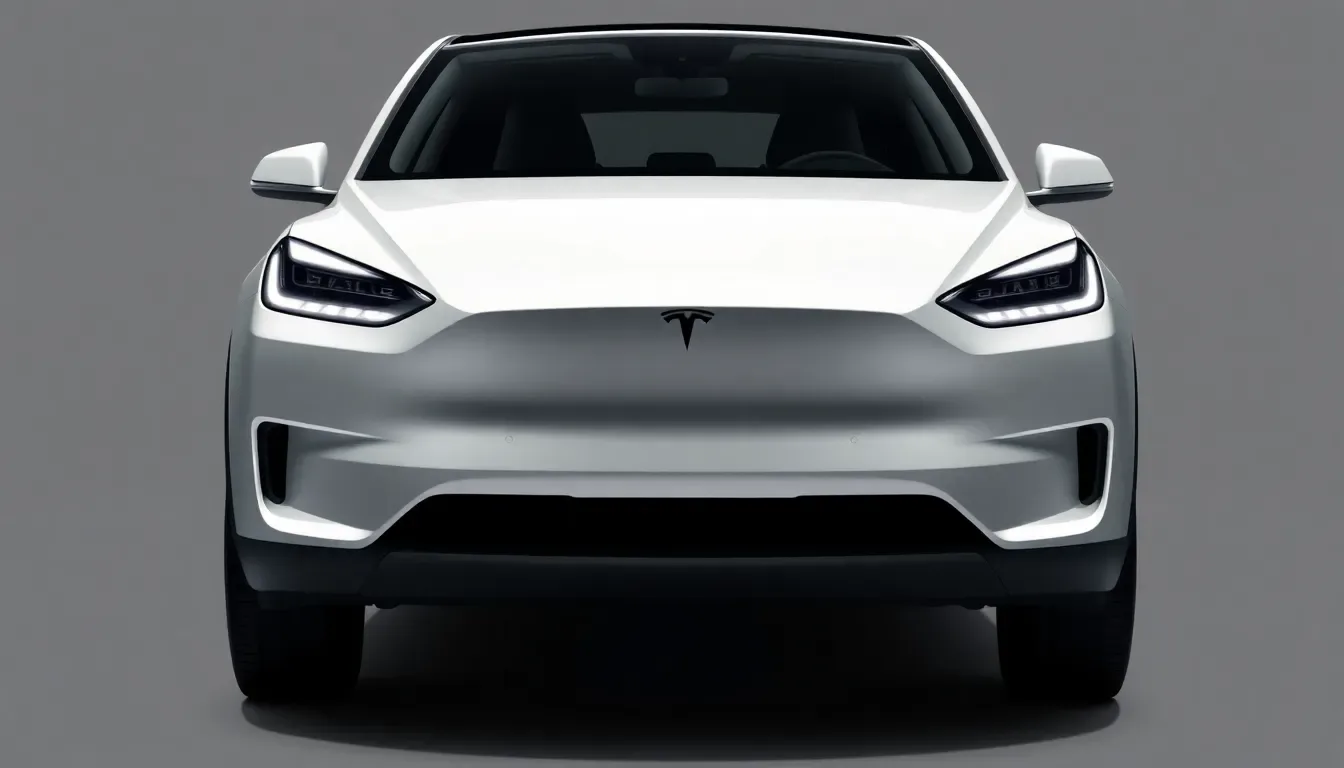
The automotive industry is witnessing a significant shift towards electric vehicles (EVs), with Tesla leading the charge. One of its latest offerings, the Tesla Model Y L, is making waves in the competitive SUV market, especially in China. With impressive sales numbers right out of the gate, it’s clear that this model has struck a chord with consumers. Let’s dive deeper into the details surrounding its rapid ascent and what it means for Tesla and the EV market at large.
The Tesla Model Y L has quickly established itself as a formidable player in the mid-to-large SUV segment of the Chinese market. In just its first month, it not only made an impact but also positioned itself among the top-selling models, showing that Tesla’s strategic moves are paying off.
Sales figures for the Tesla Model Y L in September
In September, the Tesla Model Y L achieved remarkable sales figures, moving a total of 8,221 units within China. This impressive total secured its position as the fourth best-selling mid-to-large SUV in the country, trailing behind competitors like the Leapmotor C16, the Li Auto L6, and the Xiaomi YU7, which sold 8,312, 11,827, and 22,244 units, respectively.
- Leapmotor C16: 8,312 units sold
- Li Auto L6: 11,827 units sold
- Xiaomi YU7: 22,244 units sold
The Model Y L stands out not just for its numbers but also for its pricing strategy. Priced higher than many of its competitors, it nevertheless appeals to consumers seeking quality and performance, a testament to Tesla’s brand strength in the EV market.
Initial reaction and market impact
Since its launch in August, the Model Y L has garnered positive reviews from automotive critics and consumers alike. With its spacious interior, which includes:
- A second row featuring two captain seats with retractable armrests
- A third row that can comfortably accommodate average-sized adults
This makes it an attractive option for families, with a starting price of around $47,566 before additional options. Such features not only appeal to families but also to a wider demographic looking for versatility in their vehicles.
Moreover, the rapid sell-out of the Model Y L’s production for October and November illustrates the strong demand and consumer trust in Tesla’s offerings. With new orders now projected for delivery in December 2025, it’s evident that Tesla’s production capabilities are being tested to meet the soaring demand.
Elon Musk’s strategic vision for Tesla
As Tesla CEO, Elon Musk has consistently pushed the envelope, making bold moves in technology and business strategies. His vision for the company encompasses not only the production of innovative vehicles but also the establishment of a robust charging infrastructure and the integration of autonomous driving technologies.
- Focus on innovation and sustainability
- Expansion of the Supercharger network
- Development of autonomous driving capabilities
These elements are crucial for maintaining Tesla’s competitive edge in the rapidly evolving automotive landscape, especially as more manufacturers enter the EV market.
Challenges ahead for Tesla and its competitors
Despite its current success, Tesla faces challenges on multiple fronts. Rivals are increasingly entering the EV space, and while they may lag behind in sales, the competition is formidable. Companies are investing heavily in technology and infrastructure to catch up with Tesla’s lead. For instance, issues surrounding EV charging infrastructure remain a pressing concern.
While Tesla has a stronghold on the charging station market, other automakers are beginning to expand their charging networks. However, as of Q3 2025, Tesla installed 1,820 new chargers, bringing its total to 34,328, which accounts for over 53% of the total charging stalls in the United States. In contrast, other competitors combined installed only 841 chargers.
This disparity highlights the importance of charging infrastructure in EV adoption. As more consumers make the switch to electric vehicles, the necessity for a reliable and expansive charging network becomes even more critical.
Looking ahead: the future of Tesla’s product lineup
Beyond the Model Y L, Tesla continues to develop its product lineup, with the highly anticipated Roadster making headlines. Earlier this year, Musk teased an upcoming demo that would showcase the Roadster’s capabilities, promising to be a momentous event for Tesla fans.
This model has been in the spotlight for years, originally slated for release in 2020. However, the focus on scaling other models and enhancing their technological offerings has delayed its launch. Recent updates from Tesla executives indicate that the Roadster is still on track for an epic demonstration by the end of 2025, heightening excitement among enthusiasts.
As Franz von Holzhausen, Chief Designer at Tesla, stated, “I’m excited to showcase the Roadster for a lot of different reasons. The wait will be worth it.” This statement not only reinforces the anticipation but also suggests that Tesla aims to redefine performance standards in the automotive industry.
Conclusion
The Tesla Model Y L’s success in its debut month illustrates the brand’s strength and the shifting dynamics of the automotive market in favor of electric vehicles. With impressive sales figures, a solid consumer base, and ongoing innovation, Tesla is positioning itself for continued success. As the competition heats up, the coming years will be crucial for both Tesla and its rivals in navigating the evolving landscape of electric mobility.