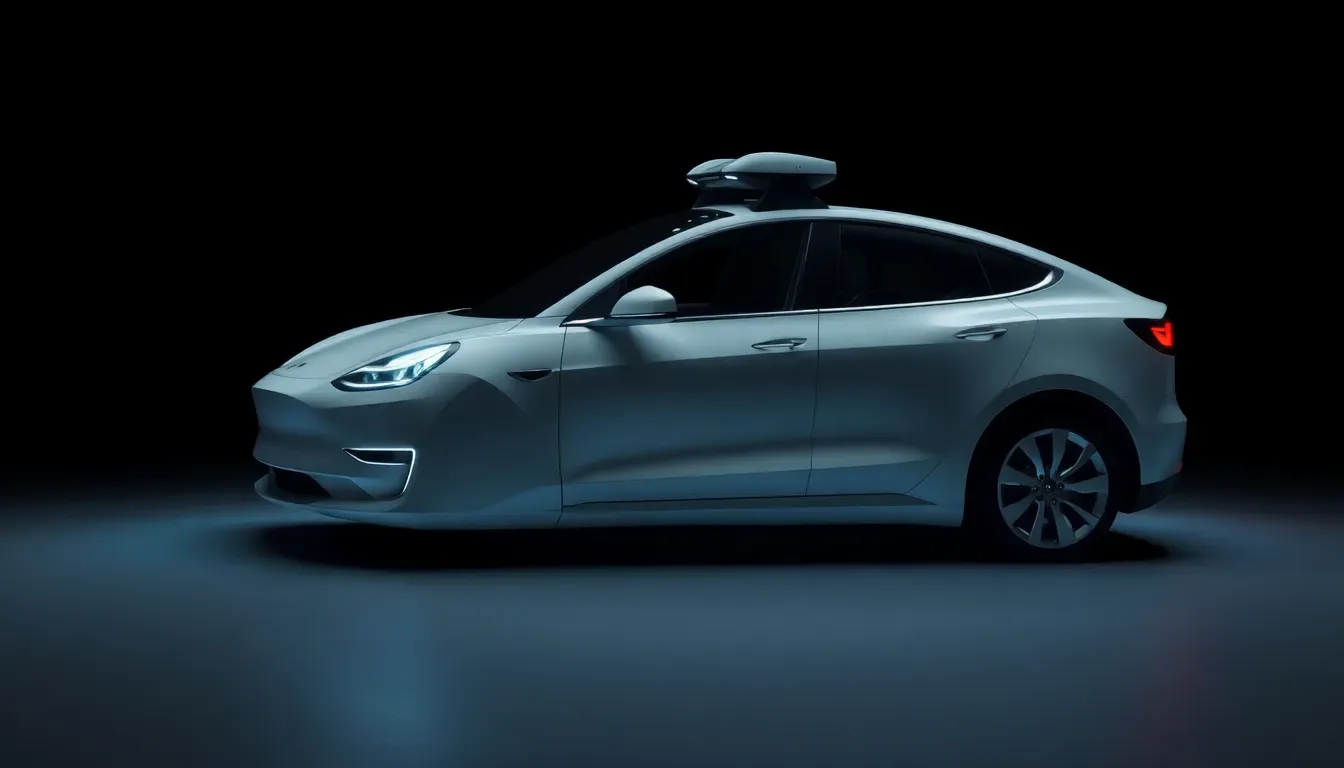
In recent developments, Tesla has taken a significant step forward in the realm of autonomous driving by rolling out Full Self-Driving (FSD) version 14.2.1.25 to its Early Access Program members. This update not only enhances the driving experience but also reflects Tesla’s commitment to refining its autonomous capabilities. As the automotive landscape evolves rapidly, the implications of such advancements could reshape our understanding of transportation.
With this new release, extensive tests have already shown improvements that promise to transform highway driving. From refining speed profiles to enhancing lane change confidence, this update appears to address previous shortcomings while integrating feedback from the user community. Let’s delve deeper into the features and improvements of this latest version.
Overview of the Full Self-Driving update
The launch of Tesla’s FSD v14.2.1.25 coincided with the much-anticipated Holiday Update, catching the attention of both enthusiasts and critics. The version presents a mix of enhancements that aim to elevate the autonomous driving experience. Early testers report that the changes from the prior version are notable, particularly where issues had previously arisen.
This update is part of Tesla’s ongoing effort to perfect its Full Self-Driving technology, with rigorous testing and feedback loops driving its development. The company has been known for its iterative approach, which relies heavily on real-world user experiences to inform further modifications.
Key improvements in version 14.2.1.25
Among the most significant improvements in this release are:
- Refined Speed Profiles: Enhanced management of speed settings for smoother driving.
- Increased Lane Change Confidence: More assertive and timely lane changes.
- Enhanced Speed Limit Recognition: Better interpretation of road signs and traffic conditions.
These features work together to create a more fluid driving experience, especially on highways where maintaining speed relative to other vehicles is crucial.
Speed profile refinements
Previous versions of FSD struggled with managing speed profiles effectively. Users reported that **Hurry Mode**, for example, was excessively conservative, often not exceeding 10 MPH over the speed limit, which led to frustrating situations of holding up traffic.
With the latest update, **Hurry Mode** now adapts to the flow of traffic, allowing for a more comfortable driving experience. During testing, drivers found that they were able to maintain a pace consistent with surrounding vehicles without needing to intervene.
The adjustments to speed profiles are not just about pushing the limits; they are about enhancing safety and efficiency in highway driving. When vehicles move in harmony with traffic, overall congestion decreases, making for a smoother commute.
Confidence in lane changing
Another notable enhancement in FSD v14.2.1.25 is the car’s confidence when executing lane changes. Prior versions were often overly cautious, leading to indecisive driving behavior that was both frustrating and potentially dangerous.
Now, lane changes are executed with improved timing and decisiveness. Testers reported:
- Lane changes are made at appropriate times, avoiding unnecessary maneuvers.
- The vehicle shows a better understanding of when to enter the correct lane, especially when approaching exits.
- Overall, the driving experience feels less robotic and more intuitive.
This newfound assertiveness in lane changing has been a welcomed improvement, making the driving experience much more enjoyable and reducing the need for driver intervention.
Improvements in speed limit recognition
Speed limit recognition has historically been a challenging aspect of autonomous driving. In earlier versions, the system occasionally misread speed limit signs, mistaking them for unrelated signage, which could lead to abrupt deceleration or acceleration.
In this latest update, it appears that the system has shifted towards a more reliable method of interpreting speed limits. The vehicle now appears less dependent on visual signage and more on:
- Map data, which provides a broader context for speed limits.
- The behavior of nearby traffic, allowing for more adaptive responses.
For example, during highway testing, even when encountering a route sign, the car maintained its speed, suggesting that it is becoming more adept at discerning relevant speed information from its environment.
A minor complaint: parking challenges
Despite the substantial improvements, some users have reported ongoing challenges with the parking functionality of FSD. Many testers expressed a desire for updates that enhance this feature, as parking remains a critical aspect of driving in urban environments.
During recent tests, one user noted a peculiar instance where the vehicle struggled to maneuver into a parking spot, hesitating and failing to execute the necessary turns.
While the majority of driving features are showing marked improvements, the parking functionality seems to lag behind. This is an area where Tesla acknowledges the need for further enhancements in future updates, and users are eager for solutions.
The future of Tesla’s autonomous driving
The enhancements seen in FSD v14.2.1.25 mark a significant milestone for Tesla as the company pushes the boundaries of autonomous driving technology. With every update, Tesla not only refines its systems but also reshapes the conversation around what is possible in the realm of transportation.
The goal is clear: to reach a level of full autonomy that does not just meet regulatory requirements but also builds trust with drivers. As Tesla continues to iterate and improve upon its offerings, it sets the stage for a future where autonomous vehicles could become a common sight on our roads.
As we look ahead, the ongoing dialogue between Tesla and its user community will undoubtedly play a crucial role in shaping the next stages of development in autonomous vehicle technology.