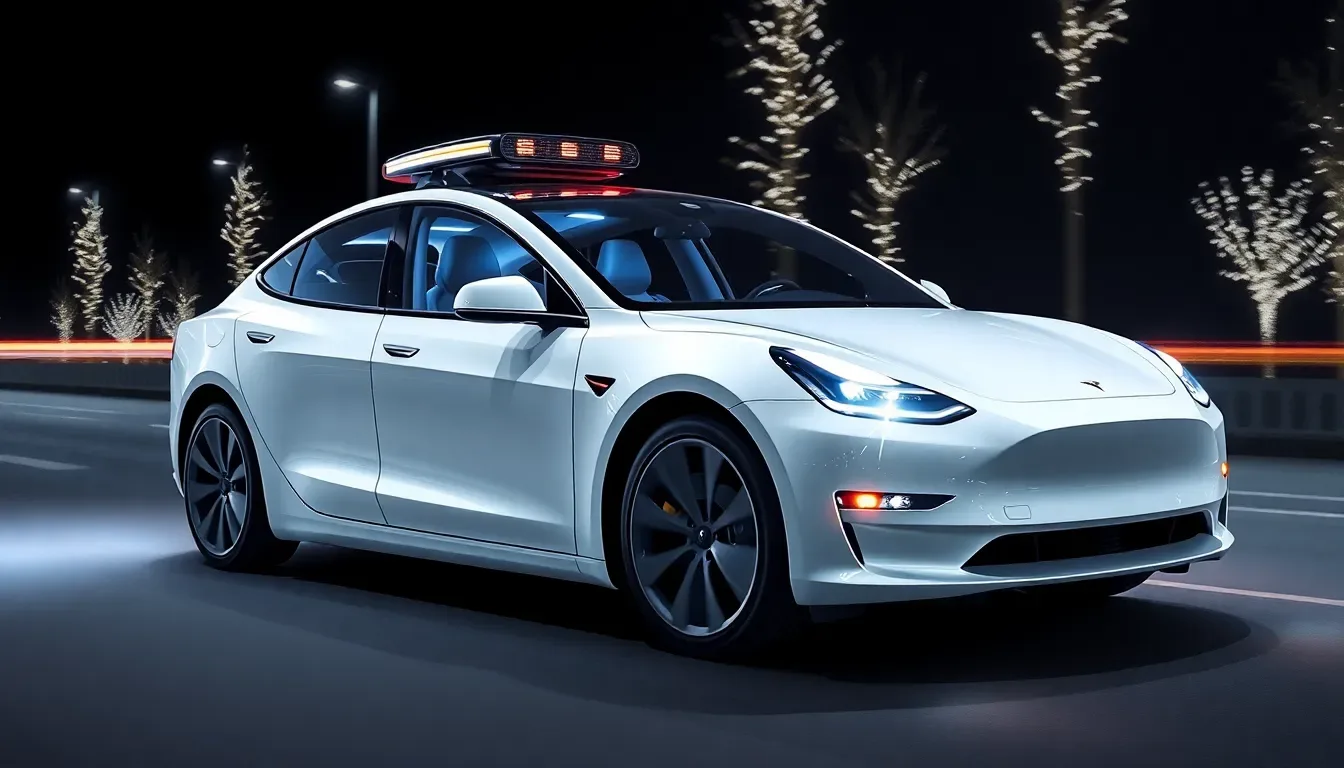
In the fast-evolving world of electric vehicles, Tesla continually pushes the boundaries of technology and innovation. Recently, the company made headlines with a significant update to its Full Self-Driving (FSD) software, alongside exciting developments regarding the Cybertruck and its Supercharger network. Let’s dive into these updates and explore what they mean for Tesla owners and the broader EV community.
Tesla introduces new Full Self-Driving version in Holiday Update
Tesla has surprised many of its owners by rolling out a new version of its Full Self-Driving software, coinciding with the launch of its Holiday Update. This update began reaching users with Hardware 4 on December 13, 2025. The company has been known for its methodical approach to updating software, and this time is no different.
The updated FSD v14.2.1.25 was first delivered to members of the Early Access Program who own Hardware 4 vehicles. This version appears to be a refinement over the previous v14.2.1, which had garnered mixed reviews from users due to some regressions in features like speed limit recognition and parking performance.
Notably, the update includes an array of exciting new features, enhancing the overall user experience. The significant enhancements from the Holiday Update include:
- Grok with Navigation Commands (Beta) – Enhances navigation by allowing users to add and edit destinations.
- Tesla Photobooth – A fun feature that allows users to take pictures inside their car using the cabin-facing camera.
- Dog Mode Live Activity – Users can monitor their pets via periodic snapshots taken inside the cabin.
- Dashcam Viewer Update – Now includes new metrics, such as steering wheel angle and speed.
- Santa Mode – Introduces festive graphics and sounds to celebrate the holiday season.
- Supercharger Site Map – Offers a 3D view of Supercharger locations starting with 18 pilot sites.
- Automatic Carpool Lane Routing – Helps drivers utilize carpool lanes when enabled.
Despite the promising enhancements, some owners remain cautious, recalling previous software updates that didn’t meet expectations. Tesla continues to iterate on its FSD software, addressing issues while adding new functionalities. The company acknowledges that not every update leads to improvements in all areas, a common challenge in software development.
Tesla expands charging infrastructure with northernmost Supercharger in North America
As part of its ongoing efforts to enhance its Supercharger network, Tesla has inaugurated its northernmost charging station in Fairbanks, Alaska. This station features eight V4 stalls, a significant addition for EV owners in one of the coldest regions of the United States.
Located just 196 miles from the Arctic Circle, Fairbanks has an average temperature hovering around -12 degrees Fahrenheit during winter. This new charging station is crucial for the growing number of Tesla owners in Alaska, as there are only 36 Supercharger stalls throughout the state, despite its vast size.
The Fairbanks charging station is part of Tesla’s larger strategy to expand its infrastructure, aiming to add over 12,000 stalls by the end of 2025. Tesla’s Supercharging expansion has shown remarkable progress, with a reported increase of 16 percent in stations and 18 percent in stalls globally compared to the previous year. Key details include:
- Charging Speed: The V4 capabilities allow charging speeds of up to 325 kW.
- Pricing: The base price per kWh at the Fairbanks Supercharger is set at $0.43.
- Future Plans: The station is slated to expand to 48 stalls in the future.
Tesla’s ambitious goals and consistent commitment to infrastructure development underscore the company’s dedication to supporting electric vehicle adoption and enhancing the overall user experience.
Update on Cybertruck’s Powershare feature
Tesla is also in the spotlight for its Cybertruck, particularly regarding the much-anticipated Powershare feature. This bidirectional charging capability allows the Cybertruck to serve as a portable power source for homes, appliances, and other electric vehicles. Announced in late 2023, Powershare has yet to be implemented, creating a wave of anticipation and frustration among early adopters.
The feature was initially expected to launch alongside the Cybertruck’s rollout but has faced multiple delays. In a recent communication with owners, Tesla stated that the feature is still under development, with a new release target set for mid-2026. This postponement has led to disappointment among owners, especially those who anticipated the feature would be available at their vehicle’s pickup.
Key details regarding the Powershare feature include:
- Functionality: Supports both vehicle-to-load (V2L) and vehicle-to-home (V2H) applications.
- Power Management: Prioritizes Powerwall discharge before tapping into the truck’s battery pack.
- Development Challenges: The integration has proven complex, especially in ensuring seamless communication between the Cybertruck and various generations of Powerwall.
Wes Morrill, the Cybertruck’s lead engineer, expressed empathy for the frustrations voiced by owners and acknowledged the technical obstacles encountered in bringing this feature to fruition. The transparency in communication reflects Tesla’s commitment to delivering a fully functional and safe product, even at the cost of delays.
Tesla’s Robotaxi testing expands with Model S
In a surprising twist, Tesla has begun testing its Robotaxi technology using Model S vehicles equipped with LiDAR rigs, diverging from its typical approach of utilizing Model Y crossovers. This shift hints at Tesla’s exploration of premium offerings within its Robotaxi platform, potentially introducing a more luxurious ride-hailing service.
The Model S, known for its performance and luxury, could position Tesla to compete with more upscale ride-hailing options such as Uber Black and Lyft Luxe. This development signals that Tesla is not only focused on mass-market solutions but is also considering the luxury segment for its future autonomous vehicle fleet.
Some key points regarding this testing phase include:
- Testing Versatility: The switch to Model S vehicles indicates Tesla’s flexibility and ambition in validating its technology under varied conditions.
- Luxury Market Potential: The possibility of integrating Model S into the Robotaxi fleet could appeal to consumers seeking premium transportation options.
- Strategic Development: Tesla’s engineering decisions are guided by data-driven insights, emphasizing the company’s analytical approach to innovation.
While the full implications of these tests remain to be seen, they demonstrate Tesla’s commitment to evolving its offerings and adapting to market demands.
Overall, Tesla continues to make waves in the electric vehicle market through its innovative software updates, infrastructure expansion, and ongoing development of its vehicle lineup. Each of these elements contributes to a broader vision of sustainable transportation and energy solutions, reshaping the future of mobility in profound ways.