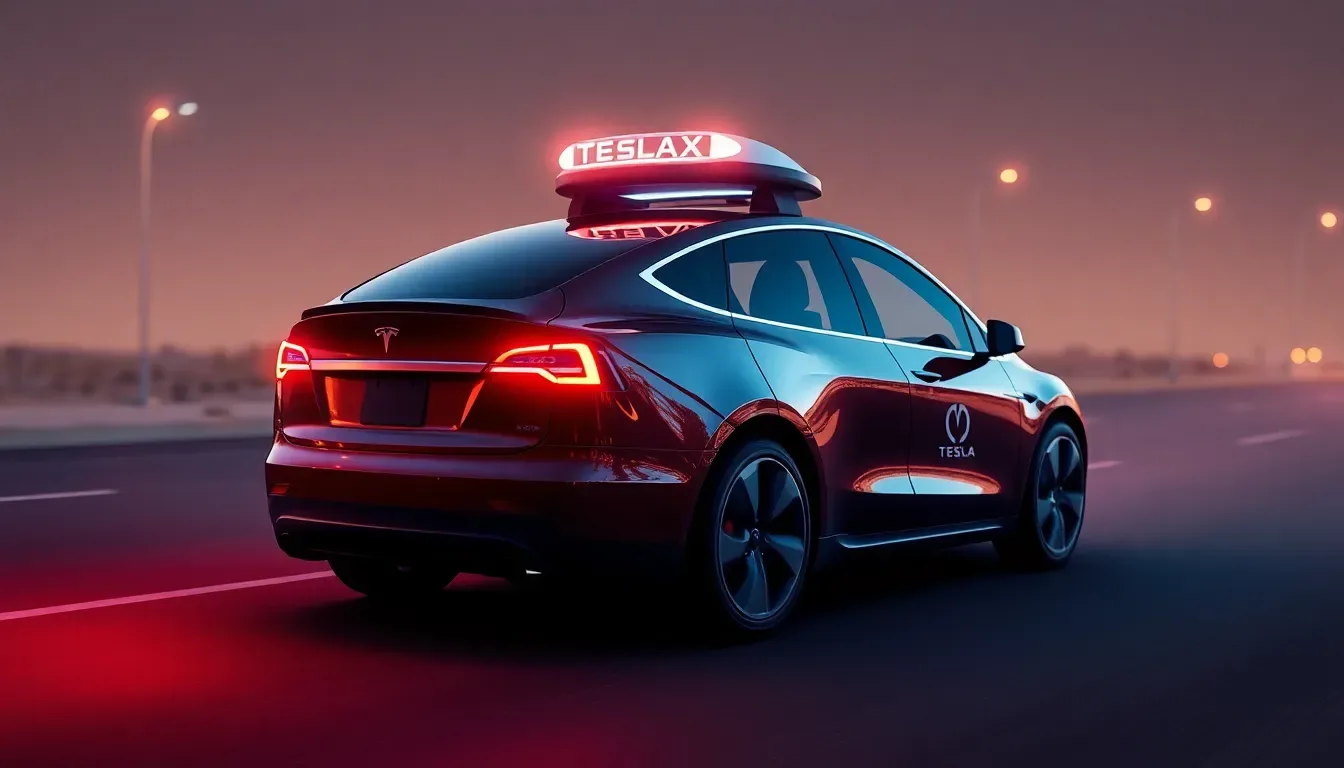
Elon Musk’s vision for the future of transportation is shaping up rapidly, particularly with the expansion of Tesla’s Robotaxi initiative. The company’s ambitious plans aim to revolutionize urban mobility through autonomous vehicles. As the deadline approaches for significant fleet increases in major cities, the implications for the ride-hailing industry and the automotive landscape are profound.
Recent insights from Musk during his appearance on the All-In podcast shed light on Tesla’s progress and future targets, indicating a notable push towards a fully autonomous ride-hailing service.
Expansion of robotaxi fleet
Tesla’s Robotaxi program is in its initial phases, but the company is poised for a significant increase in fleet size. Elon Musk revealed during the podcast that Tesla plans to ramp up its Robotaxi fleet in Austin to 500 vehicles and in the Bay Area to 1,000 vehicles by the end of 2025. This ambitious target reflects Tesla’s confidence in its autonomous technology.
Musk stated, “We’re scaling up the number of cars to, what happens if you have a thousand cars? Probably we’ll have a thousand cars or more in the Bay Area by the end of this year, probably 500 or more in the greater Austin area.” This statement indicates a robust effort to meet consumer demand for ridesharing while showcasing the company’s technological advancements.
With only a couple of months left in 2025, Tesla’s Robotaxi team is set to face intense pressure to meet these ambitious targets. Successful deployment of the Robotaxi fleet in these key markets could provide a significant boost to Tesla’s ride-hailing program, which has been relatively conservative lately.
Insights into Musk’s robotaxi strategy
Elon Musk has consistently emphasized the importance of Tesla’s Full Self-Driving (FSD) capabilities and Robotaxi network in determining the company’s future valuation. In a recent earnings call, he reiterated that the transition to a system without safety drivers in Austin is on track for completion by the end of the year.
- Musk stated, “We are expecting to have no safety drivers in at least large parts of Austin by the end of this year.”
- This transition represents a significant shift towards full autonomy.
- He assures that safety will remain a priority during this deployment.
Musk’s vision for a driverless future is ambitious, and the next steps are critical for Tesla as it navigates regulatory frameworks and public acceptance. The success of the Robotaxi fleet could prove essential in shaping Tesla’s long-term strategy and financial outlook.
The implications of autonomous driving technology
The push for autonomous vehicles, particularly through the Robotaxi initiative, presents both opportunities and challenges. As Tesla works to establish a robust fleet, the implications for urban transportation systems are profound:
- Reduced congestion: Autonomous vehicles could optimize traffic patterns and reduce the number of cars needed on the road.
- Environmental benefits: Electric Robotaxis can contribute to lower emissions, aligning with global sustainability goals.
- Economic impact: The ride-hailing market could shift dramatically, affecting drivers and traditional taxi services.
As cities adapt to these developments, it will be crucial to address infrastructure needs and regulatory concerns associated with deploying autonomous vehicles on public roads.
Musk’s perspective on driverless technology
In addressing public skepticism regarding autonomous technology, Musk stated, “The reality is, people may think they want to drive their car, but the reality is that they don’t.” He emphasized that the convenience of ride-hailing services often outweighs the desire for manual control.
This perspective reflects a growing trend among consumers who prefer the convenience of being transported without the responsibility of driving. The potential benefits of ride-hailing services include:
- Increased productivity while on the move.
- Enhanced safety features inherent in autonomous driving technology.
- Cost reduction in personal vehicle ownership.
Updates from Neuralink: A peek into the future
While Tesla’s advancements in autonomous vehicles are impressive, Elon Musk’s other venture, Neuralink, is also making headlines. Recently, Musk shared that Noland Arbaugh, the first human patient implanted with Neuralink technology, might soon receive an upgrade. This upgrade could enhance his cognitive abilities, allowing him to perform advanced tasks with his mind.
In a response to recent updates about Arbaugh’s progress, Musk remarked on the potential for further enhancements in his abilities, including possibly receiving a dual Neuralink implant. The implications of such advancements are staggering, potentially enabling faster reaction times in competitive video gaming.
Noland Arbaugh’s journey with Neuralink
Noland Arbaugh has shared his experiences since receiving the implant, which he affectionately calls “Eve.” His journey has demonstrated the positive impact of Neuralink on his daily life, including:
- Returning to school and excelling in subjects like neuroscience.
- Engaging in gaming and public speaking.
- Overcoming challenges related to his implant, such as a recent pressure sore.
As he prepares for his two-year update in early 2026, Arbaugh’s story offers a glimpse into the transformative potential of brain-computer interfaces.
The Tesla Cybercab: Innovations in autonomy
Another exciting development from Tesla is the Cybercab, a vehicle designed to operate without human input. Recent discussions have centered around whether this autonomous vehicle would include traditional controls like steering wheels and pedals. Musk has clarified that the Cybercab will not feature any manual controls when production begins in 2026.
His reasoning is straightforward: “How many times have you been in an Uber or Lyft and said, ‘I wish I could take over for the driver?’ 0.0 times.” This statement highlights the shift in consumer expectations towards fully autonomous ride-hailing services.
However, some Tesla enthusiasts remain skeptical, noting that current prototypes equipped with traditional controls are being tested to ensure safety during development.
Excitement surrounding the Tesla Roadster
Elon Musk has also teased exciting developments regarding the highly anticipated Tesla Roadster. During a recent appearance on the Joe Rogan Experience, Musk revealed that the Roadster will feature “crazy technology” that may redefine what we consider a car.
The company has been working tirelessly to deliver a product that exceeds expectations, with Musk promising an unforgettable demonstration of the vehicle’s capabilities. He stated, “Whether it’s good or bad, it will be unforgettable,” suggesting that the upcoming unveiling could be a landmark moment for the automotive industry.
With Musk hinting at features that could include hover capabilities and advanced performance metrics, fans eagerly await final details on pricing and production timelines.
As Tesla continues to innovate and expand its horizon, the convergence of autonomous driving, neural technology, and groundbreaking automotive advancements positions the company at the forefront of the future of transportation.