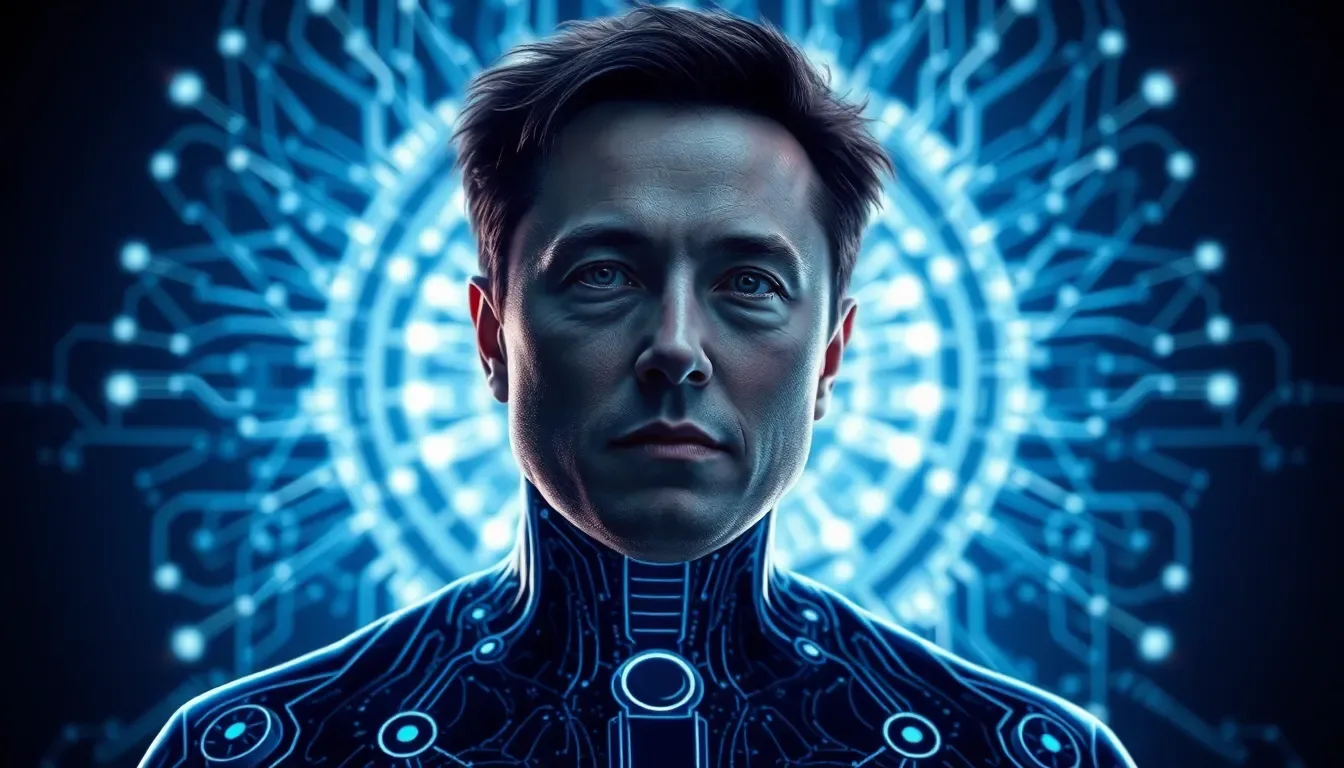
Elon Musk continues to push the boundaries of artificial intelligence through his ventures, particularly with xAI and its upcoming Grok 5 model. As the race toward artificial general intelligence (AGI) escalates, Musk’s latest insights provide a glimpse into a future that could redefine technology and society itself.
In a recent post, Musk shared his optimistic view that Grok 5 has a 10% chance of becoming the world’s first AGI. If this prediction holds true, it could mark yet another groundbreaking achievement for Musk’s entrepreneurial legacy.
Elon Musk’s evolving estimation of Grok 5
Just a month ago, Musk had hinted at a more cautious probability for Grok 5’s potential to reach AGI. At that time, he spoke of an uncertain yet promising future, as no company has successfully achieved AGI to date. However, his latest remarks have significantly raised expectations, suggesting that the capabilities of Grok 5 are advancing rapidly.
Musk stated, “My estimate of the probability of Grok 5 achieving AGI is now at 10% and rising.” This is a notable shift in his perspective, indicating not only confidence in the technology but also an urgency to bring it to fruition. He emphasized that Grok 5 could achieve AGI or something indistinguishable from it, underscoring the revolutionary implications of this technology.
The significance of AGI in modern society
Artificial General Intelligence (AGI) refers to an AI system that can understand, learn, and apply intelligence across a wide range of tasks similarly to a human. This leap from narrow AI, which excels at specific tasks, to AGI represents a monumental shift in technological capabilities.
- Potential for Transformation: Industries spanning health care, education, and transportation could see dramatic improvements in efficiency and problem-solving capabilities.
- Economic Impact: The integration of AGI could contribute trillions of dollars to the global economy while reducing costs and improving productivity.
- Advancements in Robotics: AGI could revolutionize robotics, enabling machines to perform complex tasks that require understanding and adaptability.
- Scientific Discovery: AGI could accelerate breakthroughs in research and development, leading to faster cures for diseases and advancements in technology.
According to a report by the Center for International Relations and Sustainable Development (CIRSD), achieving AGI could ultimately lead to artificial superintelligence (ASI), a level of intelligence that would exceed human capabilities. The ethical and societal implications of such advancements raise critical discussions about governance, safety, and the alignment of AI with human values.
The competitive landscape of AGI development
While Musk is optimistic about Grok 5, he is not alone in the race for AGI. Numerous startups and established tech giants are actively developing their own AI technologies with similar goals. The competition is fierce, and companies are investing billions in research and development to secure their positions in this rapidly evolving field.
Some key players in the AGI space include:
- OpenAI: Known for its GPT models, OpenAI is at the forefront of developing AI that can understand and generate human-like text.
- DeepMind: A subsidiary of Alphabet Inc., DeepMind focuses on AI research and has made significant strides in reinforcement learning.
- Anthropic: Founded by former OpenAI researchers, Anthropic aims to develop AI that is aligned with human intentions and values.
As these companies push the envelope of what’s possible with AI, the implications for society are profound. Not only does this competition drive innovation, but it also raises concerns about safety, ethics, and the potential for misuse of such powerful technologies.
Tesla’s driverless rides and the future of transportation
Beyond AI developments, Musk is also making headlines with Tesla’s ambitious plans to launch driverless rides in Las Vegas. This initiative aims to utilize the Boring Company’s underground tunnel system, which has been operational for some time and is expanding rapidly.
Currently, Tesla vehicles navigate these tunnels with a Full Self-Driving system, albeit with safety drivers present. However, Musk has announced a timeline for removing these drivers, suggesting that within a month or two, the vehicles will operate entirely autonomously.
The Boring Company’s Vegas Loop will feature:
- Multiple Stations: Initially serving three resorts, plans are in place to expand to over 100 stations across 68 miles of tunnel.
- Electric Vehicles: Tesla Model 3 and Model Y vehicles will be instrumental in providing efficient transportation for visitors.
- Safety Innovations: The move to fully autonomous vehicles aims to enhance passenger safety and improve the overall experience.
This development aligns with Musk’s broader vision of revolutionizing transportation, reducing traffic congestion, and creating a more sustainable transit model. As the technology matures, the Las Vegas Loop could serve as a model for future urban transportation systems worldwide.
Insurance innovations with Tesla’s Full Self-Driving technology
As Tesla continues to advance its Full Self-Driving (FSD) capabilities, new opportunities in the insurance sector are emerging. Recently, Shai Wininger, co-founder of Lemonade, proposed an innovative insurance model for Tesla’s FSD miles, aiming to offer coverage “for almost free.”
This proposal comes as traditional insurance companies often charge higher rates for Tesla vehicles due to their advanced technology and repair costs. However, proponents argue that FSD-equipped Teslas are safer than human drivers, providing a compelling case for lower insurance premiums.
Key highlights of this insurance proposition include:
- Direct Integration: The integration with Tesla vehicles will streamline the insurance process for customers.
- Data-Driven Pricing: Utilizing Tesla’s API allows for more accurate assessment of driving behavior compared to conventional devices.
- Market Expansion: This insurance model could be rolled out in states where Tesla’s own insurance program is not available.
The potential for lower insurance costs could incentivize more Tesla owners to utilize the FSD system, further integrating autonomous driving into everyday life.
Elon Musk’s ambitious pay package and its implications
Elon Musk’s recent $1 trillion pay package proposal has sparked debate among shareholders and analysts. This package, designed to secure Musk’s role as Tesla’s CEO for the next decade, will reward him based on the company’s growth and performance metrics.
Despite its ambitious structure, the package faces scrutiny from Institutional Shareholder Services (ISS), which advises shareholders to reject it. Concerns center around the potential for excessive compensation and its impact on future remuneration structures.
- High Stakes: The pay package could enable Musk to become the first trillionaire, raising ethical questions about executive compensation.
- Incentives for Growth: The package is intended to align Musk’s incentives with shareholder interests, promoting long-term company growth.
- Future Governance: Critics argue that such a large package could hinder the board’s ability to negotiate future pay levels effectively.
The outcome of this proposal will not only affect Musk’s compensation but also set a precedent for how companies compensate their executives in the future, especially in an era marked by soaring valuations and rapid technological advancements.