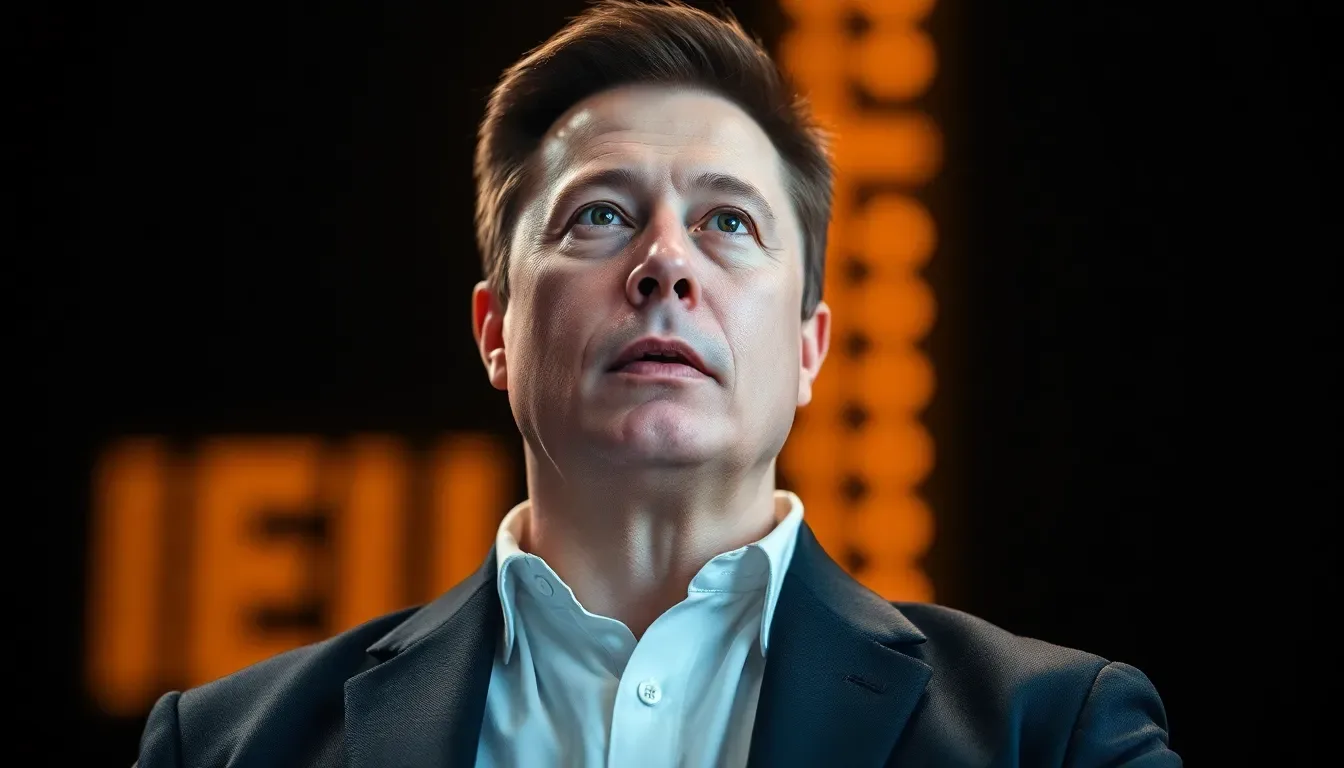
Elon Musk continues to push the boundaries of technology with Tesla’s ambitious developments in artificial intelligence and chip design. As the company gears up for the future, the insights from Musk’s latest announcements highlight not only the evolution of Tesla’s chips but also the broader implications for the automotive and tech industries. This is a look into the details of Tesla’s chip advancements and the exciting future that awaits.
Elon Musk outlines Tesla’s advanced AI chip development
Recently, Elon Musk shared intriguing details about Tesla’s upcoming AI5 chip, hinting at even more advanced iterations, potentially reaching AI8. His insights came through a post on X, where he expressed excitement about the design progress made in collaboration with Tesla’s chip engineers located in both California and Texas. This ongoing development is part of Tesla’s strategy to remain at the forefront of AI technology.
In his post, Musk remarked, “AI6 and AI7 will follow in fast succession. AI8 will be out of this world,” illustrating the rapid pace of innovation occurring within Tesla’s chip development teams. The mention of AI4 chips currently powering the rollout of Robotaxi services raises questions about the necessity for developing multiple generations of chips. While AI4 is adequate for today’s requirements, future applications, including Tesla’s Optimus humanoid robot, will undoubtedly benefit from more sophisticated chip technology.
AI5 chip: A significant leap forward
During Tesla’s Q3 2025 earnings call, Musk labeled the AI5 chip as “an amazing design” that marks a substantial evolution from its predecessor, the AI4 chip. The AI5, manufactured through partnerships with Samsung in Texas and TSMC in Arizona, is projected to deliver performance gains of up to 40 times compared to the AI4.
Key aspects of the AI5 chip include:
- Redesigned architecture: The chip’s design has been completely overhauled, eliminating traditional components like GPUs and image signal processors to enhance efficiency.
- Half-reticle design: Musk described the chip as fitting within a half-reticle design, which contributes to its sleek and efficient form factor.
- Scalability: Tesla plans to produce an oversupply of AI5 chips, which will not only power vehicles but also humanoid robots and data centers.
- Integrated approach: The company’s focus on vertically integrating its hardware and software development gives it a unique advantage in scaling AI applications.
Musk’s passion for this chip is evident, as he mentioned that he has “poured so much life energy” into its development. This commitment to innovation positions Tesla as a leader in the AI landscape.
The implications of advanced chip technology
The advancements in Tesla’s chip technology are not merely technical achievements; they hold significant implications for various sectors:
- Autonomous driving: Enhanced AI chips will improve the capabilities of Tesla’s Full Self-Driving (FSD) systems, making them safer and more reliable.
- Humanoid robotics: The Optimus robot will leverage the power of advanced chips to achieve greater autonomy and functionality.
- Data centers: Improved chip performance can revolutionize how Tesla processes vast amounts of data, optimizing operations across its platforms.
As Tesla continues to innovate, the demand for more sophisticated AI chips will likely increase, influencing the entire tech ecosystem.
Expanding Tesla’s Robotaxi program
In addition to chip advancements, Elon Musk has revealed exciting plans for Tesla’s Robotaxi program. During a recent podcast appearance, he discussed ambitious targets for expanding the Robotaxi fleet in key locations, including Austin and the Bay Area. By the end of 2025, Tesla aims to deploy 500 Robotaxis in Austin and 1,000 in the Bay Area, marking a significant step in the company’s autonomous vehicle initiative.
Musk addressed the potential impact of this expansion, stating, “We’re scaling up the number of cars to, what happens if you have a thousand cars?” This reflects a strategic move to increase the presence of Tesla’s Robotaxi service in urban areas, enhancing accessibility and convenience for users.
Future of Robotaxi operations
The success of the Robotaxi pilot program is critical for Tesla’s future valuation and growth. Musk emphasized the goal of transitioning to a system without safety drivers in Austin by year-end, which would be a monumental shift in the deployment of autonomous vehicles.
Key points regarding the Robotaxi program include:
- Deployment without safety drivers: The plan to operate without safety drivers represents a significant leap toward full autonomy.
- Market competitiveness: A successful Robotaxi rollout could position Tesla competitively against other ride-hailing services.
- Increased demand: As more Robotaxis hit the road, demand for Tesla’s AI chips and technology will likely surge.
This ambitious expansion reflects Musk’s vision for Tesla’s role in the future of transportation, where autonomous vehicles could become a commonplace mode of travel.
Looking ahead: The Tesla roadmap
Elon Musk’s recent comments and developments offer a glimpse into the future of Tesla and its commitment to technology and innovation. With a focus on advanced chip design and the expansion of autonomous services, Tesla is poised to lead the charge in the electric vehicle and AI sectors.
As the company continues to refine its technologies, the potential applications of AI5 and beyond are vast. From enhancing the driving experience to revolutionizing logistics and transportation, Tesla’s innovations are set to reshape multiple industries.
As we await further announcements from Musk and Tesla, the excitement surrounding these developments is palpable, and the implications for the future of mobility and AI are monumental.