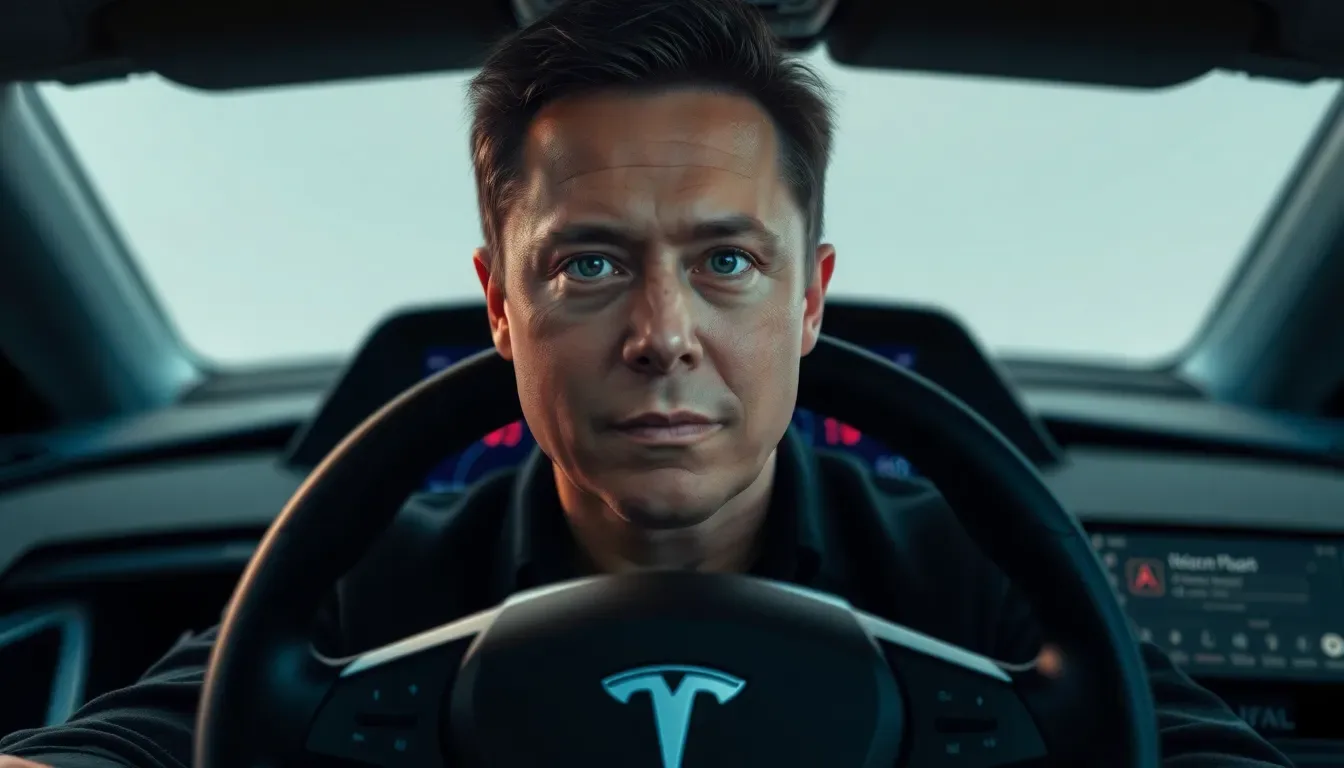
The future of transportation is rapidly evolving, and Tesla is at the forefront of this revolution. With the unveiling of the Tesla Cybercab, a vehicle designed to operate entirely autonomously, questions about its design and operational capabilities have surfaced. Elon Musk, the visionary CEO of Tesla, has recently made headlines by addressing the critical issue of whether the Cybercab will feature traditional manual controls. His insights not only clarify Tesla’s direction but also reflect broader trends in the automotive industry towards automation and the redefinition of vehicle functionality.
Elon Musk clarifies the Tesla Cybercab’s steering mechanism
The Cybercab is envisioned as a groundbreaking vehicle that aims to phase out human drivers entirely. However, speculation has surrounded its design, particularly regarding whether it would include conventional equipment such as a steering wheel and pedals. Musk decisively ended this debate, asserting that the Cybercab will not incorporate any elements that suggest manual operation will be possible.
During a recent appearance on the All In Podcast, Musk stated unequivocally that the production units of the Cybercab, set to roll off the assembly line in the second quarter of 2026, will not have a steering wheel or pedals. He elaborated on this decision, suggesting that while people might believe they want to drive, their experiences in ride-sharing services like Uber or Lyft indicate otherwise.
In Musk’s words:
“The reality is, people may think they want to drive their car, but the reality is that they don’t. How many times have you been in an Uber or Lyft and said ‘I wish I could take over for the driver’?”
Despite Musk’s assurances, some Tesla enthusiasts argue that the current prototypes observed on the roads still feature the very manual controls Musk has dismissed. These prototypes are part of real-world testing, and manual controls are necessary during this phase.
Understanding the implications of a fully autonomous vehicle
The decision to eliminate traditional driving controls in the Cybercab aligns with a broader industry trend towards full autonomy. As vehicles increasingly incorporate advanced AI and machine learning technologies, the role of the driver is being fundamentally reevaluated. This shift raises several important considerations:
- Safety and Liability: Fully autonomous vehicles could lead to a decrease in traffic accidents, but questions remain about liability in the event of a malfunction.
- Infrastructure Needs: Cities will need to adapt their infrastructure to accommodate autonomous vehicles, including dedicated lanes and parking solutions.
- User Acceptance: Consumer willingness to embrace driverless technology will significantly influence its success.
The role of testing in the development of the Cybercab
While the Cybercab is being developed with a focus on autonomy, testing remains a critical aspect of its evolution. Several prototypes have been seen operating in public, which, while equipped with steering wheels and pedals, are primarily for testing purposes. This real-world application is crucial for refining the vehicle’s AI systems and ensuring safety before the public release.
Moreover, Tesla’s emphasis on rigorous testing highlights the company’s commitment to delivering a reliable and safe product. The feedback gathered during these tests will undoubtedly contribute to the vehicle’s final design and functionality.
Broader trends in the automotive industry
The Cybercab’s design philosophy is reflective of broader trends in the automotive industry, where many manufacturers are investing heavily in autonomous technology. Companies are not only focusing on developing self-driving capabilities but also exploring new business models that could emerge from this shift, including:
- Ride-Hailing Services: As seen with Uber and Lyft, companies may pivot towards offering ride-sharing services using autonomous fleets.
- Data Monetization: Vehicles equipped with advanced sensors and AI can generate valuable data that can be monetized.
- Shared Mobility Solutions: The concept of personal ownership may evolve towards shared vehicle models, reducing the overall number of cars on the road.
Elon Musk’s vision for the future
Musk’s confidence in the Cybercab and its potential reflects his broader vision for the future of transportation. He believes that this vehicle will not only redefine how people think about driving but also pave the way for a new era of mobility. Musk has hinted at “crazy technology” that could even exceed traditional definitions of a vehicle.
He has previously suggested that the Cybercab could incorporate features akin to those found in science fiction, such as hovering capabilities, made possible through innovations from SpaceX. This ambitious approach highlights Musk’s commitment to pushing the boundaries of what is possible in automotive technology.
The potential impact of the Cybercab on the automotive market
The introduction of the Cybercab could have profound implications for the automotive market. As Tesla continues to lead the charge in electric and autonomous vehicle technology, competitors will be pressured to innovate or risk obsolescence. Key effects may include:
- Increased Competition: Traditional automakers will need to accelerate their own autonomous initiatives to keep pace with Tesla.
- Consumer Expectations: As technology advances, consumers may begin to expect more from all vehicles, influencing purchasing decisions.
- Regulatory Challenges: Policymakers will face the task of creating regulations that address the complexities of autonomous vehicles on public roads.
In conclusion, Elon Musk’s recent statements about the Cybercab underscore a significant pivot in the automotive landscape towards autonomy. As Tesla prepares for the upcoming production of the Cybercab, the implications of this vehicle extend beyond the company itself, potentially shaping the future of mobility for years to come.