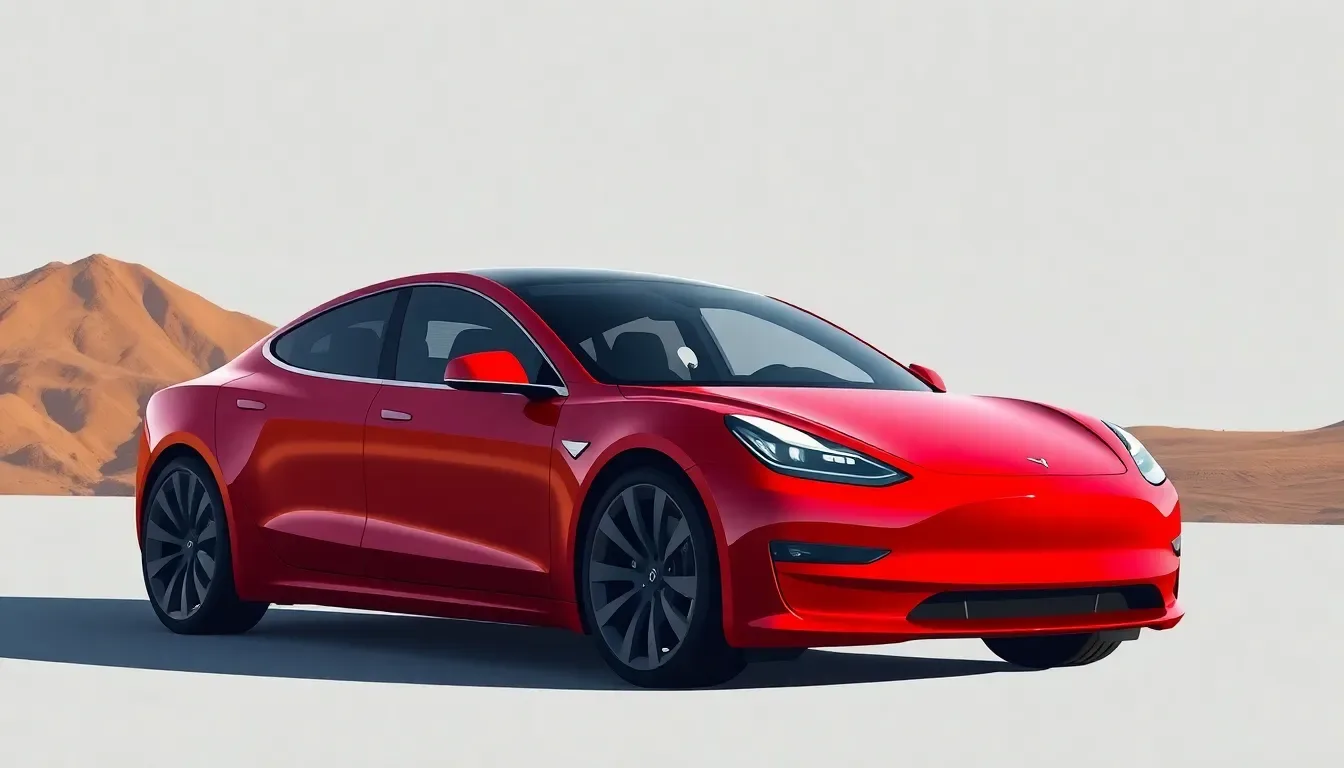
Elon Musk continues to innovate and expand Tesla’s ventures beyond electric vehicles. One of the latest developments is the company’s new Diner concept, which has gained immense popularity since its opening in Los Angeles. As the brand looks to replicate this success in other locations, it opens up discussions about the evolving landscape of consumer experiences and the integration of technology in everyday life.
This article explores the details surrounding Tesla’s new Diner locations, the ambitious plans for their Robotaxi fleet, and Musk’s latest insights on upcoming innovations in the tech giant’s ecosystem.
Tesla’s successful diner concept
Tesla’s first Diner, located on Santa Monica Boulevard, has become a vibrant hub for both Tesla enthusiasts and casual diners alike. Open 24 hours a day, it offers a unique fusion of dining and electric vehicle (EV) charging facilities. The Diner features:
- Locally sourced menu crafted by a world-class chef
- Two large movie screens for entertainment
- Supercharging stations for Tesla vehicles
Since its launch on July 21, 2025, the Diner has reported remarkable success, serving approximately 50,000 burgers in just one quarter, averaging 715 burgers sold daily. This rapid turnover highlights not only the demand for a unique dining experience but also the effectiveness of integrating EV charging with food services.
Elon Musk has expressed interest in expanding this concept further, with plans to open new Diner locations in Austin and Palo Alto, both strategically significant for Tesla. Musk mentioned, “It probably makes sense to open one near our Giga Texas HQ in Austin and engineering HQ in Palo Alto,” indicating the potential for greater synergy between vehicle charging and dining experiences.
Expansion of the Robotaxi fleet
As part of Tesla’s innovative edge, the Robotaxi pilot program is gaining momentum. Musk recently announced plans to expand the Robotaxi fleet in Austin to 500 units, while in the Bay Area, the target is set at an impressive 1,000 units by the end of 2025. This ambitious expansion reflects Tesla’s commitment to revolutionizing urban transportation.
Musk stated, “We’re scaling up the number of cars to… probably 500 or more in the greater Austin area,” signaling a significant operational push in the face of increasing demand for autonomous ride-hailing services. As the year comes to a close, Tesla’s Robotaxi team will be busy ensuring that these targets are met, which could pave the way for a more robust ride-hailing program.
The future of autonomous driving with Robotaxis
Elon Musk has been vocal about the pivotal role that the Full Self-Driving (FSD) and the Robotaxi network will play in Tesla’s long-term valuation. During a recent earnings call, he mentioned plans to transition to a system without safety monitors in parts of Austin by the end of this year, a significant milestone in the trajectory of autonomous vehicle technology.
This transition is crucial as it not only showcases Tesla’s confidence in its technology but also reflects the broader industry’s shift towards fully autonomous transportation solutions. Musk emphasized, “We’re obviously being very cautious about the deployment,” signaling a commitment to safety even as the company pushes forward with innovation.
Neuralink’s advancements: A glimpse into the future
In a related yet distinct domain, Neuralink, another of Musk’s ventures, is making strides with its brain-machine interface technology. Recently, Musk discussed the potential for upgrades for its first human patient, Noland Arbaugh, who received an implant that has significantly enhanced his quality of life. Arbaugh can now perform complex tasks, including gaming and attending classes, thanks to the Neuralink device.
This technology’s implications are vast, with Musk asserting that it could eventually enable users to outperform others in fast-paced video games. He stated, “Noland might be the first to receive a Neuralink upgrade to further augment his abilities,” hinting at the exciting possibilities that lie ahead.
Elon Musk’s insights on technology and public perception
Musk’s recent public statements have sparked discussions about the perception and acceptance of new technologies. On the topic of the Cybercab, Tesla’s autonomous vehicle, he noted that it would not include manual controls such as a steering wheel or pedals. He remarked, “The reality is, people may think they want to drive their car, but the reality is that they don’t,” emphasizing a shift in consumer preferences towards full autonomy.
This perspective is significant as it challenges traditional notions of vehicle ownership and driving. Tesla’s approach to the Cybercab indicates a future where human driving may become obsolete, paving the way for a new era of transportation, specifically designed for ride-hailing without human intervention.
The community’s response and challenges
While the Diner and Robotaxi initiatives have garnered positive attention, they have not been without their challenges. The Diner has attracted protestors, expressing concerns about various issues related to Musk and his businesses. Despite this, the innovative Diner continues to thrive, suggesting that consumer demand for unique experiences can often overshadow negative sentiment.
Protests outside the Diner highlight the complex relationship between public figures and community perceptions. However, Musk’s ventures, including the Diner and Robotaxis, showcase the potential for technological innovation to create new markets and reshape existing ones.
The road ahead for Tesla and its innovations
As Tesla continues to expand its reach in both the dining and transportation sectors, the company is poised for significant growth. The combination of innovative dining experiences and ambitious plans for autonomous vehicles illustrates Tesla’s commitment to redefining consumer interactions with technology.
With new Diner locations on the horizon and the ongoing development of the Robotaxi fleet, Tesla is set to not only capture market share but also influence consumer habits significantly. The next few years will be pivotal in determining how these innovations will integrate into everyday life, reshaping our understanding of mobility and convenience.