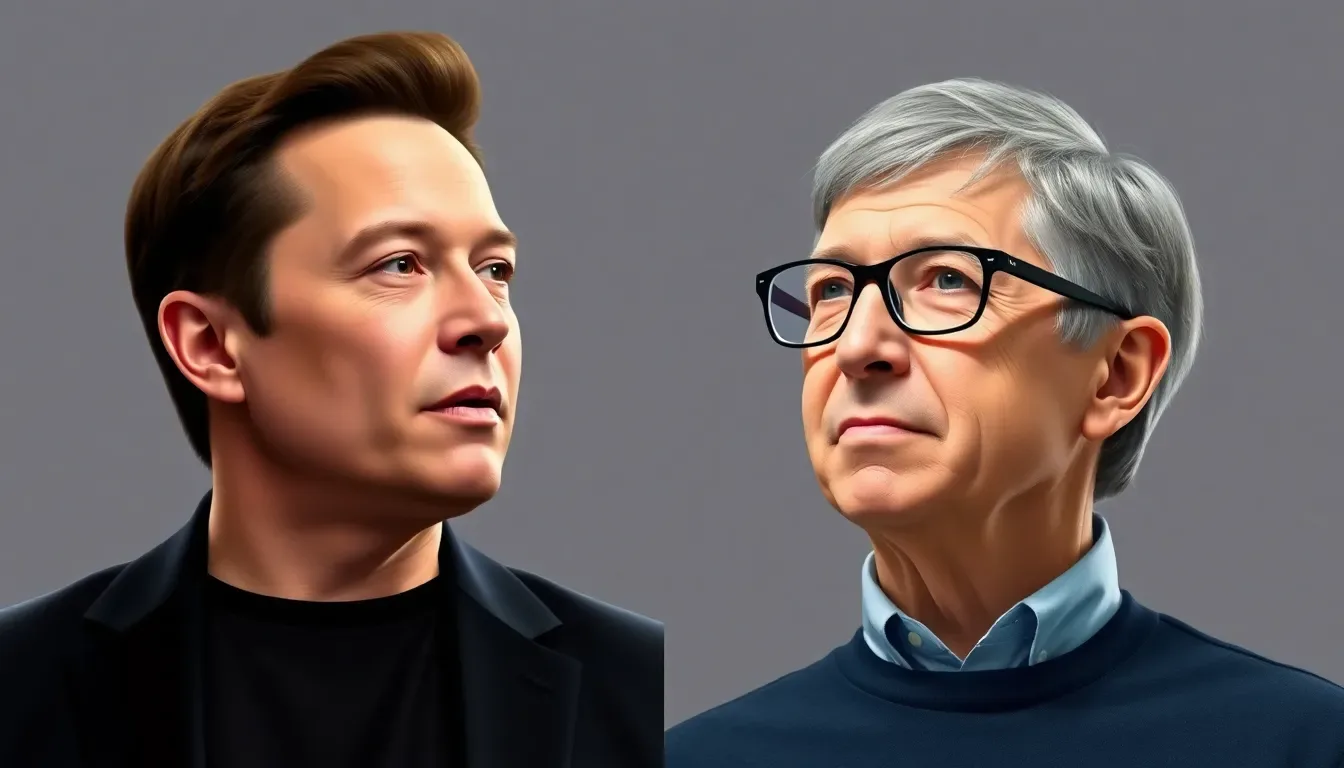
Elon Musk’s ongoing rivalry with Bill Gates has reached new heights, particularly in light of Gates’ significant short position against Tesla. This contentious relationship highlights not only personal differences but also stark contrasts in their views on technology and investment strategies. As Tesla continues to innovate and expand, the stakes in their interactions have never been higher.
The backdrop of this rivalry is a fascinating narrative involving billions of dollars, technological innovation, and the future of sustainable energy. As Tesla advances its position in the electric vehicle (EV) market, the implications of Gates’ financial maneuvers are noteworthy, particularly as Musk’s net worth fluctuates based on Tesla’s stock performance.
Elon Musk’s Critique of Bill Gates’ Short Position
In a recent comment on social media, Elon Musk took a jab at Bill Gates regarding the latter’s substantial short position against Tesla, reportedly amounting to around 1% of the company’s total shares. This position, if maintained, could have cost Gates over $10 billion as Tesla’s stock has surged to new heights.
Gates previously admitted to Musk, via text, that he was betting against Tesla, even while reaching out to explore philanthropic collaborations. This contradiction did not sit well with Musk, who has publicly challenged Gates on multiple occasions since then.
Musk’s criticism of Gates has included pointed remarks, such as:
- Gates was “hoping to make money on the downfall of the one company taking EVs seriously.”
- His short position against Tesla reflects a lack of faith in sustainable technologies.
This ongoing tension has drawn attention to the broader implications of their rivalry, especially as Musk recently reached a net worth exceeding $600 billion—marking a historic milestone. This wealth surge coincided with significant Tesla stock gains fueled by advancements in their Robotaxi program.
The Robotaxi Revolution: Tesla’s Ambitions
Tesla is at the forefront of a potential revolution in autonomous driving technology through its Robotaxi initiative. This program aims to deploy a fleet of self-driving vehicles capable of providing ride-hailing services without human oversight. As Tesla expands its operations beyond its current markets in Austin and the California Bay Area, several major cities are set to be included:
- Houston
- Dallas
- Miami
- Las Vegas
- Phoenix
Analysts like Mark Delaney from Goldman Sachs emphasize that while expansion is crucial, the speed of deployment will be the key metric to watch. They argue that profitability will hinge on how quickly Tesla can scale its driverless operation and initiate rides in new regions.
Recent tests in Austin showcase Tesla’s commitment to this goal. Autonomous Model Y vehicles were seen operating without any occupants, a significant step towards achieving fully autonomous rides. Musk has reiterated his confidence in removing Safety Monitors from these vehicles, stating:
“Unsupervised is pretty much solved at this point. So there will be Tesla Robotaxis operating in Austin with no one in them.”
Elon Musk’s Competitive Stance Against Waymo
Musk has not only directed his critiques toward Gates but has also made headlines with comments about Waymo, a leading competitor in the autonomous vehicle space. Recently, he stated that Waymo “never really had a chance” against Tesla, predicting that this will become clear in hindsight.
Both companies are significant players in the race for self-driving technology, yet they differ markedly in their approaches. Tesla’s strategy relies predominantly on vision-based systems, while Waymo incorporates various technologies, including LiDAR, which Musk has previously dismissed as ineffective.
The competition is palpable with both companies vying to dominate urban transportation. Key differences include:
- Tesla plans to activate its Robotaxi services across all its vehicles with a simple software update.
- Waymo utilizes a more limited fleet of specially designed vehicles.
- Tesla’s vision-based approach contrasts with Waymo’s mixed-method strategy, which includes sophisticated sensors.
This rivalry is set against a backdrop of increasing demand for autonomous technologies, with both companies pushing boundaries in their respective domains.
The Financial Stakes: Short Positions and Market Movements
Understanding the financial implications of short selling is crucial in this context. Bill Gates’ significant short position against Tesla reflects skepticism about the company’s future, which has proven costly given Tesla’s stock performance. Musk’s remarks about Gates’ financial strategy underscore the volatile nature of investments in emerging technologies.
Short selling involves borrowing shares to sell them at a current market price, hoping to repurchase them later at a lower price. This strategy can yield substantial profits if the stock declines but poses immense risks if the stock rises, as seen with Tesla’s recent gains.
The situation is compounded by Gates’ broader investment strategy, as evidenced by the Gates Foundation’s recent decision to reduce its holdings in Microsoft, raising questions about his views on tech investments.
The Future Outlook for Tesla and Its Competitors
As the competition heats up, the future for Tesla and its rivals will depend on several factors, including:
- Technological advancements in autonomous driving.
- The regulatory landscape surrounding self-driving vehicles.
- Consumer acceptance of ride-hailing services using autonomous vehicles.
Musk’s aggressive stance and innovative strategies position Tesla uniquely within this evolving market. As the company aims to expand its Robotaxi fleet and eliminate Safety Monitors, it will be crucial to observe how these developments influence public perception and market dynamics.
The stakes are high, and with Musk’s track record of defying expectations, the coming years will be pivotal for both Tesla and its competitors as they navigate the complexities of autonomous vehicle technology.