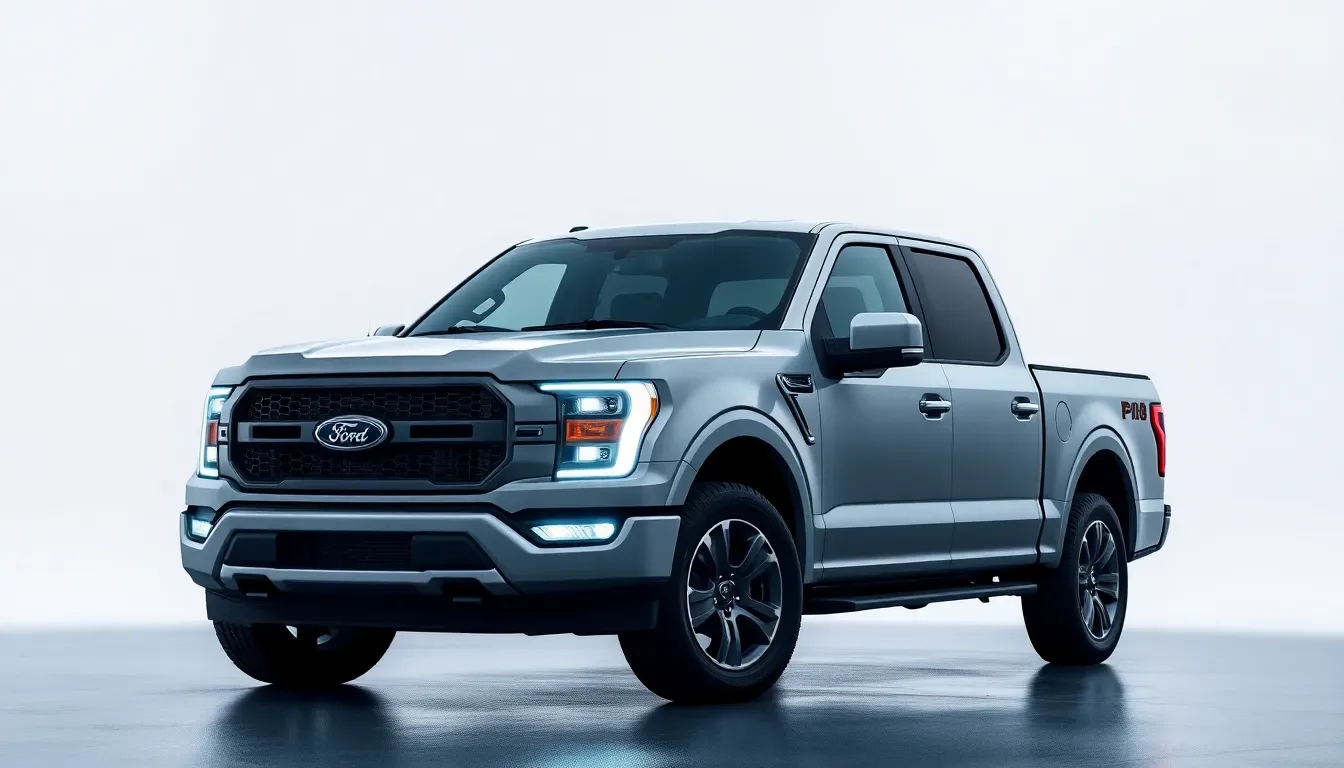
The automotive industry is undergoing a dramatic transformation, particularly with the rise of electric vehicles (EVs). As companies pivot to meet the challenges of electrification, decisions are being made that can have significant financial impacts. Recently, Ford made headlines with a surprising announcement that reflects the current state of EV development and the challenges facing traditional automakers.
Ford’s decision to cancel the all-electric F-150 Lightning is a pivotal moment, not only for the company but for the entire electric vehicle market. With a hefty charge of $19.5 billion, the company is signaling a major shift in strategy—a move that has left many wondering about the future of electric trucks and Ford’s position in the competitive landscape.
Ford’s cancellation of the F-150 Lightning: A significant shift in strategy
Ford has officially announced the cancellation of its much-anticipated all-electric F-150 Lightning. This decision comes as part of a broader effort to restructure its strategy regarding its electric vehicle initiatives, which have proven to be more challenging than initially expected. The company has been grappling with substantial losses in its EV sector, amounting to $13 billion since 2023.
This cancellation is not merely a response to low sales figures; it reflects a significant shift in market dynamics. Ford’s management has been vocal about the difficulty of producing large electric vehicles profitably. Thus, the company is pivoting towards more profitable segments, including hybrids, extended-range electric vehicles, and a focus on energy storage solutions.
The financial implications of restructuring
Ford’s restructuring comes with a staggering financial burden. The company plans to report a $19.5 billion charge related to the cancellation of the F-150 Lightning and other associated costs. This decision underscores the reality that the path to profitability in the EV sector is fraught with challenges.
- High production costs associated with electric vehicle manufacturing.
- Lower-than-expected consumer demand for larger electric models.
- Regulatory changes that can impact profitability.
Ford’s approach highlights a growing trend among traditional automakers who are finding it increasingly difficult to compete in the EV market without incurring significant losses. The company’s decision to redirect funds to areas with higher profit margins underscores a strategic pivot aimed at ensuring long-term sustainability.
Shifting focus: Hybrids and extended-range vehicles
In lieu of large electric vehicles, Ford is now focusing on developing hybrid models and extended-range electric vehicles that incorporate gasoline engines to enhance travel distances. This shift could provide a more immediate return on investment compared to larger all-electric models, which have proven to be less viable in the current market.
Ford’s executives have articulated a clear vision for the company’s future, emphasizing the importance of adapting to market realities. Andrew Frick, President of Ford, stated, “Rather than spending billions more on large EVs that now have no path to profitability, we are allocating that money into higher returning areas.”
The new strategy may include the development of:
- Affordable electric vehicles aimed at a broader consumer base.
- Advanced hybrid trucks and vans that can leverage existing infrastructure.
- Innovative energy storage solutions to support renewable energy initiatives.
Industry context: Challenges facing electric vehicles
Ford’s struggles with the F-150 Lightning are not isolated. The entire automotive industry is facing similar challenges as they transition to electric vehicles. Market dynamics are shifting, and consumer preferences are evolving, making it essential for companies to adapt quickly.
Factors contributing to these challenges include:
- Competition from established electric vehicle manufacturers like Tesla.
- Emerging electric startups that are rapidly innovating and capturing market share.
- Fluctuating raw material costs that impact production expenses.
This competitive pressure forces traditional automakers to reconsider their strategies. While Ford has decided to step back from the large electric vehicle market, other manufacturers are still exploring viable pathways to electrification.
Future prospects for Ford and the EV market
While the cancellation of the F-150 Lightning is certainly a setback, it may also present Ford with an opportunity to recalibrate its strategy and focus on segments that offer better profit margins. The automotive giant is not completely abandoning electric vehicles; rather, it is opting for a more pragmatic approach that emphasizes hybrids and affordable EVs.
Ford’s pivot could lead to new innovations and product offerings that resonate with consumers looking for practicality and efficiency. As the market continues to evolve, it will be crucial for Ford to stay ahead of the curve and meet consumer demands for both electric and hybrid solutions.
Ultimately, Ford’s decision reflects a broader trend within the automotive industry to reevaluate the role of electric vehicles. The challenges faced by traditional automakers in this transition may lead to exciting new developments in the sector, as companies forge new paths toward sustainable and profitable electric mobility.