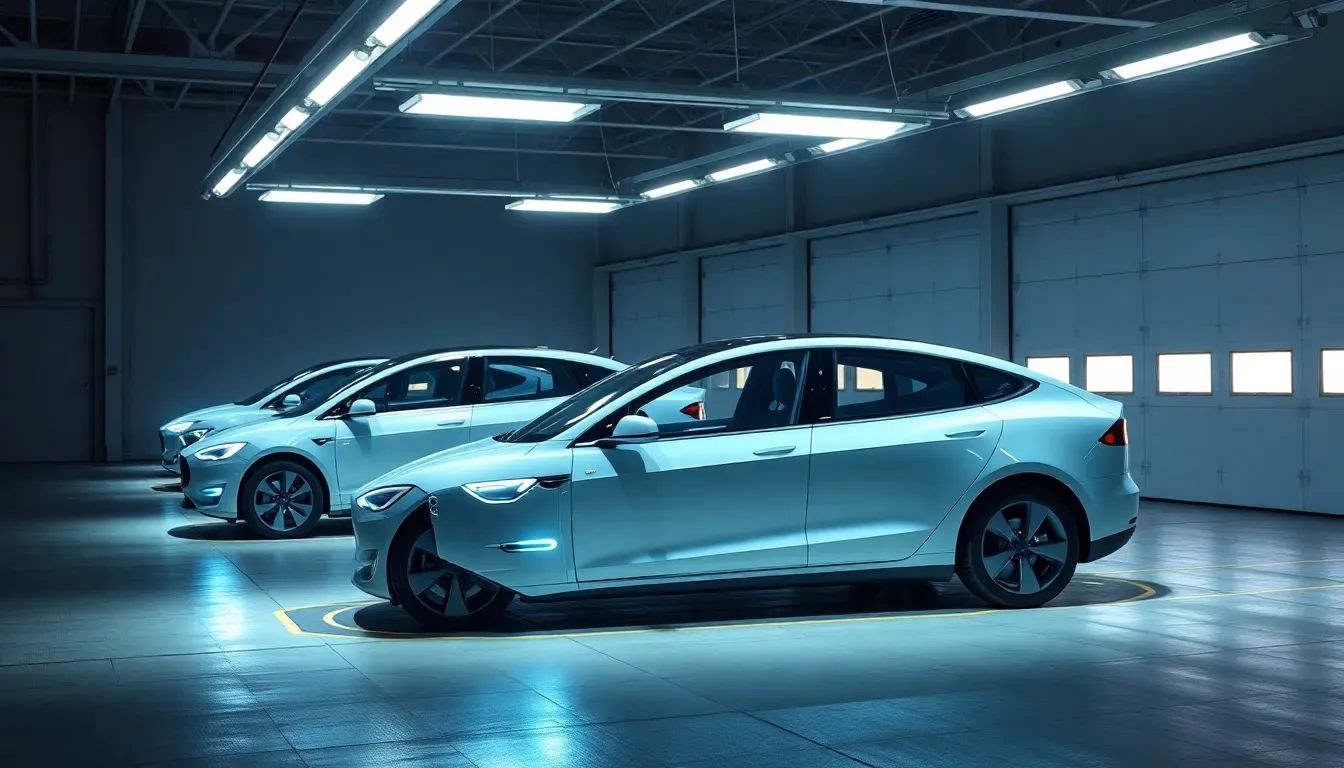
As the automotive industry evolves, Tesla is once again in the spotlight, this time with the highly anticipated Cybercab. Recent drone footage has ignited speculation and excitement among enthusiasts and investors alike, hinting at the imminent production of this innovative vehicle. With a focus on autonomous technology and design efficiency, the Cybercab represents a significant leap in Tesla’s commitment to reshaping urban transportation.
This article delves into the recent sightings of the Cybercab, production targets, and what these developments could mean for Tesla and the future of autonomous vehicles.
Recent sightings of the Cybercab raise excitement and speculation
Drone operators have played a crucial role in tracking Tesla’s developments at its Giga Texas facility. Notably, Joe Tegtmeyer, a seasoned drone flyover enthusiast, reported multiple covered Cybercab units situated near the crash testing facility during his latest aerial reconnaissance. Although the vehicles were concealed, their distinct sleek lines and compact dimensions were still noticeable.
Among the observations was the intriguing possibility that these units could either be older prototypes being retired or newly minted models preparing for crucial crash tests. Regardless of their status, Tegtmeyer emphasized that these sightings are indicative of a ramp-up in Cybercab activities at Giga Texas, signaling that production is likely approaching a significant milestone. He tweeted, “In either case, this is another datapoint indicating production is getting closer to happening,” which highlights the excitement surrounding the Cybercab’s progress.
Production targets for the Cybercab and its significance
The recent drone sightings come on the heels of reports indicating renewed Cybercab testing at both the Fremont Factory and Giga Texas. A test unit was recently observed navigating Giga Texas’ South River Road, while another was seen at the Fremont Factory, indicating that Tesla is making tangible progress in refining its autonomous vehicles.
The ambitious vision for the Tesla Cybercab is to establish it as the company’s highest-volume vehicle, with CEO Elon Musk projecting an astounding annual production rate of approximately 2 million units per year. Achieving such a target requires innovative manufacturing strategies, including the implementation of Tesla’s “Unboxed” production process designed to streamline assembly lines to resemble those of consumer electronics.
- Efficient Manufacturing: The “Unboxed” production method aims to reduce complexity and increase output.
- High Demand: Anticipated demand for the Cybercab reflects a growing interest in autonomous ride-sharing services.
- Market Position: By targeting high-volume production, Tesla positions itself competitively against traditional taxi services and emerging mobility solutions.
Innovations in Tesla’s autonomous driving technology
As Tesla continues to enhance its Full Self-Driving (FSD) technology, recent updates have shown promising improvements. The release of FSD V14.1.2 has garnered positive feedback from testers, who have noted significant advancements in the software’s performance, particularly regarding handling unpredictable driving scenarios.
In a recent interaction on social media, Musk confirmed that a broader rollout of FSD V14.2 is imminent, responding to calls from the Tesla community for the software to be made available to a wider audience. Tesla owner and FSD tester AI DRIVR remarked, “95% of the indecisive lane changes and braking have been fixed in FSD 14.1.2,” further solidifying the software’s readiness for deployment.
Mad Max mode and the future of driving experiences
A standout feature introduced with FSD is the “Mad Max mode,” allowing for more aggressive driving maneuvers, such as faster lane changes and higher speeds. This mode has been particularly effective in urban environments, where traffic congestion presents unique challenges. Testers have shared videos showcasing the system’s ability to navigate complex traffic scenarios with confidence.
- Increased Aggression: Mad Max mode provides a more assertive driving experience for those who prefer to maintain higher speeds.
- Safety Features: Despite its aggressive nature, the system retains safety protocols to ensure a secure experience.
- User Feedback: Tester reactions have been overwhelmingly positive, indicating a strong desire for the broader Tesla fleet to experience these enhancements.
Plans for driverless rides in Las Vegas
Elon Musk has revealed exciting news regarding Tesla’s operations in Las Vegas, particularly concerning the Boring Company’s Vegas Loop. Currently, Teslas are utilized to transport passengers through an underground network, making stops at popular resorts and attractions. However, Musk announced that the plan is to eliminate safety drivers from these vehicles, moving towards a fully autonomous operation.
The Vegas Loop aims to expand significantly, with projections indicating the addition of over 100 stations across 68 miles of tunnels. As this ambitious project unfolds, the transition to fully autonomous rides will mark a pivotal moment in the evolution of urban transportation.
With this transition, passengers can expect:
- Convenient Travel: Direct access to various hotspots without the need for human drivers will streamline the user experience.
- Increased Capacity: A driverless system can enhance the number of rides available, catering to a larger audience.
- Safety Assurance: With advanced safety measures in place, the risk associated with autonomous travel will be minimized.
Musk’s timeline for removing safety drivers indicates that the transition could occur within the next month or two, aligning with Tesla’s broader ambitions to implement autonomous rides in other urban settings.
Conclusion
As Tesla forges ahead with the Cybercab and its autonomous technology, the excitement surrounding these developments marks a transformative period for both the company and the automotive industry. With ambitious production targets and innovative features like Mad Max mode, Tesla is positioning itself as a leader in the future of transportation. The introduction of driverless rides in Las Vegas further exemplifies the company’s commitment to reshaping mobility solutions in urban environments.