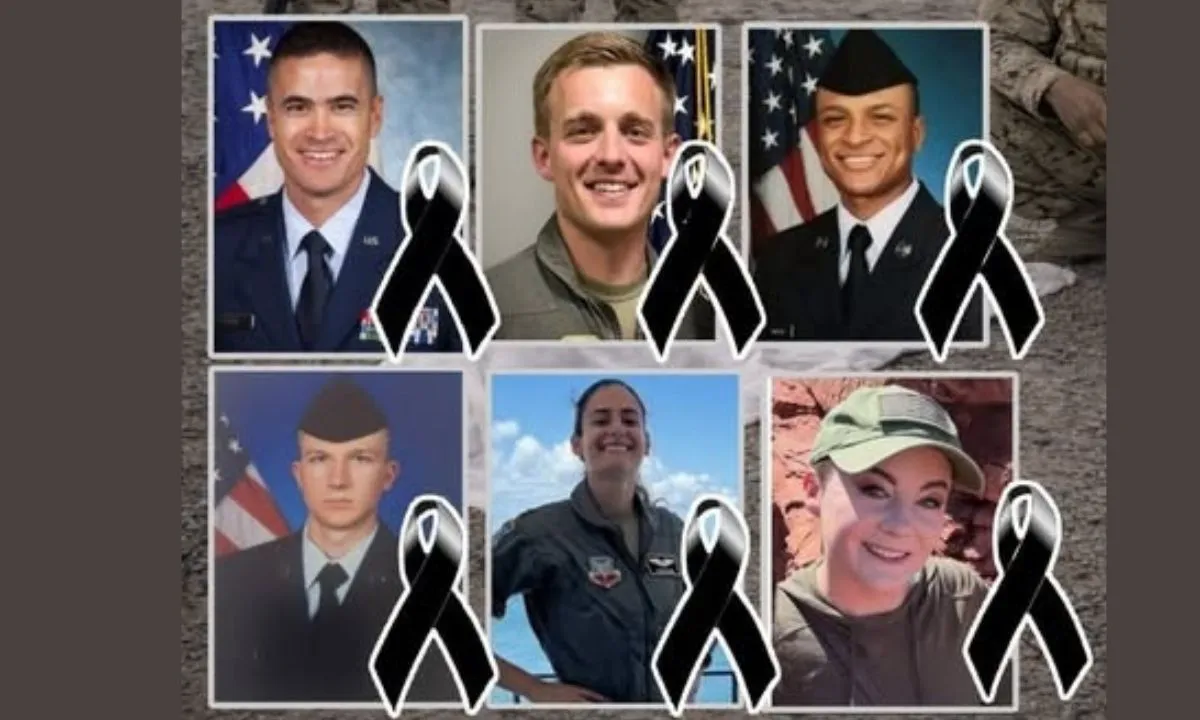
The recent tragedy involving a KC-135 refueling aircraft in Iraq has brought to light the risks faced by military personnel during combat missions. Six service members lost their lives in this incident, raising questions about safety protocols and the ongoing challenges in military aviation. This article explores the details surrounding the crash, the brave individuals involved, and the implications for future operations.
Details of the KC-135 Crash in Iraq
The Pentagon has confirmed the identities of six U.S. service members who tragically lost their lives when a KC-135 refueling aircraft crashed in western Iraq. This incident occurred during a combat mission supporting Operation Epic Fury on a Thursday, in what was deemed “friendly” airspace.
While another aircraft involved in the incident managed to land safely, the KC-135 suffered a catastrophic failure and crashed. Initial investigations suggest that the crash was not a result of hostile or friendly fire, and the military is currently conducting a thorough investigation to determine the precise cause.
Profiles of the Fallen Airmen
The following airmen were identified as the brave individuals who made the ultimate sacrifice:
- Maj. John “Alex” Klinner, 33
- Capt. Ariana Savino, 31
- Tech. Sgt. Ashley Pruitt, 34
- Capt. Seth Koval, 38
- Capt. Curtis Angst, 30
- Tech. Sgt. Tyler Simmons, 28
All six were assigned to the 6th Air Refueling Wing at MacDill Air Force Base in Florida, and the 121st Air Refueling Wing at Rickenbacker Air National Guard Base in Columbus, Ohio. Their loss is deeply felt across the military community.
Maj. John ‘Alex’ Klinner: A Legacy of Service
Maj. John “Alex” Klinner, hailing from Birmingham, Alabama, was not only a dedicated airman but also a devoted father to three young children, including 7-month-old twins and a 2-year-old son. His brother-in-law, James Harrill, shared that Klinner was an exceptional father who cherished every moment with his family.
A graduate of Auburn University, Klinner served for eight years in the U.S. Air Force and had recently moved into a new home with his family. Known for his kindness and helpful nature, he was remembered fondly by family and friends. “He was one of the most kind, giving people,” Harrill remarked, recalling a time Klinner helped shovel snow from their driveway during a family wedding.
His wife, Libby, expressed her heartache over their children’s loss, stating that they would never know the full extent of their father’s love and selflessness.
Capt. Ariana Savino: A Rising Star
Capt. Ariana Savino, 31, from Covington, Washington, was also part of the crew on the ill-fated KC-135. Her dedication to her duties and commitment to her fellow airmen exemplified the core values of the U.S. Air Force. Savino was known for her professionalism and leadership abilities, quickly earning the respect of her peers.
Tech. Sgt. Ashley Pruitt: A Committed Servant
Tech. Sgt. Ashley Pruitt, 34, from Bardstown, Kentucky, was another vital member of the crew. Pruitt was not only a skilled airman but also a mentor to many within her unit. Her career in the Air Force was marked by a commitment to excellence and a desire to help others succeed.
Capt. Seth Koval: An Instructor Pilot
Capt. Seth Koval, 38, served as a KC-135R Stratotanker instructor pilot with the 166th Air Refueling Squadron at the 121st Air Refueling Wing in Columbus, Ohio. Koval had a distinguished career with 19 years of service, during which he logged over 2,000 flight hours, including significant combat experience.
His background included a degree from Purdue University, after which he enlisted as a machinist with the Indiana National Guard before transitioning to the Ohio Air National Guard. Koval’s leadership and expertise were invaluable to the training of new pilots.
Capt. Curtis Angst: From Ground to Sky
Capt. Curtis Angst, 30, was another dedicated pilot within the 166th Air Refueling Squadron. With a degree in aerospace engineering from the University of Cincinnati, Angst began his career as a vehicle maintenance technician before earning his commission as a pilot.
His commitment to service and impressive academic background underscored his contributions to the Air Force. Throughout his career, he logged numerous flight hours and participated in various missions that demonstrated his capabilities as a pilot.
Tech. Sgt. Tyler Simmons: The Boom Operator
Tech. Sgt. Tyler Simmons, 28, served as a boom operator on the KC-135R. His primary responsibility was to transfer fuel to other aircraft during missions, a critical role in maintaining air operations. Simmons was remembered by his family for his infectious smile and strong presence.
Having joined the Air Force in 2017, Simmons transitioned from security forces to aviation and quickly became a respected member of his squadron.
The Investigation Continues
U.S. Central Command has confirmed that the KC-135 crashed during a combat mission in friendly airspace. Investigations are ongoing to understand the factors leading to the crash, with officials indicating that it was not caused by any hostile action.
Military aviation incidents like this one highlight the risks service members face daily and the complexities involved in operating aircraft in combat zones. The KC-135, a critical asset for midair refueling, enables extended flight missions, making it indispensable for military operations.
The Role of the KC-135 Stratotanker
The KC-135 Stratotanker has been a vital part of the U.S. Air Force’s operational capabilities for decades. It serves multiple purposes, including:
- Midair refueling of military aircraft
- Transporting wounded personnel
- Conducting reconnaissance and surveillance missions
With over 60 years of service, the KC-135 fleet remains essential for maintaining air superiority and operational flexibility across various military engagements.
Conclusion of the Investigation
As the investigation continues, the loss of these six airmen underscores the sacrifices made by military personnel in carrying out their duties. The families of the fallen are in the thoughts of many as they navigate this difficult time.
In light of this incident, it is crucial to enhance safety protocols and continually assess the operational risks associated with military aviation, ensuring that those who serve are equipped with the best possible resources to perform their missions safely.