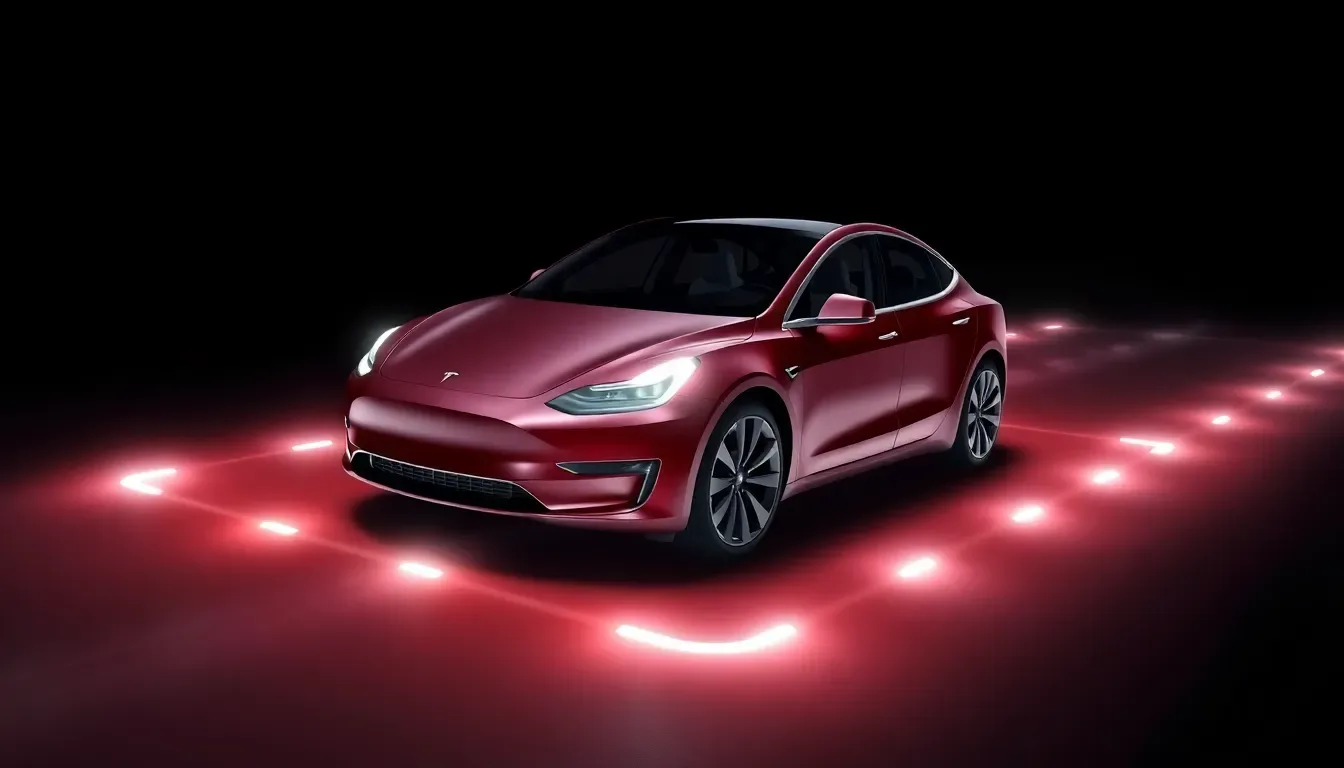
Tesla continues to push the boundaries of technology and innovation, often hinting at exciting new features that could redefine the driving experience. Recently, the company hinted at a potential integration of Starlink internet technology into its vehicles, a move that could revolutionize connectivity in the automotive sector. This integration could enhance user experience and redefine how vehicles communicate with the digital world.
Tesla’s Patent for Starlink Integration: A Game Changer
In a recent patent filing, Tesla outlined a groundbreaking design for a vehicle roof assembly that incorporates radio frequency (RF) transparency. This innovation would facilitate seamless communication between the vehicle and external devices, including satellites. The patent, published under U.S. Pub. No 2025/0368267, describes a roof made from RF-transparent polymer materials, allowing for enhanced connectivity.
Tesla aims to leverage new materials, such as high-strength polymer blends, instead of traditional glass or metal. These materials not only provide the necessary strength and safety but also optimize the vehicle’s compatibility with modern communication technologies. The integration of Starlink technology could lead to:
- Improved Connectivity: Elimination of cellular dead zones, particularly in rural areas, ensuring constant internet access.
- Enhanced Vehicle Functionality: Improved communication for features like navigation and remote monitoring.
- Robust Data Transmission: Enabling features that require constant data flow, such as autonomous driving capabilities.
This patent signals Tesla’s intent to incorporate advanced technologies and offers a sneak peek into the future of connected vehicles.
The Potential of RF-Transparent Roof Designs
Tesla’s new roof design proposes the use of polymer blends such as Polycarbonate and Acrylonitrile Butadiene Styrene (ABS). These materials are known for their durability and compliance with safety standards, which is crucial when integrating new technologies. The advantages of using such materials include:
- Crashworthiness: Maintaining safety while ensuring the roof can support RF communication.
- Noise and Vibration Control: Enhancing passenger comfort through advanced material properties.
- Sustainability: Potential for recyclable materials in the manufacturing process.
Through this innovative design, Tesla is working to overcome challenges related to safety and connectivity while maintaining compliance with Federal Motor Vehicle Safety Standards (FMVSS).
Starlink: A Competitive Advantage for Tesla Owners
The integration of Starlink into Tesla vehicles would provide several distinct advantages for owners. These benefits are particularly pertinent for those who travel frequently or live in areas with limited cellular coverage:
- Elimination of Dead Zones: Starlink’s satellite network provides reliable internet access in remote areas.
- Critical for Robotaxi Services: Reliable connectivity is essential for fleet management and remote monitoring, enhancing the potential for autonomous vehicle operations.
- Enhanced Entertainment Options: Continuous internet access can provide passengers with entertainment and connectivity options during journeys.
As Tesla moves to integrate Starlink connectivity, it reinforces its commitment to enhancing user experience and staying at the forefront of automotive technology.
Anticipating Future Developments
The concept of integrating Starlink into Tesla vehicles indicates a significant shift in how we perceive automotive connectivity. As the demand for continuous internet access grows, the automotive industry must adapt. Tesla’s approach to using innovative materials and technologies positions it as a leader in this space.
Moreover, the continuous development in the Starlink satellite network, coupled with Tesla’s advancements, could lead to:
- Seamless Software Updates: Improved capability for Over-the-Air (OTA) updates, enhancing vehicle performance and adding new features.
- Real-Time Data Processing: Enhanced capabilities for processing data from various sensors and systems within the vehicle.
- Future-Proofing Vehicles: Ensuring that vehicles remain relevant and equipped with the latest technological advancements.
Tesla’s integration with Starlink could also pave the way for new business models, where internet connectivity becomes a standard feature of the driving experience.
A Glimpse into Tesla’s Broader Strategy
This patent filing is just one part of Tesla’s broader strategy to innovate within the automotive sector. The company has consistently demonstrated its ability to adapt and evolve, often leading to advancements that set industry standards. The move towards integrating satellite communications aligns with Tesla’s mission to accelerate the world’s transition to sustainable energy.
As Tesla continues to innovate, it is not only enhancing its own vehicles but also influencing the entire automotive landscape. The implications of this technology extend beyond just connectivity; they touch upon:
- Energy Management: Improved energy efficiency through better communication between vehicles and power sources.
- Enhanced Mobility Solutions: Future possibilities for autonomous vehicles relying on stable internet connectivity.
- Collaboration with Other Technologies: Opportunities for partnerships with technology providers and service platforms.
This forward-thinking approach could solidify Tesla’s place as a key player in the future of transportation technology.