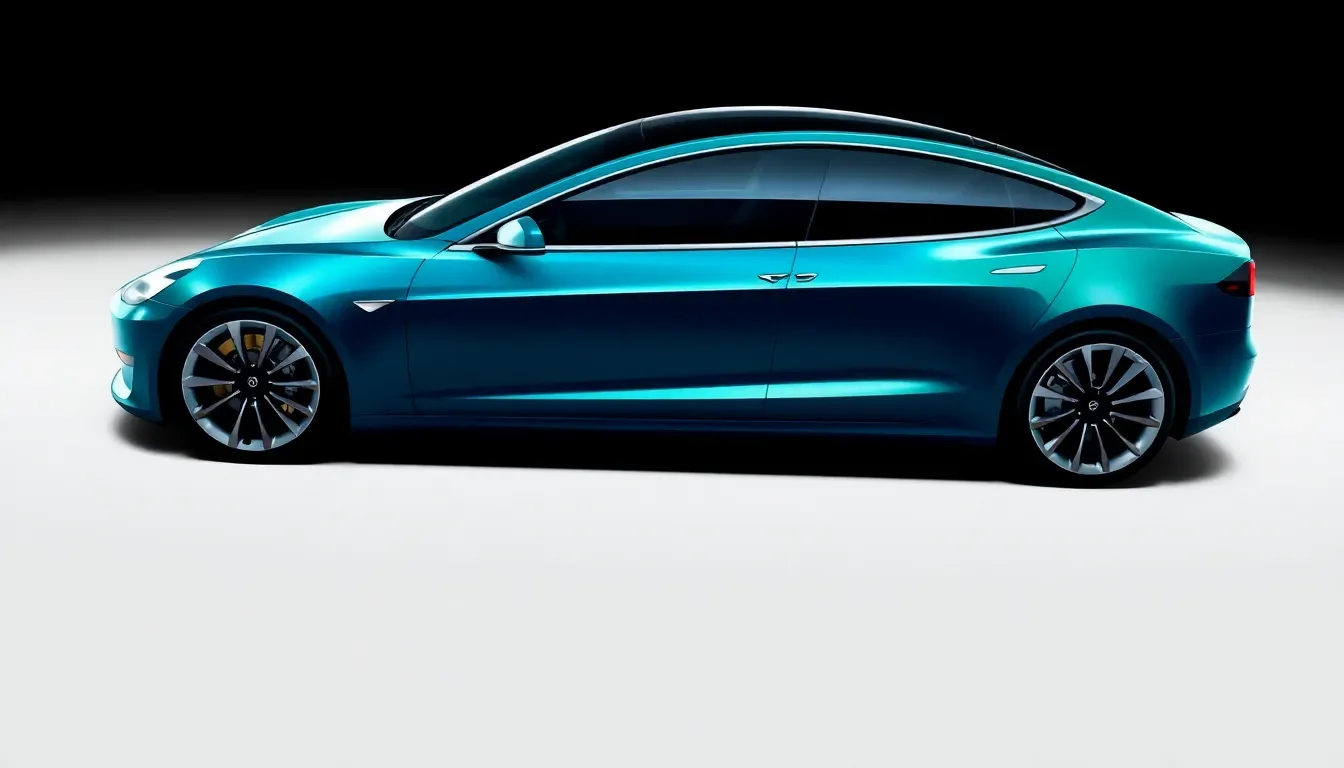
The automotive industry is undergoing a seismic shift, with electric vehicles (EVs) leading the charge. As companies like Tesla and Rivian push the boundaries of technology, innovations in self-driving capabilities and insurance solutions are emerging. Understanding these developments is crucial for consumers and enthusiasts alike. Let’s dive into the latest updates from Tesla and its competitors.
Rivian announces ambitious self-driving initiatives
Rivian, a notable player in the electric vehicle market, has recently revealed its plans to enhance its self-driving technology. At its AI and Autonomy Day held in Palo Alto, California, Rivian unveiled an advanced self-driving chip and a subscription model aimed at competing directly with Tesla’s offerings.
The company introduced the Autonomy+ subscription service, priced at $49.99 per month, alongside a one-time purchase option costing $2,500. This initiative will provide customers with access to Rivian’s self-driving suite, marking a significant step forward in the company’s technological evolution.
CEO RJ Scaringe expressed his enthusiasm for these developments, stating that the technology’s efficacy will improve as more data is collected from real-world usage. This strategy mirrors Tesla’s approach, which utilizes a neural network to enhance its algorithms based on driving data.
Scaringe emphasized the importance of their in-house developed chip, the RAP1, which is anticipated to be about 50 times more powerful than the current chip utilized in Rivian vehicles. This chip is expected to perform over 800 trillion calculations per second, enabling significant advancements in autonomous driving technology.
Rivian’s focus initially centers on personal vehicle ownership, although future plans include entering the rideshare market. Scaringe noted:
“While our initial focus will be on personally owned vehicles… this also enables us to pursue opportunities in the rideshare space.”
This dual approach reflects Rivian’s commitment to adapting to market demands while paving the way for future innovations.
Technical specifications of Rivian’s self-driving technology
Rivian is taking a comprehensive approach to its autonomous driving capabilities. Unlike Tesla, which primarily relies on a vision-only system, Rivian employs a mix of technologies including:
- 11 cameras
- Five radar sensors
- One forward-facing LiDAR sensor
This multifaceted sensor suite is designed to enhance the vehicle’s ability to perceive its environment more accurately.
Furthermore, the RAP1 chip powers Rivian’s third-generation autonomy computer, known as the Autonomy Compute Module 3 (ACM3). The specifications of the ACM3 are impressive and include:
- 1600 sparse INT8 TOPS (Trillion Operations Per Second)
- Processing power equivalent to 5 billion pixels per second
- RAP1 features RivLink, a technology designed for low-latency interconnect, which enhances processing capabilities
- In-house developed AI compiler and platform software
These advancements demonstrate Rivian’s intent to not only keep pace with industry giants but also to carve out its niche in the competitive landscape.
Tesla Model Y discounts: Driving sales and adapting to market conditions
In a bid to boost sales before the year concludes, Tesla has rolled out substantial discounts on its Model Y configurations. The company is offering reductions of up to $1,500 on new Model Y Standard trims and up to $2,000 on Premium trims available in U.S. inventory. Additionally, buyers can enjoy a complimentary upgrade, such as a choice of paint or interior color, at no extra cost.
This promotional campaign comes as Tesla seeks to maintain strong sales figures amid fluctuating market conditions. The company reported over 1.2 million vehicle deliveries in the first three quarters of the year, though this represents a slight decline compared to the previous year.
Despite this, Tesla’s performance in Q3 was particularly noteworthy, marking its best quarterly results to date. The elimination of the $7,500 EV tax credit in September spurred a rush of buyers eager to secure their purchases, leading to impressive sales figures.
Looking ahead, projections suggest that Tesla could see a decline in deliveries for the second consecutive year. However, the company’s strategic emphasis is shifting from sheer volume to enhancing autonomy and AI capabilities, which are pivotal for its long-term valuation.
Upcoming developments in Tesla’s Full Self-Driving technology
Elon Musk has hinted at significant advancements in Tesla’s Full Self-Driving (FSD) technology, describing an upcoming model as “the last big piece of the puzzle.” This update is anticipated to introduce enhanced reasoning and reinforcement learning capabilities.
During a Q&A session, Musk stated:
“There’s a model that’s an order of magnitude larger that will be deployed in January or February 2026.”
This announcement aligns with Tesla’s vision of achieving full autonomy, with Musk expressing confidence that FSD unsupervised capabilities are nearing completion. This model is expected to incorporate advanced learning algorithms to further develop the vehicle’s decision-making processes.
As Tesla continues to refine its FSD technology, the company is also working on eliminating safety monitors for Robotaxi operations, indicating a move towards a more autonomous driving experience.
Tesla’s partnership with Lemonade: A new insurance offering
In an innovative move, Tesla has partnered with Lemonade, an AI-driven insurance company, to introduce a new insurance program aimed at providing competitive rates for Tesla owners. This collaboration leverages Lemonade’s unique model, which focuses on harnessing technology to streamline the insurance process.
Details of the insurance program highlight Tesla’s commitment to enhancing the customer experience. Key features include:
- Lower insurance premiums based on driving behavior
- Quick claims processing through a user-friendly app
- Integration with Tesla’s safety features to reduce overall risk
By offering this insurance option, Tesla aims to provide a comprehensive package that complements its vehicles, ensuring that customers receive value beyond just the purchase of a car.
The future of autonomy and electric vehicles
The competition in the electric vehicle market is becoming increasingly fierce, with Rivian and Tesla at the forefront of innovation. As advancements in self-driving technology continue to evolve, the focus will likely shift toward enhancing user experience and ensuring safety.
Both companies are making strides towards achieving Level 4 automation, which would enable vehicles to operate independently under certain conditions. The implications of this technology are profound, potentially transforming transportation and personal mobility.
As the industry progresses, consumers can expect not only improved vehicles but also enhanced ecosystems that encompass services like insurance and autonomous driving. This holistic approach will undoubtedly shape the future of the automotive landscape.