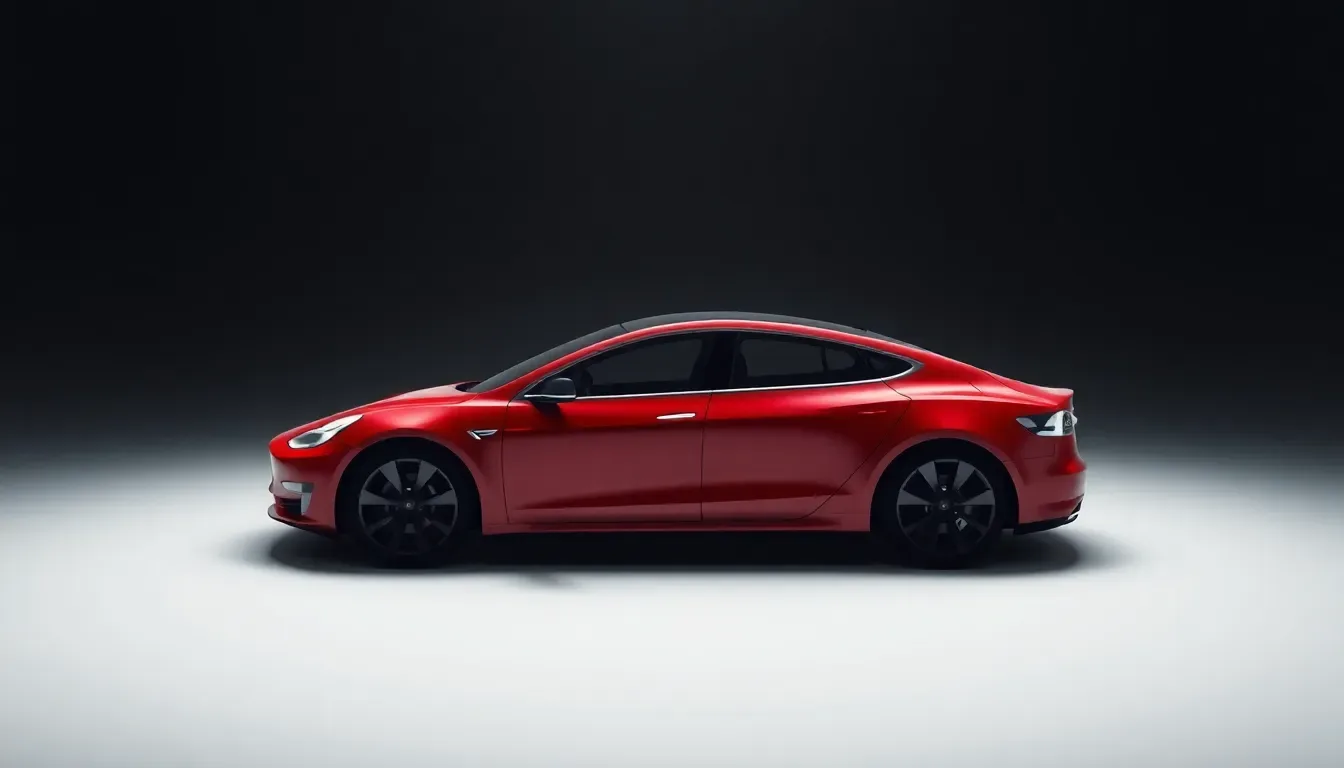
As Tesla continues to navigate a pivotal moment in its evolution, the focus on leadership and strategic direction has intensified. Recent discussions surrounding CEO Elon Musk’s proposed performance award for 2025 highlight the intersection of corporate governance, investor sentiment, and technological advancement. Insights from Tesla’s leadership, particularly Ashok Elluswamy, the Vice President of AI Software, provide a deeper understanding of the company’s trajectory and the implications for shareholders.
Insights from Tesla’s VP for AI Software
Ashok Elluswamy, Tesla’s Director of Autopilot Software and VP of AI Software, recently articulated his perspective on the critical juncture at which Tesla finds itself. In a post on X, he emphasized the company’s transformation from a leader in electric vehicles to a frontrunner in robotics powered by real-world AI.
Elluswamy stated, “This note regarding the importance of Elon leading Tesla is more relevant now than ever. Tesla is at a critical juncture, as it is metamorphosing into the world leader in robotics.” He highlighted the complexity of creating large-scale, functional robots, which requires expertise in:
- Engineering design
- Manufacturing
- Real-world AI software
- AI chip development
According to Elluswamy, Elon Musk possesses the unique combination of skills and instincts necessary to guide Tesla through this transformation, making his leadership more crucial than ever.
Support for Musk’s 2025 Performance Award
As Tesla prepares for its 2025 Annual Shareholders Meeting on November 6, notable executives, including Board Chair Robyn Denholm, have been advocating for shareholders to support Musk’s performance award. The meeting, held at Giga Texas, is anticipated to be a defining moment for Tesla’s future.
Executives have argued that Musk’s compensation package and the accompanying proposals are vital to achieving the ambitious goals outlined in Musk’s Master Plan Part IV. This plan envisions significant advancements in technology and market position that could redefine Tesla’s impact in the automotive and energy sectors.
Shareholders are being urged to consider how Musk’s leadership and the proposed compensation align with their interests, particularly in light of Tesla’s evolving strategy and market challenges.
Calpers’ Opposition to Musk’s 2025 Performance Award
In a notable turn of events, the California Public Employees’ Retirement System (Calpers), one of the largest pension funds in the United States, has announced its opposition to Musk’s 2025 performance award. Calpers holds approximately 5 million shares of Tesla, which gives its stance considerable weight among institutional investors.
The fund criticized the scale of Musk’s proposed pay package, asserting, “The CEO pay package proposed by Tesla is larger than pay packages for CEOs in comparable companies by many orders of magnitude. It would also further concentrate power in a single shareholder.”
This isn’t the first time Calpers has voiced concerns regarding Musk’s compensation. Previously, they opposed a $56 billion pay package and criticized a performance-based plan in 2018 as being overly ambitious. Notably, that plan was later invalidated by a Delaware court, though Tesla is currently appealing the decision.
Understanding Musk’s 2025 CEO Performance Award
Musk’s 2025 performance award is structured in a way that ties his compensation directly to the company’s performance metrics. To unlock the full payout, Musk must achieve aggressive operational and financial targets, including increasing Tesla’s market cap from approximately $1.1 trillion to an astounding $8.5 trillion, which would position Tesla as the most valuable company globally.
Importantly, Musk maintains that this award is not merely about financial gain but about retaining a controlling stake in Tesla. He expressed concerns about potential future scenarios where activist investors could influence company direction, stating, “If I can just get kicked out in the future by activist shareholder advisory firms who don’t even own Tesla shares themselves, I’m not comfortable with that future.”
Tesla enters a new phase of stability
Recent analyses indicate that Tesla may be entering a new stability phase, particularly concerning vehicle deliveries. Analysts from Freedom Capital recently upgraded their outlook on Tesla shares from “Sell” to “Hold”, increasing the price target from $338 to $406.
This upgrade is attributed to Tesla’s updated vehicle lineup, which includes new affordable versions of the Model 3 and Model Y. These models, priced under $40,000, aim to stabilize delivery volumes and support annual growth. Analysts suggest that:
- The introduction of these lower-priced models is expected to attract a broader customer base.
- Stability in deliveries will be crucial for Tesla as it navigates changing market conditions.
- The upcoming quarters will be pivotal in assessing demand without the influence of tax credits.
Analysts have noted that while many firms are focused on Tesla’s innovations in AI and self-driving technology, the immediate concern remains on vehicle delivery performance.
Bank of America raises Tesla’s price target
Bank of America has revised its price target for Tesla from $341 to $471, a significant increase of 38%. This adjustment reflects the firm’s positive outlook on Tesla’s advancements in autonomy and robotics, while maintaining a Neutral rating on the electric vehicle maker. The analysis suggests that the momentum behind Tesla’s Robotaxi and Optimus projects is key to understanding this valuation.
According to Bank of America analyst Federico Merendi, Tesla’s valuation is based on a sum-of-the-parts model that highlights the potential contributions from various segments:
- Robotaxi: 45% of total value
- Optimus humanoid robot: 19%
- Full Self-Driving (FSD): 17%
- Energy Generation & Storage: 6%
Merendi emphasized that while the long-term potential is acknowledged, much of the optimism is already reflected in Tesla’s current stock price.
The significance of AI and robotics in Tesla’s future
Tesla’s commitment to AI and robotics is not just a forward-looking strategy but a core component of its business model. The company’s focus on these areas is intended to secure a competitive edge in an increasingly crowded market. By leveraging advancements in AI, Tesla aims to:
- Enhance vehicle autonomy and safety
- Streamline manufacturing processes
- Develop innovative products like the Optimus robot to diversify revenue streams
Success in these initiatives could redefine the automotive industry and establish Tesla as a leader not just in electric vehicles, but in robotics and AI as well.
As Tesla approaches its Annual Shareholders Meeting, the outcome of Musk’s performance award and the subsequent strategic decisions could have lasting implications for the company’s direction and market position. Investors and stakeholders alike will be watching closely to see how these decisions unfold and shape the future of Tesla in the coming years.