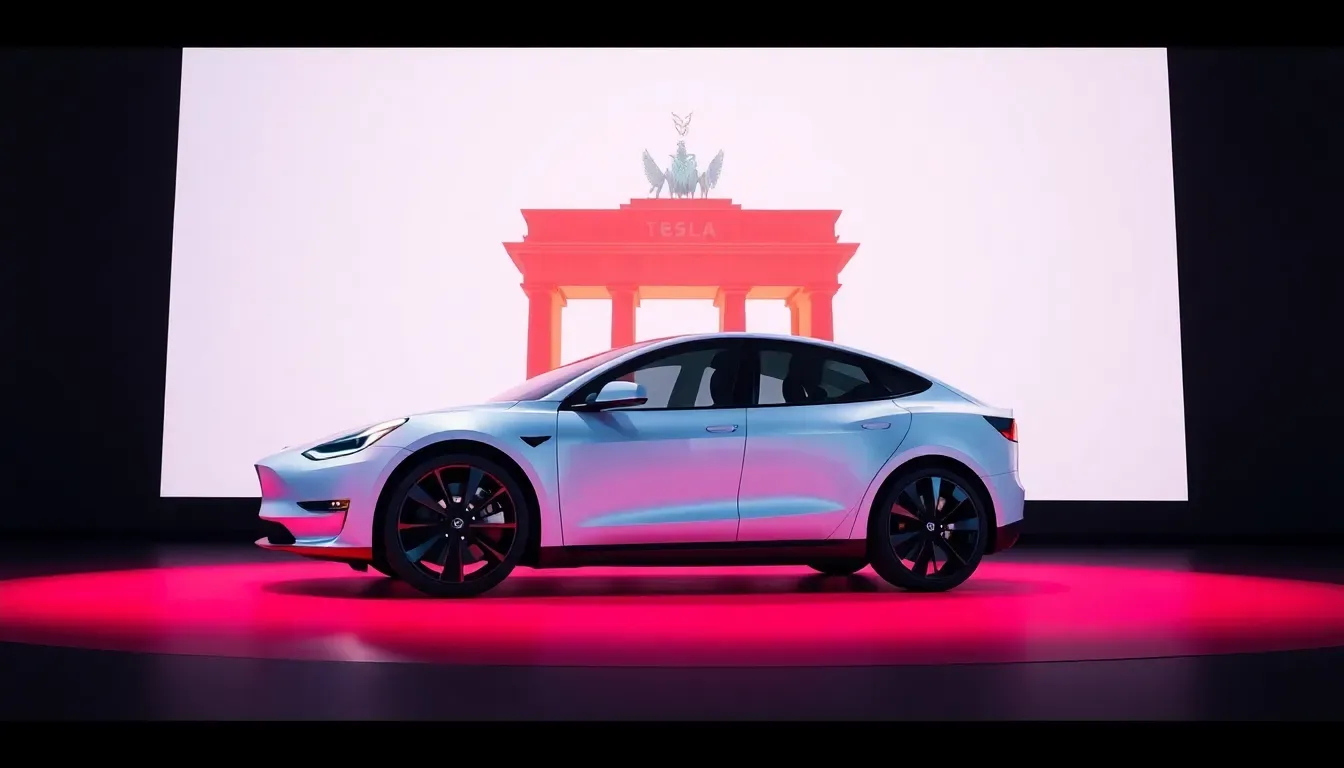
In a significant development for Tesla and its stakeholders, the company announced on Monday that production of the new Model Y Standard configuration has officially commenced at Gigafactory Berlin. This marks a pivotal moment for Tesla, as it seeks to broaden its market appeal with more accessible electric vehicle options. Let’s delve into the implications of this new model and the broader context surrounding Tesla’s strategic moves.
Production of the Model Y Standard at Giga Berlin
Tesla has ramped up its manufacturing capabilities by starting production of the Model Y Standard configuration at its facility in Berlin, Germany. This initiative comes less than a month after the official announcement of this new trim, showcasing Tesla’s agility in responding to market demands.
The Model Y Standard aims to attract a wider customer base, especially those looking for affordable electric vehicles (EVs). The move is seen as a direct response to the growing competition in the EV market and the recent changes in electric vehicle incentives in the United States.
On October 7, Tesla unveiled the Model 3 and Model Y Standard trim levels, emphasizing its commitment to making EVs more affordable. With production starting on October 3, the launch is strategically positioned to cater to the growing demand for electric vehicles under $40,000.
Key Features of the Model Y Standard
The Model Y Standard is designed to offer a more budget-friendly option for consumers while still maintaining the core features Tesla is known for. However, it does drop some of the premium elements found in higher-end models. Key features include:
- Single Motor configuration
- No rear touchscreen
- Textile seats with vegan leather instead of full vegan leather
- 320-mile range on a single charge
- No glass roof
This configuration aims to balance affordability with essential functionalities, targeting consumers who may be hesitant to invest in more expensive trims due to financial constraints.
Market Impact and Consumer Response
The introduction of the Model Y Standard is expected to create a dual effect in the market. On one hand, it may encourage new buyers to consider Tesla vehicles for the first time, while on the other hand, it could lead to potential buyers reevaluating the premium options due to the absence of certain features in the Standard model.
In the past, similar strategies have yielded mixed results. For example, the Rear-Wheel-Drive Cybertruck configuration, which was launched last year, saw a lukewarm reception as many consumers opted for more premium features. The success of the Model Y Standard will largely depend on how consumers perceive value in the absence of high-end features.
Elon Musk’s 2025 Performance Award Controversy
In a separate but related development, Norway’s $2 trillion sovereign wealth fund has voted against Elon Musk’s proposed 2025 performance award, which is set to be decided at Tesla’s upcoming annual shareholder meeting. This fund, managed by Norges Bank Investment Management (NBIM), holds a significant stake in Tesla, valued at approximately $11.6 billion.
NBIM’s opposition stems from concerns regarding the total size of the award and its implications for executive compensation. The fund emphasized the need for a more balanced approach that mitigates risks associated with key personnel in Tesla’s leadership.
Concerns from Institutional Investors
There is a growing divide among institutional investors regarding Musk’s compensation package. Major advisory firms like Institutional Shareholder Services and Glass Lewis have recommended voting against the award, indicating a lack of consensus among shareholders. On the contrary, significant investors such as ARK Invest and the State Board of Administration of Florida (SBA) support the proposal, believing it aligns with Tesla’s potential for future growth.
Elon Musk and NBIM: A History of Disagreements
This isn’t the first time Musk and NBIM have clashed. The fund previously opposed Musk’s 2018 performance award, which had been earned but subsequently rescinded by a Delaware judge. This persistent disagreement highlights ongoing tensions between Musk’s ambitious compensation packages and investor expectations for responsible governance.
Interestingly, there have been personal exchanges between Musk and NBIM’s Chief Executive, Nicolai Tangen. Text messages revealed a cordial invitation to dinner in Oslo, which Musk declined, suggesting underlying friction in their professional relationship.
The Future of Tesla’s AI Technology
On a different front, Elon Musk has hinted at exciting developments concerning Tesla’s AI technology. His recent comments suggested that the upcoming AI8 chip may have applications beyond automotive and robotics, potentially extending into areas such as aerospace and beyond.
Specifically, Musk’s interactions on social media indicated that AI8 could play a role in SpaceX’s ambitions for in-space data centers, which could revolutionize data processing capabilities beyond Earth. This integration of technologies across Musk’s companies showcases a unique synergy that could redefine operational efficiencies.
SpaceX’s Vision for Data Centers in Orbit
SpaceX is actively exploring the potential of using its Starlink V3 satellites to establish space-based data centers. This project aims to alleviate some of the challenges faced by terrestrial data centers, such as energy consumption and land use. Musk has described the project as a “very big deal,” emphasizing its significance in the context of the growing demands placed on digital infrastructure.
Key benefits of this initiative include:
- Reduction in land and water usage
- Minimized environmental impact
- Enhanced data processing speeds via low-latency connections
While the cost and maintenance of such systems remain points of contention, the potential advantages of space-based computing could transform the way data is handled in an increasingly digital world.
Advancements in Tesla’s AI Chips
Musk recently provided insights into Tesla’s AI chip development, indicating that the company is already exploring designs for generations beyond the AI5 chip. This proactive approach reflects Tesla’s commitment to maintaining a competitive edge in AI technology.
During a recent earnings call, Musk described the AI5 chip as “an amazing design” that promises significant performance enhancements over its predecessor, the AI4 chip. The new design, produced in collaboration with leading manufacturers like Samsung and TSMC, is anticipated to deliver up to 40 times the performance of the existing chips.
The Broader Implications of AI Development
Tesla’s vertical integration strategy—combining hardware and software development—positions the company uniquely in the AI landscape. Musk’s vision extends beyond vehicles, indicating that the company’s chips could power not only cars but also robotics and data centers.
As Tesla continues to innovate and expand its product offerings, the success of these initiatives will not only impact the company’s bottom line but also shape the future of the electric vehicle market and AI technology as a whole.