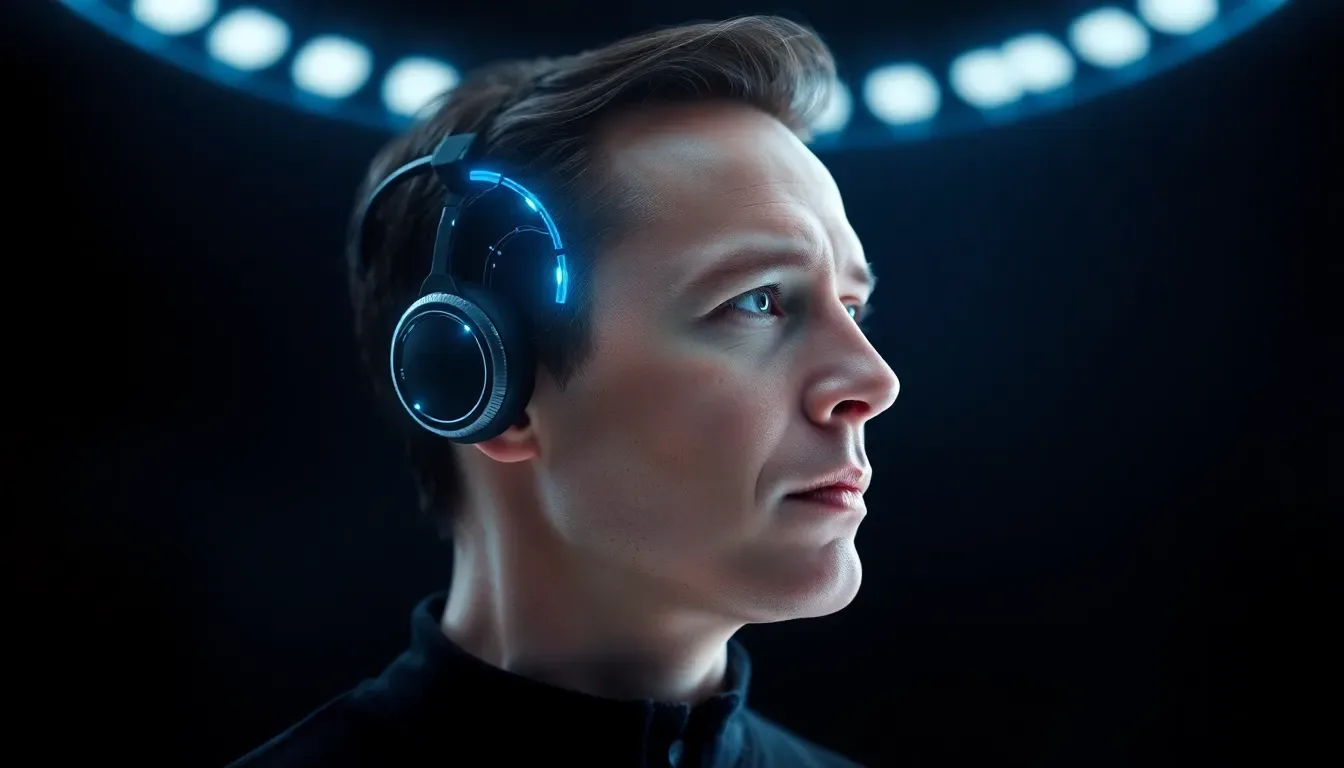
Neuralink is making significant strides in the realm of brain-computer interfaces, and recent updates from Elon Musk highlight the exciting potential for its first human patient, Noland Arbaugh. With advancements in technology and ongoing clinical trials, the implications for medical science and daily living are profound. Let’s delve into the latest developments, the future of these innovations, and what they mean for the broader landscape of neurotechnology.
Elon Musk’s insights on Neuralink’s progress
Elon Musk’s recent remarks have sparked considerable interest regarding Neuralink’s future endeavors. In a response to a post featuring Noland Arbaugh, the first individual to receive a Neuralink implant, Musk hinted at the possibility of Arbaugh being the first patient to undergo an upgrade.
Musk stated, “Noland might be the first to receive a Neuralink upgrade and/or dual Neuralink implant to further augment his abilities. It won’t be long before a Neuralink recipient can beat most and eventually all humans at fast reaction video games.” This bold claim not only reflects Musk’s visionary outlook but also underscores the potential capabilities of Neuralink’s technology.
Noland Arbaugh’s journey with Neuralink
Noland Arbaugh’s experience with his Neuralink implant, affectionately named Eve, has been transformative. After receiving the implant, he regained control over his life, enabling him to engage in activities such as gaming, attending classes, and working as a paid speaker. His updates reveal that his involvement with Neuralink has shifted as more participants join the human trials, yet he continues to express optimism about the future.
Despite facing challenges, including a recent setback due to a pressure sore, Arbaugh remains hopeful. He has set tangible goals for himself, such as studying neuroscience and maintaining good grades in subjects like chemistry, biology, and pre-calculus—achievements he attributes to the support of Neuralink.
The significance of neural upgrades
The notion of upgrading a brain-computer interface is groundbreaking. Here are some potential benefits of such upgrades:
- Enhanced cognitive functions: Upgrades might improve memory retention and processing speed.
- New capabilities: Recipients could perform complex tasks solely through thought.
- Increased accessibility: More individuals could benefit from assistive technologies.
- Expanded applications: Potential uses in gaming, education, and healthcare.
- Adaptability: Systems could evolve to meet the changing needs of users.
Future implications for Neuralink and society
The advancements in Neuralink’s technology hold significant promise not only for individual patients like Arbaugh but also for society as a whole. As brain-computer interfaces continue to develop, several implications emerge:
- Healthcare revolution: Neuralink may lead to new treatments for neurological disorders, potentially restoring lost functions for millions.
- Ethical considerations: The idea of upgrading human capabilities raises questions about equity, access, and the definition of what it means to be human.
- Impact on education: Enhanced learning capabilities could redefine traditional educational models, making knowledge acquisition more efficient.
- Workforce transformation: As cognitive enhancements become more common, the job market may shift significantly, requiring new skills.
Elon Musk’s vision for the future
Elon Musk’s vision for Neuralink is not just about individual enhancements; it encapsulates a broader aspiration for humanity. He has often discussed the potential of merging human cognition with artificial intelligence, arguing that such integration is essential for our survival in an increasingly automated world. In this context, Neuralink could serve as a bridge between human thought and machine efficiency.
As Musk mentioned in a recent appearance, the transformative power of Neuralink’s technology could lead to developments we can scarcely imagine today. He emphasized that the goal is not simply to create a better technology, but to fundamentally change how we interact with the world around us.
Conclusion: A leap into the unknown
The journey of Neuralink and its first patient, Noland Arbaugh, represents a leap into uncharted territory. As advancements continue, the implications for healthcare, education, and even our understanding of consciousness are profound. With Elon Musk at the helm, the future of Neuralink promises to be as groundbreaking as it is uncertain. Whether these innovations will meet their lofty aspirations remains to be seen, but the excitement surrounding this frontier technology is undeniable.