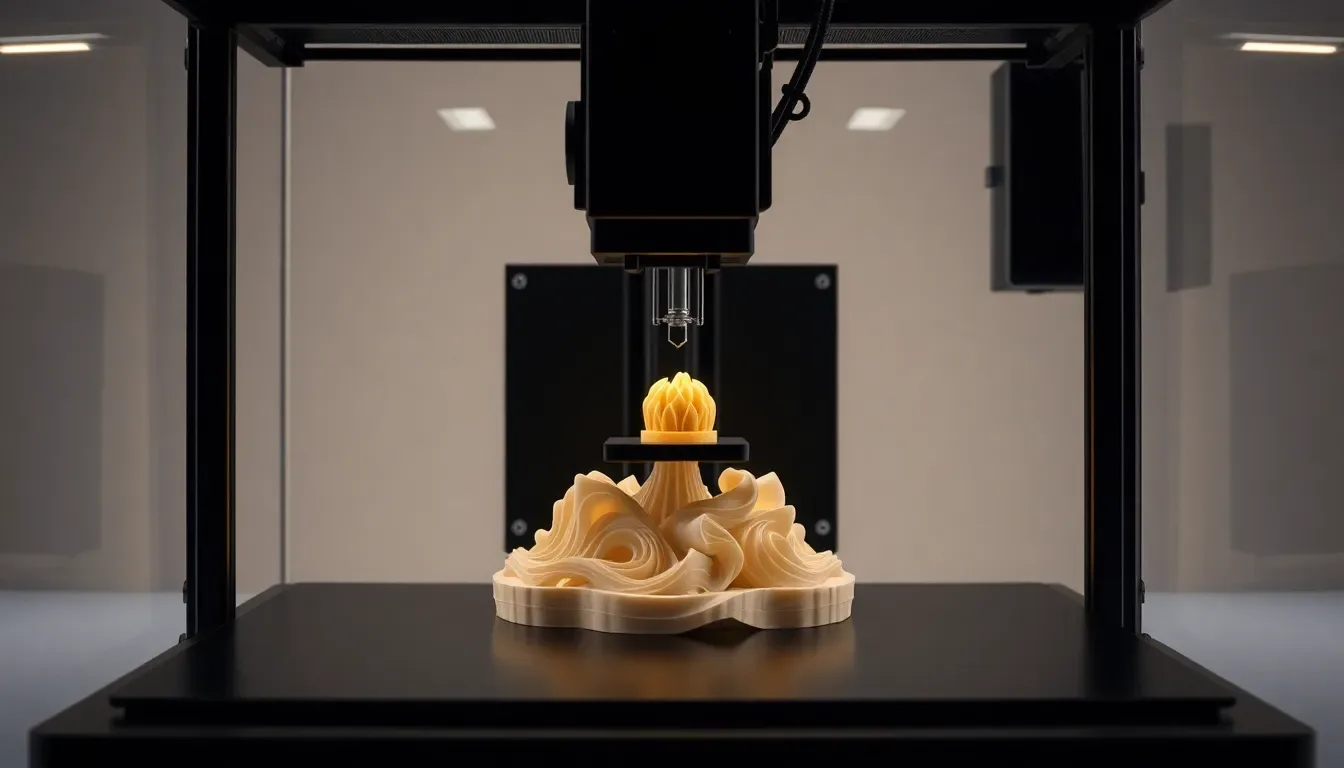
Imagine a world where manufacturing is no longer confined to sprawling factories or even skilled artisans. Picture a technology capable of replicating itself, producing identical copies with little to no human intervention. This concept is not merely fiction; it represents a significant leap in the realm of technology known as Repmold. This revolutionary idea combines self-replication with advanced manufacturing techniques, offering a glimpse into a future where production can occur anywhere, at any time. But what does this mean for society, economics, and our very existence?
The idea of Repmold—a fusion of the words replicating and mold—envisions a fully autonomous 3D printer that goes beyond mere functionality. It is a technological seed that could catalyze an exponential growth in manufacturing capabilities. In this detailed exploration, we will dissect the intricacies of Repmold, its potential applications, the challenges it poses, and the philosophical questions it raises about our future.
Understanding the Anatomy of a Repmold – Breaking Down the Vision
At its core, a Repmold is envisioned not just as a single machine but as a complete self-sustaining fabrication ecosystem. To achieve the groundbreaking capability of self-replication, it must integrate advanced technologies far beyond what current 3D printers can offer.
Core Module 1: The Universal Fabricator Head
The heart of the Repmold is its versatile fabricator head, which must include:
- Multi-Material, Multi-Process Deposition: This head would need to switch seamlessly between different materials and processes, including thermoplastics, photopolymers, and metals. A sophisticated tool-changer system would accommodate various nozzles, lasers, and UV lamps.
- Subtractive Capability: Pure additive manufacturing often falls short in terms of precision. Thus, the Repmold should incorporate subtractive methods, such as micro-milling and laser cutting, to enhance accuracy and surface finish.
Core Module 2: The Metamaterial Build Platform & Stage
The Repmold’s build platform is far from passive. It is an active component that must feature:
- The “Smart Vise”: Composed of hundreds of programmable pins, this platform can grasp, reposition, and assemble printed components, facilitating complex manufacturing processes.
- Multi-Axis Freedom: A sophisticated robotic arm or gantry system would provide the build platform with the ability to operate in multiple axes, aligning the workpiece at any angle for optimal processing.
Core Module 3: The Sensory & Cognitive Suite
A remarkable feature of Repmold is its sensory suite that enables real-time monitoring and adjustments:
- High-Fidelity Machine Vision: Equipped with advanced cameras and scanners, this module inspects the printing process, ensuring precision by comparing the physical output with its digital model.
- Tactile & Force Feedback: This system measures resistance during operations, guaranteeing that parts are not only made but also fit and function correctly.
Core Module 4: The “Vitamins” Handler
A critical aspect of self-replication is the distinction between the parts a machine can create and the “vitamins”, or high-complexity components, it cannot. A true Repmold aims to minimize the need for these vitamins:
- Chip Fabrication: While creating advanced silicon chips may be unrealistic, a Repmold could potentially manufacture basic microcontrollers and other electronic components.
- Motor and Actuator Synthesis: The challenge of producing electric motors from scratch is significant. However, a Repmold could still print certain motor components and assemble them.
- The “Seed Stock” Hopper: The machine would start with raw materials needed for production, such as plastic filament and metal powders, and would begin by recycling materials from failed prints.
Core Module 5: The Orchestrating AI
At the helm of the Repmold’s operations is its AI, which would include:
- A Complete Digital Twin: This simulation would model the entire Repmold system, ensuring all components function optimally.
- Process Planning AI: Beyond slicing models, this AI would determine the most efficient order of operations for manufacturing.
- Self-Diagnosis and Heuristic Learning: The AI would learn from each iteration, improving designs based on performance feedback.
The Evolutionary Leap – From RepRap to Repmold
The conceptual foundation of Repmold can be traced back to the RepRap Project, launched in 2005. This open-source initiative aimed to develop a 3D printer capable of producing most of its own plastic components. Although the RepRap was groundbreaking, it was limited in its ability to achieve full self-replication.
The journey towards Repmold can be envisioned as a series of evolutionary stages:
- Stage 1: Structural Closure – Achieved by RepRap, this stage refers to the ability to produce non-moving structural parts.
- Stage 2: Simple Mechanical Closure – This stage allows for the production of basic fasteners and gears with tighter tolerances.
- Stage 3: Actuator Closure – The machine can assemble electric motors from both printed and sourced components.
- Stage 4: Sensory Closure – At this point, the machine can fabricate its own sensors for improved functionality.
- Stage 5: Computational Closure – The pinnacle of this evolutionary path, allowing the machine to create the necessary logic for its successor.
- Stage 6: Materials & Energy Closure – The ultimate goal, where the machine can process raw materials and generate its own power.
The New World of Exponential Fabrication – Applications of Repmold

The implementation of Repmold technology could reshape our economy and society in ways previously unimaginable.
Transforming Supply Chains and Economics
- Post-Scarcity for Basic Goods: Instead of traditional supply chains, users could send digital files directly to local Repmolds, drastically reducing costs associated with transportation and logistics.
- Ultra-Localized Manufacturing: Every community could access a manufacturing base, enabling rapid production of custom tools and parts needed for daily life.
- Democratized Innovation: Lower barriers to entry would encourage creativity and innovation, expanding the maker movement to broader economic scales.
Advancements in Space Exploration
The potential applications of Repmold technology extend beyond Earth:
- The Self-Replicating Lunar Factory: A Repmold sent to the Moon could utilize local materials to build infrastructure, laying the groundwork for future human colonization.
- Von Neumann Probes: These autonomous probes could explore distant star systems, mining resources and replicating themselves to continue their mission.
Revolutionizing Medicine and Bio-Fabrication
- On-Demand Medical Devices: In emergency situations or remote areas, a Repmold could produce customized medical instruments tailored to individual patients.
- The Printer that Prints a Printer: A medical-grade Repmold could generate additional units for clinics in underserved regions, vastly improving healthcare access.
Environmental Benefits and Circular Economy
- Pollution-Eating Machines: Repmolds designed for environmental remediation could convert waste materials into new products, promoting sustainability.
- Perfect Recycling: A Repmold could dismantle broken appliances and recycle their components, significantly reducing waste.

Confronting the Existential Challenges – What Lies Ahead?
Despite its promise, the Repmold concept is fraught with challenges that raise profound questions about our future.
The Uncontrollable Cascade – The Gray Goo Problem
The potential for unchecked replication poses significant risks. A malfunctioning Repmold could lead to a “gray hardware” scenario, where machines proliferate uncontrollably and disrupt ecosystems. Implementing robust containment measures will be crucial.
Geopolitical and Economic Implications
- Impact on Global Economies: Economies reliant on manufacturing could face sudden collapse, leading to widespread unemployment and social upheaval.
- Weaponization Risks: The first to harness Repmold technology could create advanced weaponry, igniting a new arms race.
The Control Dilemma – Ownership of the Seed
The ability to replicate machines raises questions about intellectual property and control. Will Repmold technology be open-source, fostering innovation, or will it be monopolized, granting immense power to those who control it?
Human Purpose in an Automated Future
If machines can perform every task, what becomes of human labor? The arrival of Repmold may trigger a crisis of purpose, forcing society to reevaluate the value of human contribution.
Exploring the Philosophical Horizon – Are We the Repmold?
The pursuit of Repmold reflects humanity’s own nature. In many ways, we too are self-replicating beings:
- We create new life. The cycle of birth continues through generations.
- We shape our environment. Through creativity and innovation, we mold the world around us.
- Our DNA serves as a template. Just as Repmold aims to replicate itself, we pass on genetic information with variations.
- We seek resources for survival. Like machines, we require materials to sustain our existence.
Thus, building a Repmold is not solely an engineering challenge; it is a reflection of our own essence. This endeavor forces us to confront what it means to be human and to ponder the deeper implications of creating machines that mirror our own capabilities.