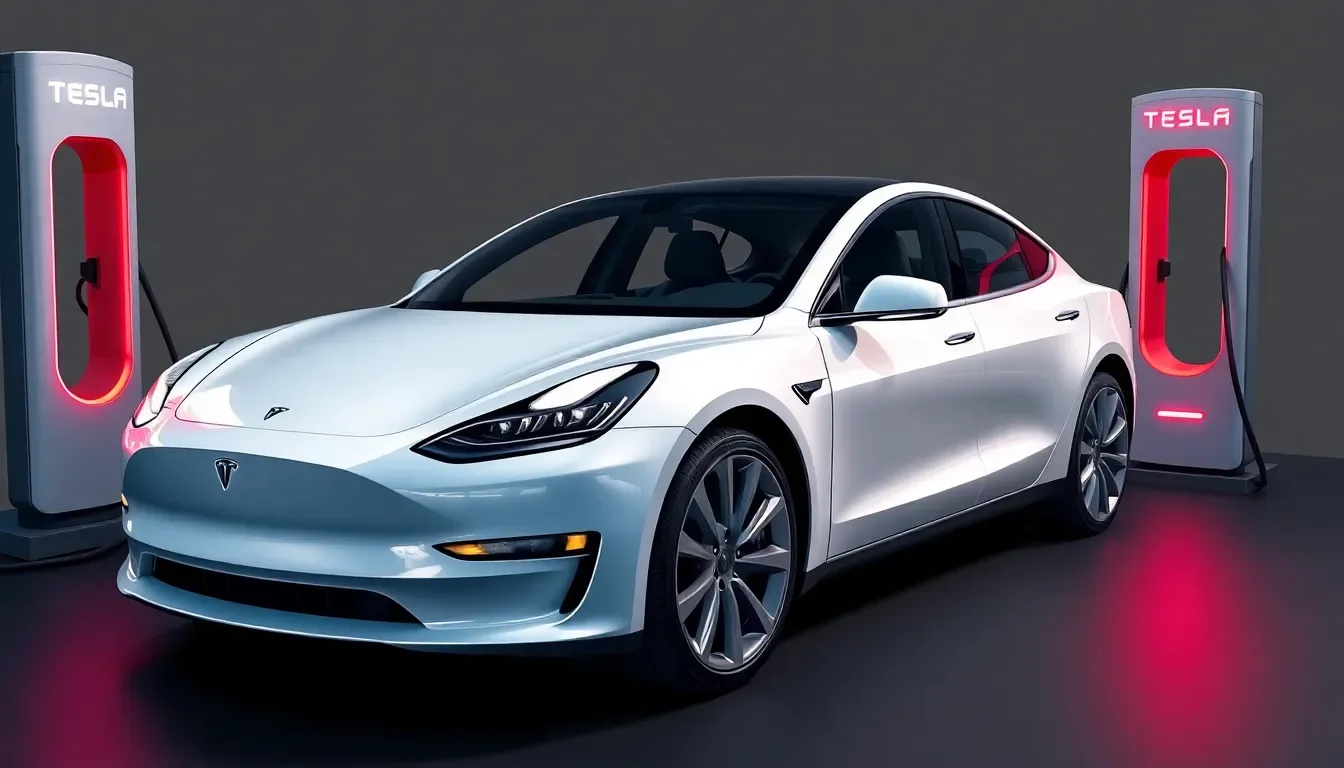
As electric vehicles continue to revolutionize the automotive industry, innovations from leading manufacturers like Tesla are pushing the boundaries of technology and user experience. One of the latest enhancements focuses on making vehicle ownership more convenient, especially in crowded environments. This article delves into Tesla’s recent advancements, particularly their new features and the competitive landscape of autonomous driving.
Tesla introduces innovative features for urban parking
Tesla has recently rolled out an exciting new feature aimed at easing the challenges of locating vehicles in busy parking scenarios. With the latest update to the Tesla App (version 4.51.5), the company has integrated a Vehicle Locator function that utilizes a simple directional arrow to guide owners directly to their parked cars.
This feature is particularly beneficial in large parking lots, crowded garages, or unfamiliar areas. It streamlines the process of finding your vehicle, eliminating the frustration often associated with locating a parked car in dense urban settings.
Previously, Tesla’s app provided the address where the vehicle was parked, which was useful but required users to navigate without precise direction. Now, the app enhances user experience by:
- Indicating the direction to walk with a real-time arrow.
- Showing the distance to the vehicle, allowing for better planning while walking.
- Improving the navigation experience in crowded venues such as sports events and shopping centers.
This integration is a clear reflection of Tesla’s commitment to enhancing the ownership experience through technology. The app’s new features, including a Photobooth mode and a customizable colorizer, also showcase Tesla’s focus on user engagement and personalization.
Elon Musk critiques Waymo’s approach to autonomous driving
In a recent discussion on social media platform X, Tesla CEO Elon Musk made headlines by critiquing Waymo, declaring that the rival company “never really had a chance” in the race for dominance in autonomous driving technology. Musk’s comments highlight the competitive landscape between Tesla and Waymo, two of the primary players in the self-driving sector in the United States.
While both companies operate autonomous ride-hailing services, their approaches significantly differ. Tesla aims to integrate self-driving capabilities across its entire fleet through software updates, while Waymo focuses on a more limited set of vehicles.
Key differences between Tesla and Waymo’s strategies include:
- Tesla’s reliance on a vision-only approach for its autonomous systems.
- Waymo’s use of LiDAR technology, which Musk has previously criticized as unnecessary.
- The geographical focus of their services, with Waymo targeting urban areas and Tesla planning to extend its reach globally.
The rivalry has fueled debates about the future of autonomous driving technology, with both companies vying for technological supremacy. Musk’s assertion that Waymo’s strategy will be seen as a missed opportunity in hindsight emphasizes the competitive tension in the industry.
Advancements in Tesla’s AI5 chip project
In an exciting development for Tesla’s autonomous initiatives, reports indicate that Samsung is accelerating the production of the AI5 chip, a significant step in enhancing Tesla’s self-driving capabilities. The AI5 chip is expected to vastly improve the performance of Tesla’s vehicles and their AI applications.
Samsung’s recent hiring of experienced engineers to its Customer Engineering team signifies its commitment to overcoming the challenges that come with the production of this critical component. The AI5 chip aims to deliver substantial advancements, including:
- A processing speed approximately 40 times faster than the current AI4 chip.
- Eight times the raw computing power, significantly enhancing real-time decision-making capabilities.
- Improved energy efficiency, being three times more efficient per watt compared to its predecessor.
This chip will not only support Tesla’s self-driving ambitions but will also play a crucial role in the development of the Optimus humanoid robot and other AI-driven features across Tesla’s projects. With production expected to ramp up, the AI5 chip represents a critical milestone in Tesla’s roadmap towards full autonomy.
Future of Tesla Superchargers and accessibility for other automakers
As part of Tesla’s ongoing commitment to expanding the electric vehicle ecosystem, the company plans to allow access to its Supercharger network for additional automakers by 2025. This strategic move aims to promote sustainable transportation and create a more integrated charging infrastructure across the industry.
By inviting other manufacturers to utilize its Supercharger stations, Tesla is not only enhancing the convenience for electric vehicle owners but also encouraging the adoption of EVs more broadly. This initiative is expected to include:
- Collaboration with at least 15 other automakers, establishing a more diverse charging network.
- Improved compatibility through the development of the NACS (North American Charging Standard) adapter.
- Enhanced charging speeds and accessibility for all electric vehicle users.
This initiative positions Tesla as a leader in the EV market, emphasizing the importance of collaboration in achieving sustainability goals and facilitating the transition to electric mobility.
The NACS adapter: bridging the gap for Tesla and other vehicles
The introduction of the NACS adapter is a pivotal development in Tesla’s strategy to create a seamless charging experience across different vehicle brands. This adapter will allow non-Tesla vehicles to utilize Tesla’s extensive Supercharger network, further enhancing the convenience of owning an electric vehicle.
Key features of the NACS adapter include:
- Compatibility with various electric vehicle models, enabling broader access to charging stations.
- Streamlined charging processes that reduce wait times and improve the overall user experience.
- Support for future innovations in charging technology, ensuring that users remain on the cutting edge of electric mobility.
Looking ahead: the future of electric vehicle infrastructure
The advancements in Tesla’s technology, from their app features to the AI5 chip and expanding Supercharger access, illustrate a forward-thinking vision for the electric vehicle space. As the industry evolves, Tesla’s innovations will likely set the standard for user experience and infrastructure development.
With the growing adoption of electric vehicles, the need for robust and accessible charging solutions will only intensify. Tesla’s proactive approach in collaborating with other automakers and enhancing its technology positions it as a key player in shaping the future of sustainable transportation.