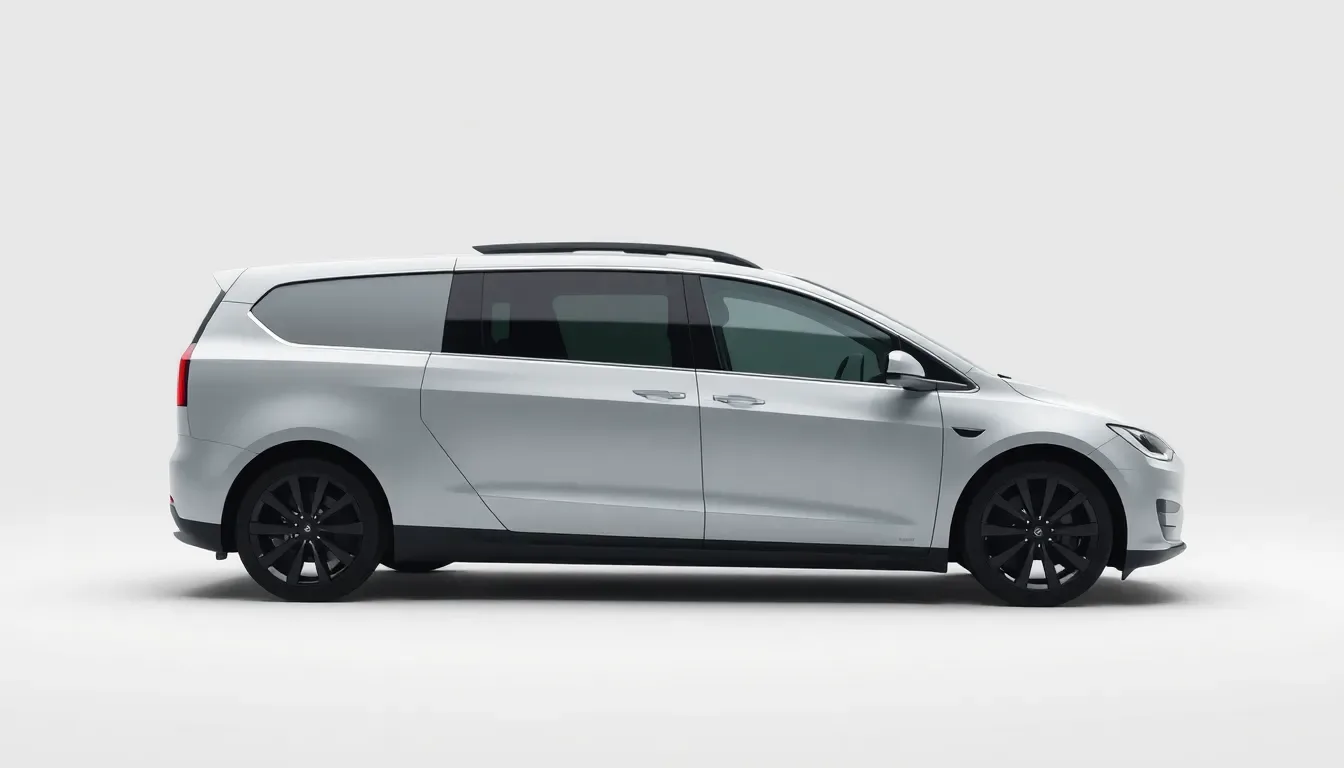
In recent times, the automotive industry has witnessed a surge in innovative concepts that blend technology with utility. Among these is Tesla’s potential venture into the recreational vehicle (RV) market, which has sparked curiosity and excitement. With advancements in automation and electric vehicle technology, the idea of a Tesla Robovan designed for RV conversions could redefine road trips and outdoor adventures.
Imagine a vehicle that not only provides the convenience of a car but also offers the amenities of an RV, all powered by Tesla’s cutting-edge technology. As developments unfold, it’s clear that Tesla’s vision is expanding beyond traditional vehicles, hinting at a future where travel is more comfortable and connected.
Robovan concept for RV adventures
Recently, Tesla’s vice president of AI and Autopilot software, Ashok Elluswamy, hinted at the possibility of a Robovan tailored for RV conversions in response to a suggestion from Y Combinator CEO Garry Tan. Tan called for startups to explore RVs equipped with Full Self-Driving (FSD) capabilities, to which Elluswamy replied, “On it,” accompanied by a striking image of Tesla’s autonomous 20-seat people mover.
The Robovan, unveiled in October 2024 during the “We, Robot” event, is designed without a steering wheel, featuring a low floor that allows for a spacious interior. Although it has been somewhat overshadowed by the more publicized Cybercab, the Robovan has captured the imagination of many enthusiasts. Social media platforms have seen a flurry of AI-generated images showcasing imaginative RV conversions of the Robovan, complete with beds, kitchens, and panoramic windows. One notable render by Tesla enthusiast Mark Anthony garnered over 300,000 views.
Innovative features of the Robovan
What sets the Robovan apart is its unique configuration and advanced features. Here are some highlights that make it suitable for RV conversions:
- Spacious Interior: The low floor design maximizes interior space, making it ideal for residential-style setups.
- Full Self-Driving Capability: Integration of Tesla’s FSD technology allows for autonomous travel, enhancing convenience on long trips.
- Customizable Layout: The absence of a steering wheel opens up various possibilities for interior design, making it suitable for a range of RV amenities.
- Eco-Friendly Power Source: As an electric vehicle, the Robovan would offer a sustainable alternative to traditional RVs, reducing carbon footprints on outdoor trips.
With these features, the Robovan presents a compelling case for those seeking adventure without sacrificing comfort or sustainability. The possibility of integrating solar panels or other renewable energy sources further enhances its appeal as an eco-friendly travel option.
Insights from Elon Musk on the Robovan
Elon Musk has also shared his thoughts on the Robovan, noting its low profile and advanced suspension system. He explained that the vehicle employs an automatic load-leveling suspension that adjusts based on the road conditions, maintaining a futuristic look while ensuring a smooth ride over uneven surfaces. In a post on X, Musk emphasized:
“The view from the inside is one of extreme openness, with visibility in all directions, although it may appear otherwise from the outside. The unusually low ground clearance is achieved by having an automatic load-leveling suspension that raises or lowers, based on smooth or bumpy road conditions.”
Elluswamy’s comments suggest that Tesla is keenly exploring the feasibility of Robovan RV conversions. However, the Robovan’s low ground clearance presents a challenge in reaching remote campsites, which are often situated in rugged terrain. Overcoming these obstacles will require innovative engineering and design solutions.
Technological integration with Starlink
In addition to the Robovan, Tesla has been making strides in integrating its vehicles with advanced communication technologies. Recently, the company hinted at a potential integration of Starlink internet terminals within its vehicles, including the Robovan. This integration would allow for seamless internet connectivity even in remote areas, enhancing the RV experience.
Among the benefits of Starlink integration are:
- Elimination of Dead Zones: Starlink’s satellite-based service would provide connectivity in areas where cellular signals are weak or non-existent.
- Reliable Internet for Off-Grid Adventures: Perfect for road trips to remote locations, ensuring access to navigation and entertainment.
- Support for Robotaxi Operations: Essential for real-time monitoring and management of Tesla’s autonomous taxi fleet.
This combination of the Robovan with Starlink technology could redefine how people experience travel, allowing for greater flexibility and connectivity on adventures.
Upcoming features and updates for Tesla vehicles
As Tesla continues to refine its vehicles, the recent Holiday Update brought exciting enhancements across its lineup. Among the updates is a new version of Full Self-Driving (FSD) software, which features several improvements. Some key highlights of the update include:
- Grok with Navigation Commands (Beta): Users can now add and edit destinations using voice commands.
- Tesla Photobooth: Take fun pictures inside the car using the cabin-facing camera.
- Dog Mode Live Activity: Owners can check on their pets through periodic snapshots taken by the cabin camera.
- Navigation Improvements: Easier setup and layout for navigation within the vehicle.
The new FSD version aims to address previous issues while enhancing overall performance, showcasing Tesla’s commitment to continuous improvement.
Another exciting development within Tesla’s ecosystem is the ongoing progress on the Cybertruck’s Powershare feature. This bidirectional charging capability allows the Cybertruck’s battery to serve as a portable power source for homes, appliances, and even other electric vehicles. Although it was initially slated for release in 2024, Tesla has announced a new timeline, pushing the release to mid-2026.
Key aspects of the Powershare feature include:
- Vehicle-to-Load (V2L) and Vehicle-to-Home (V2H): Flexible options for powering various devices and systems.
- Integration with Powerwall: The Cybertruck will prioritize Powerwall discharge before utilizing its own battery, maximizing efficiency.
- Enhanced Communication: Development is focused on ensuring seamless energy sharing between the Cybertruck and Powerwall units across different generations.
Despite the delays, Tesla’s transparency about the development process has been appreciated by many, though some Cybertruck owners have expressed disappointment over the postponement.
The potential of the Robovan, combined with Tesla’s innovative features and the integration of technologies like Starlink, positions the company as a frontrunner in revolutionizing the future of travel and outdoor experiences. As Tesla continues to expand its offerings, enthusiasts and consumers alike eagerly await the next chapter in automotive innovation.