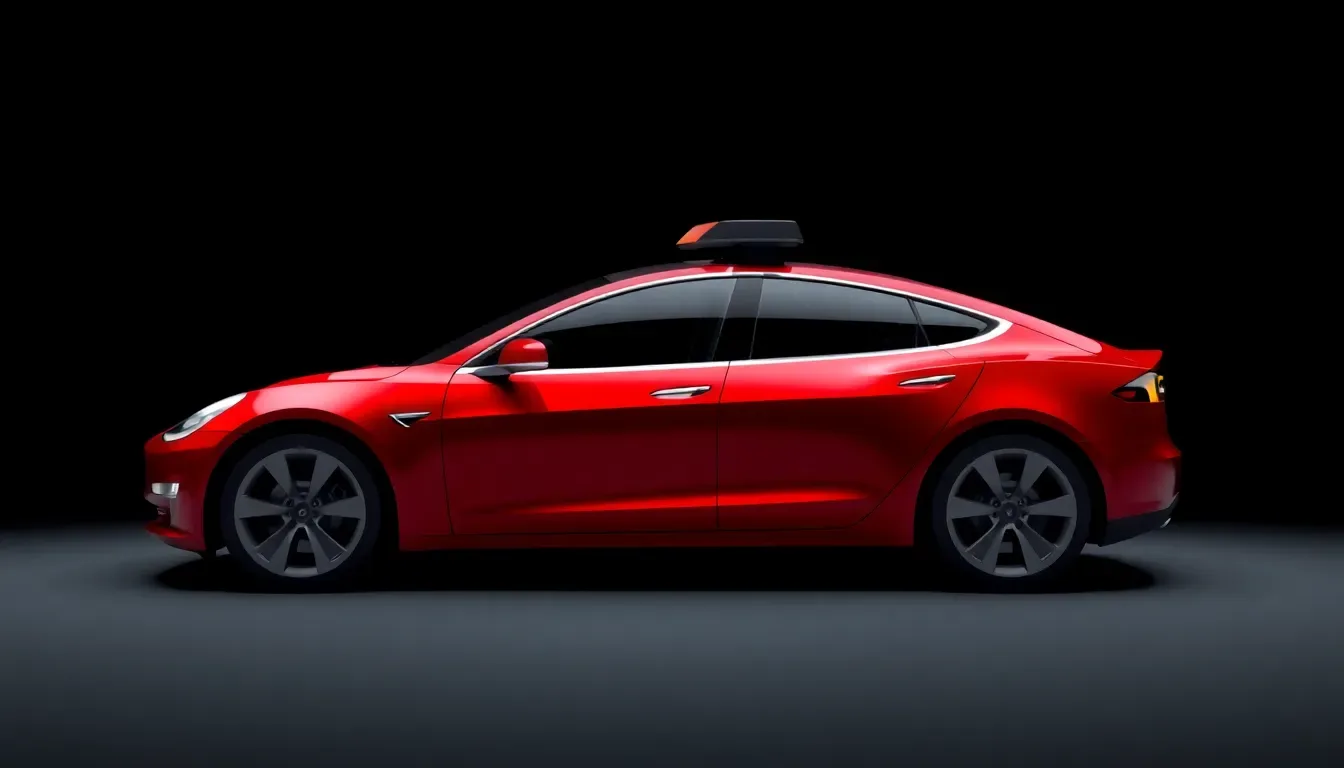
Tesla continues to push the boundaries of autonomous driving with the release of Full Self-Driving (FSD) version 14.2.1.25. This update, launched on a Friday night, was an unexpected addition to the recently unveiled Holiday Update, catching the attention of many in the automotive and tech communities. In a world where electric and autonomous vehicles are rapidly evolving, this update stands out as a significant step in Tesla’s journey toward achieving fully autonomous driving.
After extensive testing on Saturday, it became clear that the improvements made by Tesla were not just superficial. The latest version has addressed several key issues that plagued its predecessor, showcasing a commitment to refining the driving experience and enhancing user satisfaction.
Overview of Tesla’s Full Self-Driving Updates
Tesla’s Full Self-Driving system is designed to enable vehicles to navigate and drive themselves with minimal human intervention. The evolution of this technology reflects Tesla’s ongoing ambition to lead the electric vehicle (EV) market while ensuring safety and efficiency on the roads. Regular updates to FSD aim to refine performance, enhance safety features, and improve user experience.
Key Improvements in Version 14.2.1.25
The latest update introduces several notable enhancements that enhance the FSD experience. Here are the three primary areas of improvement:
- Speed Profile Refinements: Adjustments to how the vehicle interacts with speed limits and traffic flow.
- Lane Change Confidence: Enhancements in the vehicle’s decision-making process during lane changes.
- Speed Limit Recognition: Improvements in interpreting speed limit signs and adapting accordingly.
Speed Profile Refinements
One of the most significant changes in version 14.2.1.25 is the refinement of Speed Profiles. Previously, the Hurry Mode was limited to a mere 10 MPH over the speed limit, causing frustrating scenarios where the vehicle would hold up traffic. This has been rectified, allowing the car to more effectively keep pace with the flow of traffic.
Users report a much smoother experience, particularly during highway driving. This newfound adaptability means less need for human intervention, which is a crucial factor in making autonomous driving more reliable and user-friendly.
Enhanced Lane Change Confidence
Lane changes, which were previously a source of frustration due to the car’s indecisiveness, have seen vast improvements. In earlier versions, the vehicle often hesitated or executed lane changes at inappropriate times. With the latest update, lane changes are performed with confidence and at the right moments, making for a much more seamless driving experience.
Drivers have noted that the vehicle’s decision-making during lane changes has become increasingly intuitive, allowing it to navigate complex traffic scenarios more effectively. This enhancement contributes significantly to the overall performance of FSD on highways and busy streets.
Speed Limit Recognition Improvements
Accurate speed limit recognition is critical for the safe operation of an autonomous vehicle. Previous iterations of FSD struggled with interpreting various speed limit signs, sometimes mistaking them or reacting inappropriately. The latest update appears to address these issues by relying more on map data and the behavior of surrounding traffic rather than solely on road signage.
For instance, drivers have reported instances where the vehicle successfully ignored misleading signs, maintaining appropriate speeds based on traffic flow and situational awareness. This shift not only enhances safety but also reduces the likelihood of driver intervention during automated driving.
Areas for Future Improvement
Despite the significant progress observed in version 14.2.1.25, some areas still require refinement. One notable complaint from users revolves around the parking capabilities of the FSD system. While the driving features have improved, parking maneuvers remain a challenge.
- Inconsistent Parking Performance: Users have reported instances where the vehicle struggles to navigate tight parking spaces.
- Future Updates: Tesla has acknowledged these issues and is actively working on enhancements to the parking functionalities.
The Future of Tesla’s Full Self-Driving Technology
As Tesla continues to evolve its Full Self-Driving system, the focus on addressing user feedback is paramount. The improvements seen in version 14.2.1.25 demonstrate Tesla’s commitment to enhancing the user experience and ensuring the safety of its vehicles on the road.
With each update, Tesla moves closer to achieving its goal of fully autonomous driving, where vehicles can navigate without human intervention. As the technology matures, drivers can expect more adaptive, responsive, and safer driving experiences.
In conclusion, the recent updates to Tesla’s Full Self-Driving capabilities illustrate a significant leap forward in autonomous vehicle technology. By continually refining its systems based on user feedback, Tesla is setting the stage for a future where self-driving cars are not just a vision but a reality.