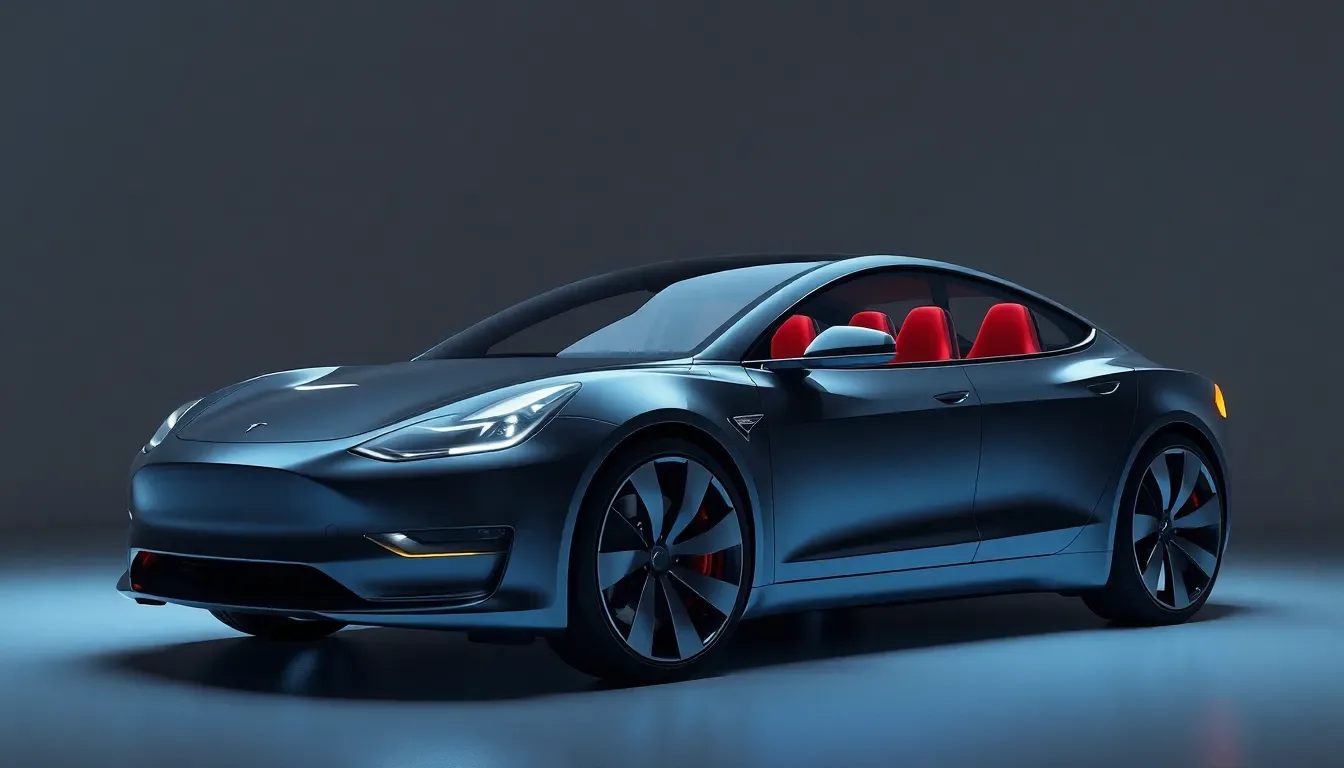
With the rapid evolution of technology, Tesla continues to lead the charge in the electric vehicle market. One of its latest innovations, the “Tesla Ride” program, exemplifies the company’s commitment to enhancing consumer experience and promoting its Full Self-Driving (FSD) technology. This initiative offers a unique opportunity for participants to engage with cutting-edge automotive technology in an interactive and supervised setting.
As the world embraces the future of transportation, Tesla’s initiative is not just about showcasing its advancements in autonomous driving; it also emphasizes safety, user interaction, and real-world applications of artificial intelligence in vehicles.
Understanding the Tesla Ride program
The Tesla Ride program is designed to give participants a hands-on experience with the company’s FSD technology. According to the official website, each session allows participants to take the driver’s seat while a Tesla Advisor accompanies them as a co-pilot. This setup not only ensures safety but also provides expert guidance throughout the experience.
During the ride, participants can explore various features of the FSD system, including:
- Comfort settings to customize their driving experience.
- In-car entertainment options to enhance enjoyment during the journey.
- Interactions with Grok AI, an artificial intelligence designed to respond to questions and even tell stories during the ride.
Each Tesla Ride session is capped at 45 minutes, prioritizing safety and quality of experience. Participants must hold a valid driver’s license and insurance, and it is advised to schedule their rides in advance to ensure availability.
Marketing strategy and program reach
The Tesla Ride program is set to run across multiple states from October through December 2025. Participants can look forward to experiencing this initiative in states such as Michigan, Virginia, Illinois, Nevada, and California. Tesla is taking a cautious approach to this rollout, emphasizing that while FSD technology is advanced, it is not yet fully autonomous.
Tom Zhu, Tesla’s Senior Vice President for Automotive, recently reiterated the company’s focus on safety. He stated, “Elon said it in 2021: For self-driving, even if the road is painted completely wrong and a UFO lands in the middle of the road, the car still cannot crash and still needs to do the right thing.” This underscores Tesla’s commitment to developing a system that minimizes risk while providing efficient transport.
Elon Musk’s insights on Robotaxi expansion
During a recent appearance on the All-In podcast, Elon Musk shared exciting updates regarding Tesla’s Robotaxi initiative. The company aims to ramp up its fleet in Austin to 500 units and in the Bay Area to 1,000 units by the end of 2025. This expansion is a critical step towards establishing a robust autonomous ride-hailing network.
Musk’s comments came as part of a broader discussion about the future of Tesla’s autonomous services, where he expressed enthusiasm about the scaling of the Robotaxi fleet. He mentioned, “We’re scaling up the number of cars to, what happens if you have a thousand cars? Probably we’ll have a thousand cars or more in the Bay Area by the end of this year, probably 500 or more in the greater Austin area.”
Future of Tesla’s Robotaxi service
The transition towards a system without safety drivers in significant parts of Austin is expected by the end of the year. Musk emphasized the cautious nature of this deployment, ensuring that safety remains at the forefront of Tesla’s operations. He noted, “We are expecting to have no safety drivers in at least large parts of Austin by the end of this year.”
The scaling of the Robotaxi fleet signifies Tesla’s commitment to making autonomous rides a viable option for everyday consumers, with expectations for improved service quality and reliability.
Neuralink’s advancements and patient updates
In another innovative domain, Elon Musk has hinted at exciting developments for Neuralink’s first human patient, Noland Arbaugh. The potential upgrade would enable Arbaugh to perform more complex tasks using only his mind. Musk indicated that Arbaugh could be the first recipient of a Neuralink upgrade, enhancing his capabilities even further.
Since receiving the implant, Arbaugh has regained significant autonomy in his daily life, engaging in activities such as:
- Gaming.
- Attending classes.
- Working as a paid speaker.
These advancements showcase the potential impact of Neuralink technology on enhancing human capabilities, paving the way for future applications in various fields.
Cybercab’s production readiness
In the realm of Tesla’s autonomous vehicles, the Cybercab has recently garnered attention. Photos of the Cybercab, shared by Tesla’s AI team, suggest that components may be nearing production readiness. The vehicle was spotted making a humorous appearance at an In-and-Out drive-through, showcasing its potential in a real-world scenario.
Industry analysts have noted that the Cybercab’s front end appears refined, with indications of a license plate mount and updated design features since its unveiling. This has led to speculation about the Cybercab’s readiness for initial production.
Production timeline and future predictions
The ongoing installation of production equipment at Giga Texas and rigorous testing of the Cybercab on public roads suggest that Tesla is making significant strides towards launching this vehicle. As production ramps up, many are eager to see how the Cybercab will perform in the autonomous ride-hailing market.
With Tesla’s commitment to innovation and safety, the future looks promising for both the Tesla Ride program and the broader scope of autonomous vehicles, including Robotaxis and the Cybercab. As these technologies develop, they hold the potential to transform the way we think about transportation.