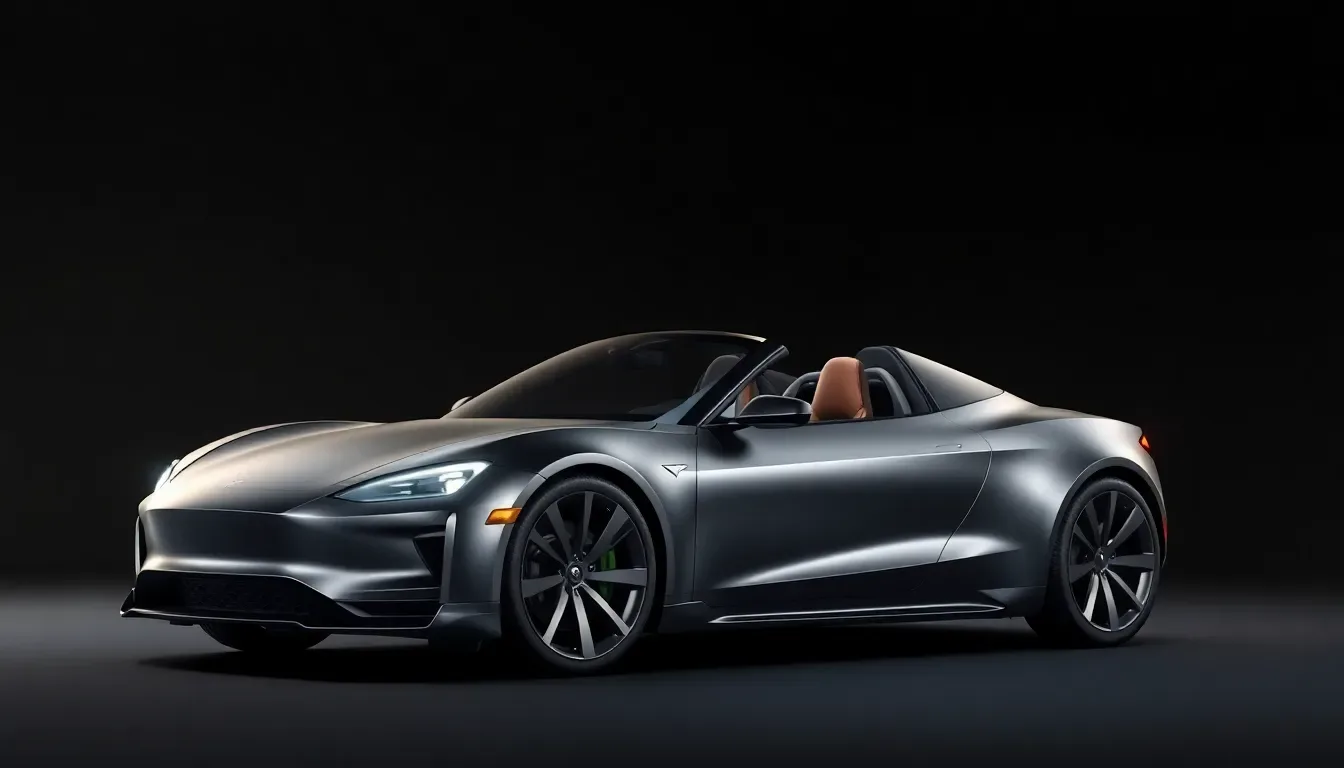
Elon Musk continues to captivate the public’s imagination with his ambitious visions for the future of transportation. Recent comments from the billionaire entrepreneur have reignited interest in Tesla’s upcoming vehicle, the Roadster, and their expanding Robotaxi program. As Tesla prepares to unveil groundbreaking technology, both enthusiasts and skeptics are eager to see what lies ahead.
Elon Musk reveals new details on the Tesla Roadster
In a recent episode of the Joe Rogan Experience podcast, Elon Musk shared exciting updates about the Tesla Roadster, a vehicle that has been long-awaited by fans. Musk described the Roadster as equipped with “crazy technology” that challenges traditional definitions of automobiles. The anticipation surrounding its release is palpable, particularly as Tesla has promised an unforgettable demonstration of the car’s capabilities.
Tesla has been teasing the Roadster for years, with numerous delays as the company strives to push boundaries beyond conventional expectations. This approach reflects Tesla’s commitment to innovation, as they aim to create a vehicle that is not only fast but also incorporates advanced features that set it apart from any car currently on the market.
During the podcast, Musk stated, “Whether it’s good or bad, it will be unforgettable,” adding that the Roadster might outshine even the most fantastical vehicles seen in movies. This claim has raised eyebrows and excitement, as Musk promised a product unveiling that could rival the most memorable moments in automotive history. He emphasized that the Roadster’s technology may even allow it to hover, thanks to a SpaceX package featuring cold gas thrusters. This revolutionary aspect could redefine the way we think about personal transportation.
Anticipating the Roadster’s features
As the unveiling date approaches, several features of the Roadster have been hinted at, fueling speculation and discussion among automotive enthusiasts. Some key points include:
- Potential hovering capability utilizing SpaceX technology.
- Unprecedented acceleration and speed statistics, likely surpassing any existing sports car.
- A design that merges aesthetics with functionality, offering luxury and cutting-edge technology.
- Integration of advanced safety features that leverage Tesla’s Full Self-Driving (FSD) technology.
- Unique driving experiences that could redefine how we view the concept of driving.
With Musk’s statements suggesting that the Roadster could be revealed before the end of the year, the excitement continues to build. Questions about pricing, production numbers, and market release timelines remain, but the implications of this vehicle are already being felt across the automotive industry.
Tesla’s Robotaxi expansion plans
In addition to the Roadster, Tesla’s ambitions in the autonomous vehicle sector are also taking shape. During his appearance on the All-In podcast, Musk outlined plans to expand the Robotaxi fleet significantly. By the end of 2025, Tesla aims to deploy 500 Robotaxis in Austin and 1,000 in the Bay Area, marking a significant step towards a fully autonomous ride-hailing network.
According to Musk, “We’re scaling up the number of cars to, what happens if you have a thousand cars?” This ambitious strategy reflects Tesla’s ongoing commitment to revolutionizing urban mobility and addressing the demand for efficient transportation solutions. The Robotaxi fleet is expected to provide a safer and more convenient way for individuals to travel while reducing the number of personal vehicles on the road.
The future of the Robotaxi network
The Robotaxi network is at the heart of Tesla’s future growth strategy. Musk has consistently emphasized that the success of this initiative will be crucial for the company’s valuation and overall potential. During the third quarter earnings call, he reiterated the importance of transitioning to a system without safety monitors in Austin by the end of the year. This move is intended to demonstrate Tesla’s confidence in its technology.
Key elements of the Robotaxi initiative include:
- Reduction of operational costs through automation, making rides more affordable for consumers.
- Enhanced safety measures using Tesla’s advanced AI and machine learning systems.
- A focus on sustainability by reducing reliance on traditional personal vehicles.
- Expansion into new markets, potentially transforming how people think about urban transportation.
The next few months will be critical as Tesla pushes forward with this expansion. The successful rollout of these Robotaxis will set the stage for future developments, including the integration of even more advanced autonomous features.
Neuralink’s innovative advancements
In another realm of innovation, Musk also touched upon Neuralink during his recent discussions. The company is reportedly preparing to offer upgrades to its first human patient, Noland Arbaugh, who has been living with a Neuralink implant. This development highlights the potential for further enhancements in brain-computer interface technology, allowing users to perform increasingly complex tasks through thought alone.
Musk mentioned that Arbaugh could be the first recipient of a Neuralink upgrade, which would enhance his cognitive abilities significantly. Arbaugh’s experience serves as a testament to the potential of Neuralink to transform lives, as he has already regained independence and improved his quality of life since receiving his implant.
The impact of advancements in brain-computer interfaces
The implications of Neuralink’s technology extend far beyond individual patients. As Musk envisions, the future may see recipients capable of excelling in various domains, including gaming and learning. Some potential benefits include:
- Improved cognitive functions and memory retention.
- Enhanced learning capabilities through direct neural connections.
- Opportunities for individuals with disabilities to regain functionalities.
- New forms of communication that bypass traditional methods.
As these technologies progress, the potential to revolutionize not only healthcare but also everyday life becomes increasingly apparent. Neuralink’s developments could pave the way for a future where human cognition and technology are seamlessly integrated.
Tesla Cybercab steering wheel controversy resolved
Meanwhile, Musk recently addressed the ongoing debate regarding the presence of a steering wheel in the upcoming Tesla Cybercab. This vehicle is designed to operate autonomously, marking a significant shift in the concept of personal transportation. Musk has confirmed that the Cybercab will not include manual controls, reinforcing the idea that the future of transportation lies in fully autonomous vehicles.
In the All-In Podcast, Musk stated, “The reality is, people may think they want to drive their car, but the reality is that they don’t.” This assertion highlights a growing trend where consumers prioritize convenience and efficiency over traditional driving experiences.
Key points regarding the Cybercab include:
- No manual steering wheel or pedals, emphasizing its autonomous capabilities.
- Design intended solely for ride-hailing and passenger comfort.
- Focus on real-world testing with current models to ensure safety and reliability.
The Cybercab represents a redefining of personal transportation, focusing on autonomy and the potential elimination of human drivers in the near future.