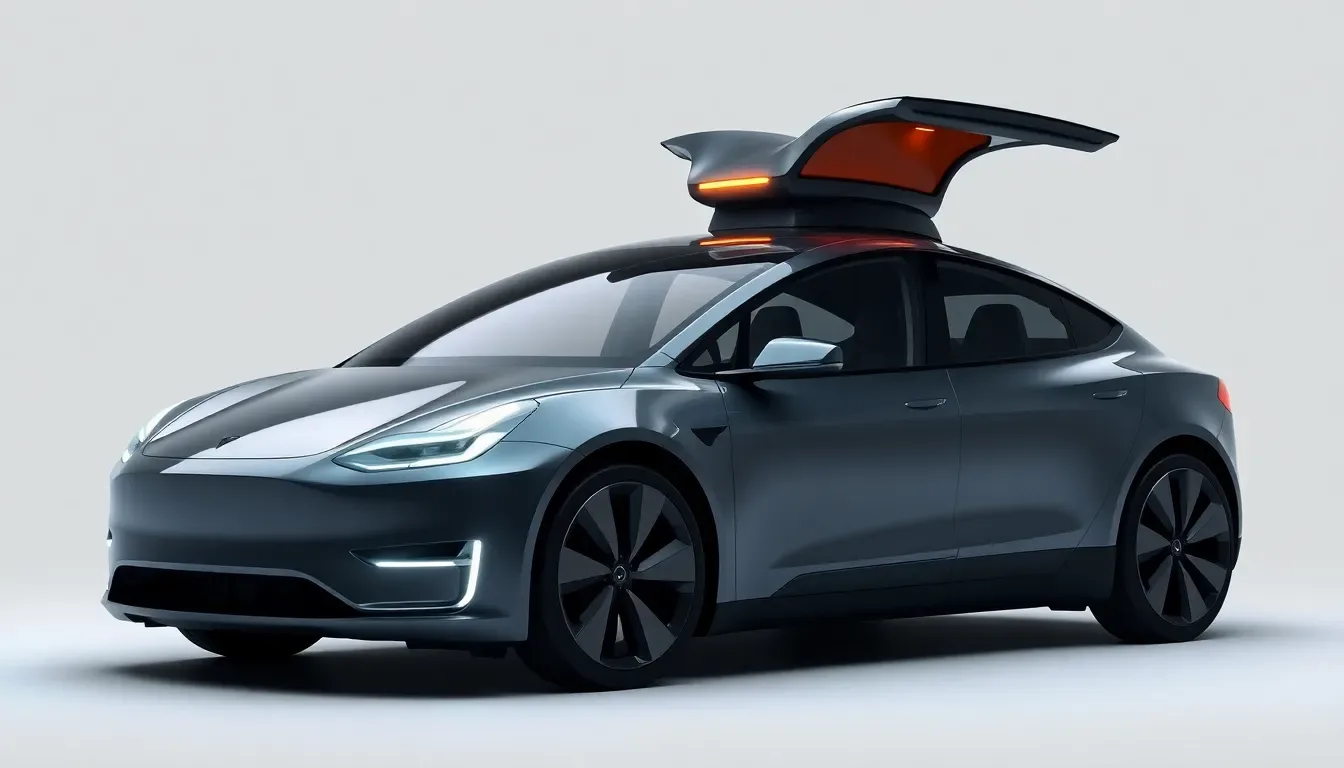
The automotive landscape is rapidly evolving, and Tesla is at the forefront of this transformation. With recent developments in their Cybercab project, the company is reshaping our understanding of transportation. Let’s delve into what’s new with the Cybercab, its implications for the future of autonomous vehicles, and how Tesla is enhancing the user experience.
Recent sightings of the Cybercab and design changes
In recent weeks, social media has been buzzing with reports of the Tesla Cybercab spotted on public roads. This revelation has created excitement among Tesla enthusiasts and potential users alike. Observations from the Palo Alto area show that Tesla has been actively testing its prototype, indicating that significant progress is being made towards its launch.
One of the most notable changes observed in the latest Cybercab prototype is the redesign of the cabin. Images suggest that Tesla has made the cabin more accessible, with larger doors that facilitate easier entry and exit for passengers. This improvement is crucial for enhancing user convenience, especially in a vehicle designed for autonomous ride-sharing.
- Increased door size for easier access
- Improved interior layout for passenger comfort
- Adjustments to camera placements for better visibility
These modifications reflect Tesla’s commitment to refining the user experience while ensuring that the vehicle meets safety and operational standards. The integration of a steering wheel in the prototype, while not intended for final production models, showcases Tesla’s iterative design process.
All-in on autonomy: the vision for the Cybercab
While current prototypes feature a steering wheel, it is important to note that the Cybercab will ultimately be produced as a fully autonomous Robotaxi. Elon Musk emphasized this direction during Tesla’s recent earnings call, aiming to produce around 2 million Cybercabs annually. This would position the Cybercab as Tesla’s highest-volume vehicle.
Musk stated, “The single biggest expansion in production will be the Cybercab, which starts production in Q2 next year.” This strategic move highlights Tesla’s focus on enhancing the efficiency of its production lines while pursuing full autonomy.
- Production of 2 million units yearly
- Designed specifically for autonomous operation
- Aim to minimize operational costs per mile
By streamlining the design and production, Tesla is not only optimizing the vehicle for autonomous functionality but also setting the stage for a new era in urban transportation.
Cybertruck FSD V14: Expectations and updates
The anticipation surrounding the Cybertruck’s Full Self-Driving (FSD) V14 update has been palpable, especially as Tesla continues to refine its self-driving software. Recent communications from Tesla’s leadership indicate that the launch of FSD V14 could occur imminently, adding to the excitement of Cybertruck owners.
As Tesla moves toward this next version, many are eager to understand what enhancements it will bring. Some features rumored to be included are:
- Improved navigation capabilities
- Enhanced obstacle detection
- New user interface updates
The updates will likely reflect Tesla’s ongoing commitment to safety and performance, ensuring that the Cybertruck remains at the cutting edge of automotive technology.
Tesla’s unified FSD experience across its lineup
As part of its broader strategy, Tesla aims to unify the FSD experience across all its vehicles. The rollout of FSD V14 will serve as a crucial step in this initiative, as it will incorporate features that enhance the driving experience across the Tesla range. This includes introducing advanced driver assistance systems that can adapt to various driving conditions.
Some of the anticipated advancements in FSD V14 include:
- Mad Max mode for aggressive driving scenarios
- Enhanced predictive algorithms for navigating complex environments
- Real-time updates based on traffic and weather conditions
This holistic approach not only strengthens Tesla’s market position but also ensures that users have a consistent and improved experience, regardless of which model they drive.
The Tesla Ride program: Bringing FSD to the public
One of Tesla’s innovative initiatives is the “Tesla Ride” program, which aims to familiarize the public with its FSD technology. This new service allows participants to experience supervised FSD features in real-world scenarios, bridging the gap between technology and everyday use.
During a Tesla Ride session, participants experience:
- Supervised autonomous driving demonstrations
- Interactive sessions with Grok AI for personalized assistance
- Insights into FSD capabilities from Tesla Advisors
The program is designed to educate consumers about the benefits and functionalities of Tesla’s self-driving technology, helping to alleviate concerns regarding its safety and reliability.
Marketing push and the future of Tesla’s FSD
As the Tesla Ride program rolls out across various states, the company is taking a cautious yet impactful approach to marketing its autonomous features. The initiative runs through late 2025, covering key markets such as California, Michigan, Virginia, Illinois, and Nevada. This outreach aims to ensure that potential users understand the technology and feel comfortable with its applications.
Tesla’s commitment to safety is evident in its messaging, as highlighted by Senior Vice President Tom Zhu. During a recent discussion, Zhu reiterated the company’s prime directive for its autopilot system: “Don’t crash.” This principle underscores Tesla’s dedication to minimizing risks while advancing towards fully autonomous driving.
In summary, Tesla’s ongoing developments with the Cybercab, the anticipated FSD V14 update, and innovative initiatives like Tesla Ride are all part of a greater vision for the future of transportation. As Tesla continues to push the boundaries of technology, it remains committed to ensuring safety and enhancing the user experience, paving the way for a new era in mobility.