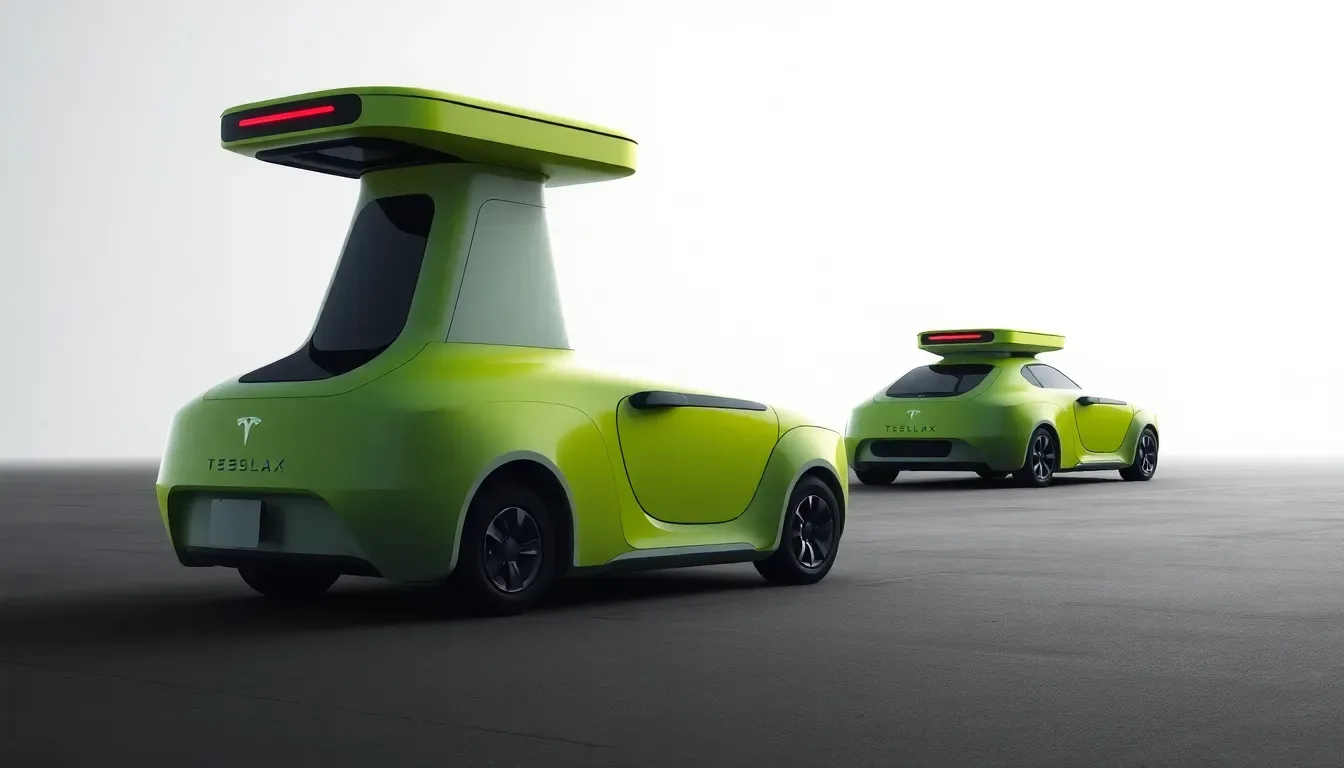
As the race towards full autonomy and innovative transportation solutions gains momentum, Tesla is making significant strides with its Robotaxi program. Recent sightings of testing units indicate an impending launch of their autonomous ride-hailing service across new regions, all while the company continues to push the envelope on self-driving technology. This article delves into the latest developments surrounding Tesla’s Robotaxi initiative, the broader context of its technological advancements, and what it means for the future of urban mobility.
Tesla’s Robotaxi program: a glimpse into the future
Tesla’s Robotaxi program is an ambitious project aimed at revolutionizing urban transportation. With test units now appearing in various regions, the company is poised to expand its ride-hailing service significantly. Currently operational in Austin, Texas, and the California Bay Area, Tesla is eyeing states like Nevada, Florida, and Arizona for future launches.
Recent reports indicate that Tesla is ramping up hiring to support the Robotaxi program, suggesting a forthcoming increase in activity. The company is not only focused on expanding its operational reach but is also committed to refining its technology to ensure safety and efficiency. The testing units spotted in Arizona, equipped with LiDAR rigs for data validation, reflect Tesla’s meticulous approach to gathering data necessary for regulatory approval.
Testing and validation: gathering crucial data
Validation units play a critical role in Tesla’s strategy for launching its Robotaxi service. These vehicles are deployed to collect data that can be useful not just for internal analysis but also for meeting regulatory requirements. The information gathered will be shared with relevant agencies that oversee the licensing for autonomous vehicle operations.
- Validation for regulatory compliance.
- Data collection for internal use.
- Real-world testing to refine technology.
For instance, two of these validation units were recently spotted in Scottsdale, Arizona, indicating that Tesla is actively testing in areas with potential for expansion. Unlike other companies that heavily rely on LiDAR, Tesla has historically leaned on its camera-based approach, dubbed Tesla Vision, which CEO Elon Musk believes is essential for achieving true autonomy.
Defining the role of LiDAR in Tesla’s strategy
While Tesla has opted against using LiDAR as a primary component of its self-driving technology, the recent use of LiDAR rigs for testing purposes raises questions. Traditionally, Tesla’s approach has been to utilize a camera-centric system, which Musk has referred to as a more effective and efficient method for developing autonomous driving capabilities.
Other companies, such as Waymo, have integrated LiDAR extensively into their systems, but Tesla’s stance remains that this technology is not necessary for achieving full autonomy. Musk has labeled LiDAR as a “crutch,” arguing that it may hinder progress towards a truly autonomous network.
Expanding the Robotaxi service: current operations and future plans
Tesla’s Robotaxi service has been operational in Austin since June 2025 and has recently expanded its service area to nearly 300 square miles. This growth is indicative of Tesla’s ambition to dominate the ride-hailing market, particularly in regions where it can quickly scale operations.
- Active in Austin, Texas.
- Service area expansion to nearly 300 square miles.
- Potential future locations: Nevada, Florida, Arizona.
The ongoing development of Tesla’s Robotaxi program highlights the company’s commitment to not only expanding its service offerings but also ensuring that its technology meets the highest standards of safety and efficiency. This expansion is particularly timely, given the growing demand for innovative transportation solutions across urban landscapes.
Developments in autonomous technology: Tesla’s FSD updates
In parallel to its Robotaxi endeavors, Tesla is also focused on rolling out updates for its Full Self-Driving (FSD) software, particularly for the Cybertruck. Recent communications from Tesla executives indicate that the much-anticipated FSD V14 update could be released soon, although it initially missed its intended timeline.
Notable features of FSD V14
The FSD V14 update represents a significant advancement in Tesla’s self-driving capabilities. Some features expected to be included are:
- Enhanced navigation capabilities.
- Improved responsiveness to real-world conditions.
- New driving modes, such as “Mad Max,” aimed at enhancing driver experience.
This update is particularly meaningful for Cybertruck owners, as it marks one of the first major over-the-air updates for the vehicle. Given the Cybertruck’s unique design and advanced technological features, it has garnered significant interest from early adopters and enthusiasts alike.
Innovative consumer engagement: the “Tesla Ride” program
In a bid to familiarize consumers with its self-driving technology, Tesla has launched the “Tesla Ride” program. This initiative aims to provide supervised FSD demonstrations, allowing participants to experience the technology firsthand while riding alongside a Tesla Advisor.
How the Tesla Ride program works
Participants in the Tesla Ride program can expect the following:
- A 45-minute session with a Tesla Advisor.
- Interactive demonstrations of FSD features.
- Engagement with Grok AI for questions and entertainment during the ride.
This program is currently available in several states and aims to enhance consumer trust in Tesla’s autonomous technology while promoting safety and responsible use of FSD features.
Marketing strategies and reach of the Tesla Ride program
The Tesla Ride program is not just a demonstration initiative; it forms part of a broader marketing strategy aimed at positioning Tesla as a leader in the autonomous vehicle space. By engaging directly with consumers, Tesla seeks to build familiarity and comfort with its technology.
As emphasized by Tesla executives, safety is a paramount concern in all FSD developments. The company’s commitment to minimizing risk while maximizing user experience reflects its overall philosophy in the autonomous vehicle market.
In summary, Tesla’s Robotaxi program, alongside its continuous improvements in FSD technology, represents a significant shift in the future of transportation. By combining innovative testing methods, consumer engagement initiatives, and a steadfast focus on safety, Tesla is paving the way for a new era of autonomous mobility. As these developments unfold, the implications for urban transportation and the broader automotive industry will be profound.