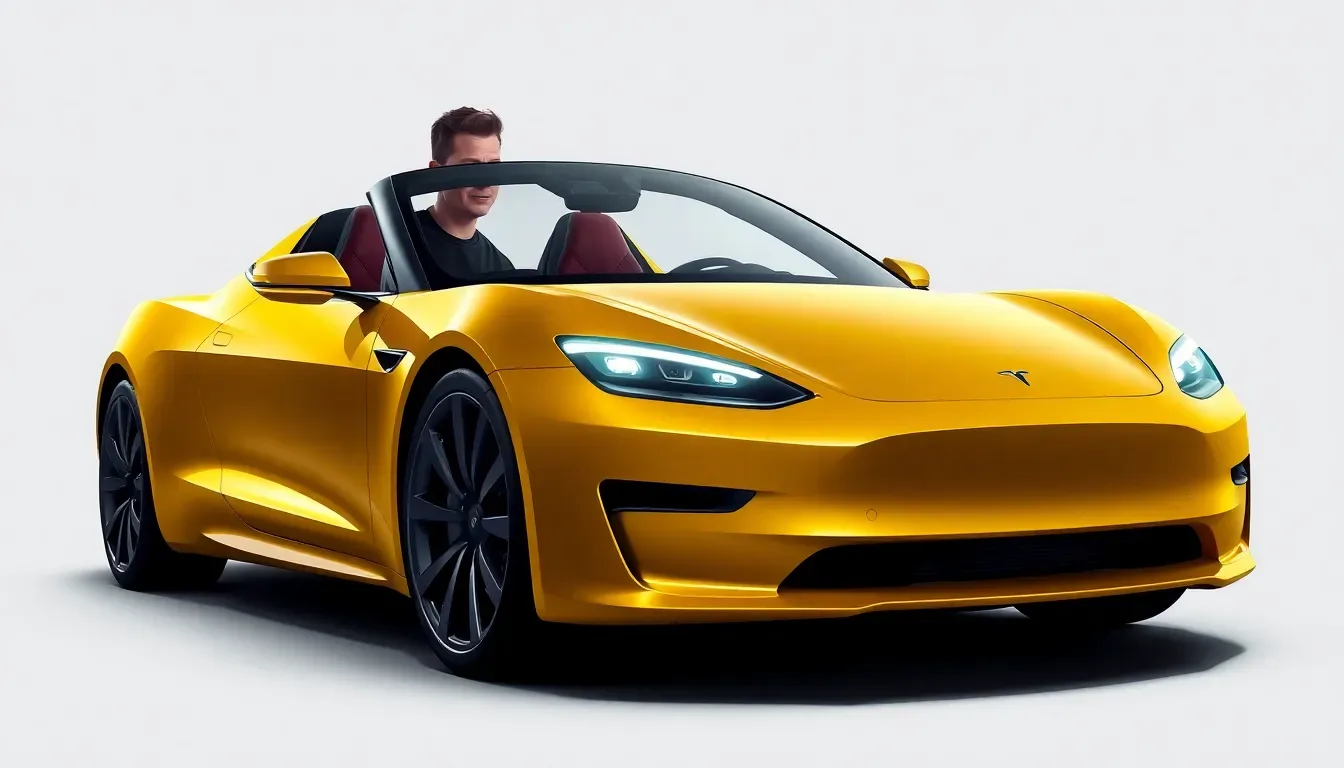
Elon Musk, a prominent figure in the tech industry, recently made headlines with his sharp remarks regarding the cancellation of a Tesla Roadster reservation by Sam Altman, the CEO of OpenAI. Their intertwined histories, marked by both collaboration and rivalry, provide an intriguing backdrop to this latest exchange. Dive into the details of this incident, the broader implications for Tesla, and how Musk’s vision continues to shape the future of transport.
Elon Musk responds to Sam Altman’s cancellation of the Tesla Roadster
In a recent post on X, Sam Altman shared his experience of canceling his Tesla Roadster reservation, which he humorously dubbed “A tale in three acts.” His narrative included screenshots of his original confirmation email from Tesla in 2018, the subsequent request for a refund of his $50,000 deposit, and a notification from Google indicating that his refund email had not been delivered. Musk quickly jumped into the conversation, emphasizing that Altman neglected to mention that he received his refund within 24 hours, a fact Musk highlighted with a pointed remark about Altman’s character.
Altman’s cancellation comes after a seven-year wait for the Roadster, a vehicle that has been anticipated for its innovative design and performance capabilities. Musk’s quick-witted response underscores the competitive nature of their relationship, which began when both were co-founders of OpenAI in 2015. Their paths diverged when Musk left the organization amid disagreements about its direction, particularly as Altman transitioned OpenAI into a for-profit entity.
Background on the Musk-Altman relationship
The partnership between Musk and Altman at OpenAI was initially rooted in a shared vision for safe and accessible artificial intelligence. However, the differences in their approaches led to significant tensions:
- Vision Divergence: Musk preferred a non-profit model focused on ethical AI, while Altman aimed for a for-profit structure to attract investment and accelerate development.
- Public Spats: This divergence has resulted in public disagreements, including Musk’s criticism of OpenAI’s profit-oriented trajectory.
- Legal Disputes: Their fallout has led to several lawsuits, further complicating their professional relationship.
The Tesla Roadster: A long-awaited innovation
The Tesla Roadster has been a subject of great anticipation in the automotive world. Initially unveiled in 2017, it promised remarkable advancements in electric vehicle technology, including:
- Unmatched Speed: Expected to reach 0 to 60 mph in under two seconds.
- Advanced Technology: Integration of cutting-edge features that surpass typical automotive standards.
- Unique Design: An aesthetic that blends futuristic elements with classic sports car aesthetics.
During a recent episode of the Joe Rogan Experience podcast, Musk hinted at the upcoming unveiling of the Roadster, stating that they are nearing the prototype demonstration. He expressed confidence that the vehicle could redefine expectations, claiming, “Whether it’s good or bad, it will be unforgettable.”
Future of Tesla’s Robotaxi program
As Tesla continues to innovate, the company’s ambitions in the autonomous ride-hailing space are gaining momentum. Musk revealed on the All-In podcast that Tesla plans to significantly expand its Robotaxi fleet:
- Austin: Plans to increase the Robotaxi fleet to 500 units.
- Bay Area: Targeting 1,000 Robotaxis by the end of the year.
Musk’s remarks signal a commitment to advancing Tesla’s Full Self-Driving (FSD) technology, with expectations that by the end of 2025, parts of Austin will operate without safety drivers. This ambitious timeline reflects Tesla’s confidence in its autonomous systems, which are crucial for the company’s valuation and future growth.
Implications of Musk’s statements
Musk’s criticisms and proclamations hold weight in the tech and automotive industries, influencing both public perception and investor confidence. His comments about the Robotaxi program suggest a future where:
- Increased Accessibility: Autonomous ride-hailing could provide affordable transportation options for many.
- Reduced Human Error: Self-driving vehicles aim to minimize accidents caused by human mistakes.
- Sustainability: Electric Robotaxis could significantly reduce carbon emissions compared to traditional vehicles.
However, the transition to fully autonomous vehicles also raises concerns regarding safety, regulatory challenges, and the impact on employment in the driving sector. Musk has emphasized the importance of a cautious approach as Tesla navigates these complex issues.
Neuralink’s developments: The next frontier
In parallel to his work with Tesla, Musk is also advancing his goals with Neuralink, a company focused on developing brain-computer interface technology. Musk recently hinted that Noland Arbaugh, Neuralink’s first human patient, could receive an upgrade that enhances his cognitive abilities.
This potential advancement exemplifies the rapid progress in neural technology and its implications for enhancing human capabilities. Arbaugh’s journey with Neuralink showcases remarkable developments, including his ability to engage in activities such as gaming and attending classes, which were previously challenging for him.
Final thoughts on Musk’s influence
Musk’s foray into various technologies reflects his relentless pursuit of innovation, and his recent comments about both Tesla and Neuralink underscore his dual focus on automotive advancements and human enhancement through technology. As these projects develop, they are likely to reshape industries and impact lives in significant ways.
With each headline, Musk continues to captivate audiences and investors alike, driving discussions about the future of technology, transportation, and human capability. As Tesla prepares for the unveiling of the Roadster and expands its Robotaxi program, the world watches closely to see how these developments will unfold.