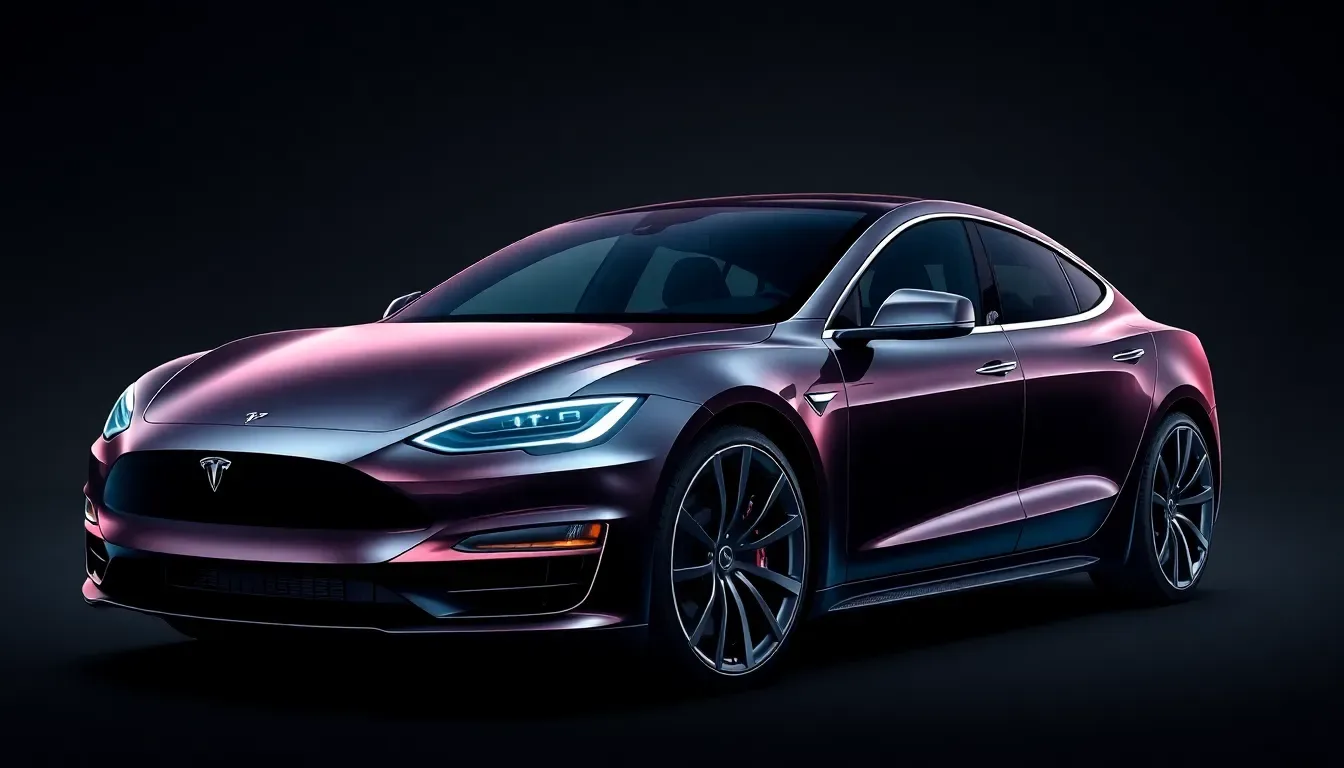
Elon Musk, the visionary behind companies like Tesla and SpaceX, recently faced a question from Joe Rogan about the potential establishment of an “AMG division” for Tesla, similar to the performance-oriented division of Mercedes-Benz. Musk’s response highlights Tesla’s unwavering commitment to autonomous vehicle technology and innovation, steering clear of distractions that could divert focus from this ambitious goal. But what does this mean for Tesla enthusiasts and the future of the automotive industry?
Tesla’s Focus on Autonomy Over Performance Divisions
During a recent episode of the Joe Rogan Experience, Musk was asked if Tesla would consider creating a division focused on high-performance vehicles, akin to the AMG division of Mercedes-Benz. Rather than embracing the idea, Musk emphasized that Tesla’s primary mission is to develop futuristic, autonomous vehicles. He stated, “I think it’s best to leave that to the custom shops. Tesla’s focus is autonomous cars, building futuristic autonomous cars. We want the future to look like the future.” This statement underscores Tesla’s dedication to innovation in the realm of self-driving technology.
Musk’s comments resonate with the company’s long-term vision of revolutionizing transportation. By concentrating resources on autonomy, Tesla aims to push the boundaries of what electric vehicles can achieve. This direction is not just about creating faster cars; it is about redefining what personal transportation looks like in the future.
Custom Performance Vehicles: A Different Market
While Tesla vehicles are already known for their remarkable performance, the concept of a dedicated performance division raises questions about market demand and profitability. Tesla enthusiasts have long suggested that the company should acquire performance tuning shops like Unplugged Performance, which specializes in modifying Tesla vehicles for enhanced performance. However, Musk’s decision to keep Tesla’s core focus on autonomy suggests that performance tuning may not align with the company’s strategic goals.
- Custom shops can cater to niche markets without diverting Tesla’s focus.
- Performance enhancements could complicate the regulatory landscape for autonomous driving.
- Existing Tesla models, such as those with the Plaid powertrain, already meet high-performance expectations.
The profitability of a dedicated performance division is also questionable. For instance, Mercedes-Benz reported sales of over 140,000 units from its AMG division in 2024, contributing significantly to its revenue. However, Tesla’s high-performance trims already cater to many customers, suggesting that the market for a separate performance division might be limited.
The Appeal of Tesla’s Customization and Performance
Despite Musk’s dismissal of an AMG-style division, the idea of customizing Tesla vehicles remains popular among owners. Custom shops like Unplugged Performance have successfully modified Tesla cars, enhancing their performance and aesthetics to meet individual preferences. Tesla owners often seek modifications for:
- Improved handling and suspension systems.
- Enhanced aesthetics with custom paint and body kits.
- Upgraded interiors for luxury and comfort.
As Tesla continues to innovate with features like Full Self-Driving capabilities, the idea of performance modifications could evolve. Customers may demand vehicles that not only drive themselves but also accelerate at thrilling speeds.
Tesla’s Ambitious Future: AI and Space Integration
Musk’s vision extends beyond traditional automotive challenges. Recently, he hinted at the potential applications of Tesla’s upcoming AI8 chip, which could serve purposes beyond vehicles. Speculations suggest that this chip might be instrumental in SpaceX’s endeavors, possibly for space-based computing systems or data centers.
In response to user inquiries, Musk’s engagement on social media hinted at the AI8 being utilized for projects that align with SpaceX’s space operations, demonstrating the synergy between Tesla and SpaceX. This involves:
- Utilizing AI in orbit for data processing.
- Implementing Tesla’s technology in space-based applications.
- Exploring autonomous systems in extraterrestrial environments.
The collaboration of technologies between Tesla and SpaceX could pave the way for innovative solutions in both automotive and aerospace sectors, reinforcing Musk’s legacy as a pioneer of modern technology.
SpaceX’s Computing: The Future of Data Centers
SpaceX has ambitious plans to employ Starlink V3 satellites to create space-based data centers, a concept Musk described as a “very big deal.” As the demand for data processing increases, earthbound data centers face challenges related to energy consumption and space. Space-based alternatives could alleviate some of these issues while offering unprecedented scalability. Key advantages include:
- Reduced energy costs due to solar power availability in space.
- Minimized cooling requirements compared to ground-based centers.
- Potential for high-speed data transfer through laser communications.
Such innovations could redefine the landscape of data management, making it feasible to handle vast amounts of information in a sustainable manner. SpaceX’s ability to turn ambitious ideas into operational realities is well-documented, and this project could be another example of that trend.
Preparing for a 24/7 Robotaxi Service
In a bold move toward autonomous transportation, Tesla is positioning itself to launch a 24/7 Robotaxi service across multiple states. Recent job listings for Robotaxi Fleet Support Specialists indicate that Tesla is ramping up its operations to ensure smooth functionality for continuous ride-hailing services. Areas targeted for this rollout include:
- Austin
- Palo Alto
- Orlando
- Tampa
- Doral
- Houston
- Las Vegas
This ambitious plan signals Tesla’s commitment to making autonomous ride-sharing a reality. The company aims to transform urban mobility, reducing congestion and improving accessibility through its advanced technologies.
Expanding the Robotaxi Fleet
Musk aims to significantly expand the Robotaxi fleet, with ambitious targets set for Austin and the Bay Area by the end of 2025. In a recent podcast, he discussed plans to have:
- 500 Robotaxis operational in Austin.
- 1,000 Robotaxis operational in the Bay Area.
The potential for extensive deployment of autonomous vehicles represents a significant milestone for Tesla and the broader automotive industry. As the company navigates this expansive growth, it will face the challenge of ensuring safety and reliability in its autonomous systems.
With only two months remaining in the fourth quarter, the pressure is on Tesla’s AI team to deliver on these ambitious goals. The outcomes of these initiatives may redefine the future of transportation, marking a pivotal moment in the history of automotive innovation.